


Kovacs sign is a video-laryngoscopic marker of excessive insertion and rotation of a hyperangulated laryngoscope blade. The glottis fills much of the screen and the cricoid/anterior subglottic wall becomes visible through the vocal cords, indicating that the camera is positioned too close to the larynx and at a steep angle to the tracheal axis.
Although the resulting laryngeal view may appear excellent, the geometry is poor for endotracheal tube delivery. The corrective manoeuvre is to withdraw and de-rotate the blade, accepting a more restricted glottic view with greater space beneath the posterior larynx and better alignment with the long axis of the trachea.
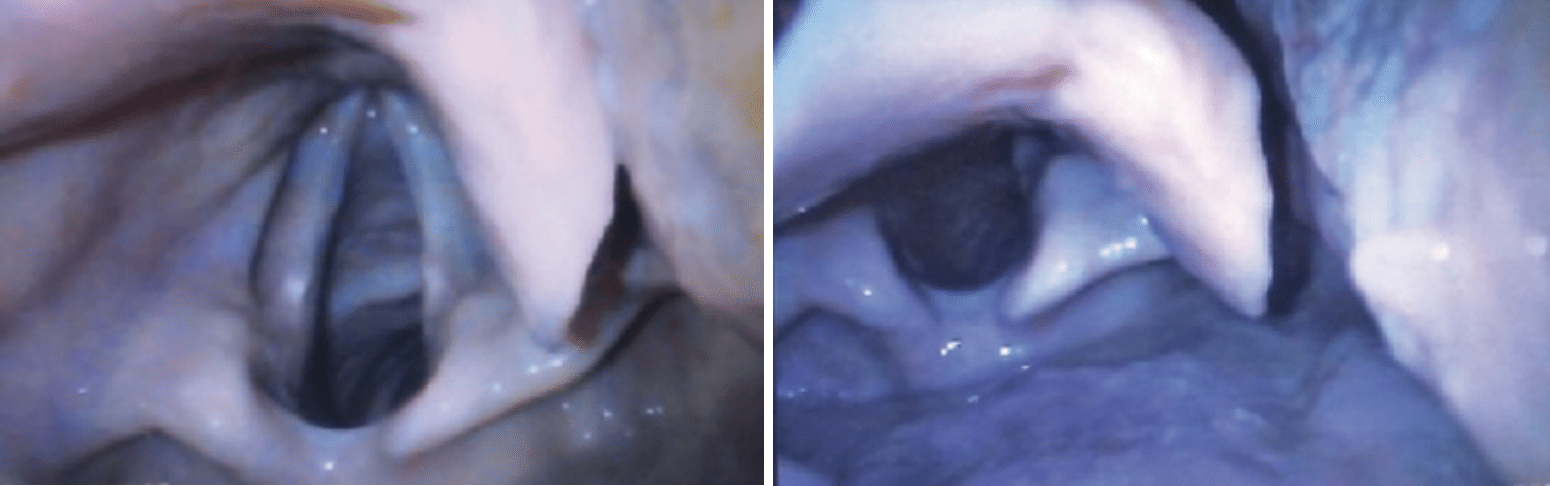
Why it matters
Hyperangulated intubation requires the endotracheal tube to negotiate two opposing curves: the primary curve around the tongue and the secondary curve from the glottic inlet into the descending trachea. Excessive blade rotation may allow an impressive close-up view of the vocal cords while creating an abrupt transition into the trachea. The tube may reach the glottic inlet but then impinge on the anterior subglottic wall or tracheal rings.
The key teaching point is:
The best view of the larynx is not necessarily the best view for intubation.
When the Kovacs sign is present, withdraw and de-rotate the blade until the view is better aligned with the tracheal axis. Kovacs describes a deliberately restricted “50/50 view”, with approximately half the screen occupied by the glottic inlet and half by the space below the arytenoids available for observing tube delivery.
Evidence
Gu, Kovacs et al tested the related concept of deliberately restricted laryngeal visualisation in a randomised clinical trial of 163 elective surgical patients undergoing GlideScope intubation. Patients were allocated to either a full glottic view or a restricted view with less than 50% of the glottic opening visible.
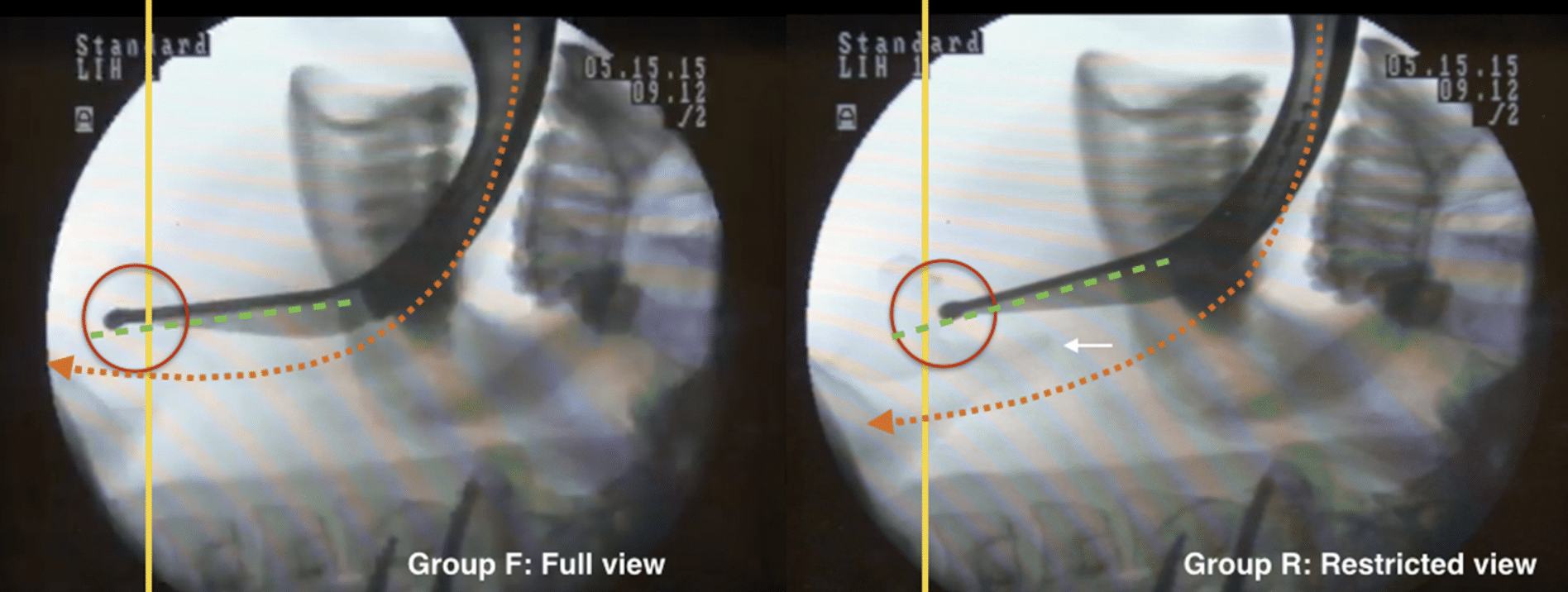
Among the 160 analysed patients, median intubation time was shorter with the restricted view (27 versus 36 seconds), and operators rated intubation substantially easier. First-attempt success was high in both groups and did not differ significantly.
| Outcome | Full view | Restricted view |
|---|---|---|
| Time to intubation, median [IQR] | 36 [27–48] s | 27 [22–36] s |
| Ease of intubation, VAS 0–100 | 50 [17–65] | 14 [6–42] |
| First-attempt success | 76/80 (95%) | 79/80 (99%) |
These findings support the underlying principle of the Kovacs sign. Maximising glottic exposure with a hyperangulated blade does not necessarily optimise the geometry for tube delivery.
Recognition as a performance error
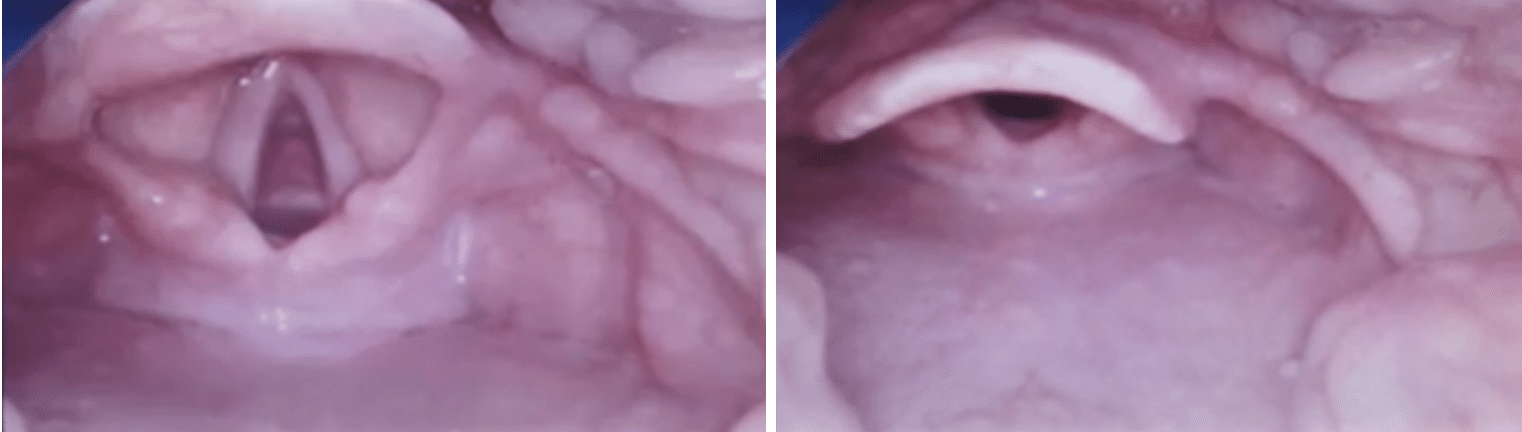
In 2023, Weingart et al incorporated over-rotated insertion (Kovacs sign) into their emergency-intubation error taxonomy. Among 100 deliberately selected recordings demonstrating suboptimal technique, the sign was present in 25 and showed high inter-rater agreement (κ 0.896).
Historical development
2015 – George Kovacs described the phenomenon to Richard Levitan while teaching on an airway course in Baltimore. Levitan attributed the finding to Kovacs and introduced the term Kovacs sign in his ACEP Now article Tips for using a hyperangulated video laryngoscope.
2016 – Gu, Kovacs, et al demonstrated that a deliberately restricted GlideScope view was associated with faster and easier tracheal intubation than a maximal glottic view.
2020 – Kovacs and Levitan emphasised the opposing primary and secondary curves encountered during hyperangulated intubation and the disadvantages of pursuing maximal laryngeal exposure.
2023 – Weingart et al published A taxonomy of key performance errors for emergency intubation. They incorporated “over-rotated insertion (Kovacs sign)” into their taxonomy of performance errors during emergency intubation.
2025 – Boyd and Dinsmore used the term Kovacs sign in their review of Hyperangulated videolaryngoscopy. They contrasted a 100% POGO (Percentage of Glottic Opening) view with visible anterior cricoid/tracheal structures against a deliberately restricted 50% POGO delivery view.
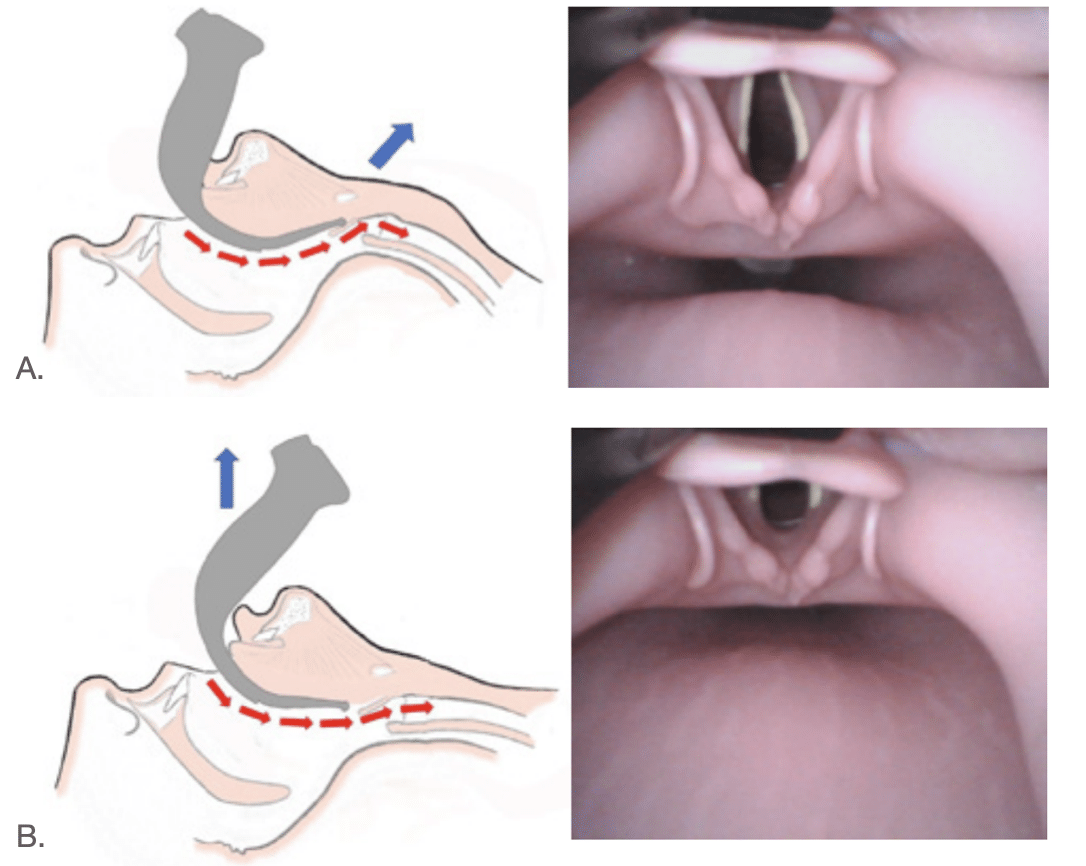
2025 – Hung et al referred to the phenomenon in a cadaveric comparison of intubation techniques. They noted that excessive proximity of the videolaryngoscope camera to the glottis may restrict manoeuvrability of a styleted endotracheal tube.
2026 – Bracey and colleagues formalised the corresponding HAVL performance error as over-rotation blade insertion, defined by the glottis occupying more than 50% of the screen with the first anterior tracheal ring visible.
Eponymythology
Kovacs recalls describing the visual phenomenon to Richard Levitan while the two were teaching together on an airway course in Baltimore. Levitan subsequently attributed the finding to Kovacs and introduced the eponymous term in his 2015 ACEP Now article.
The eponym has subsequently appeared in airway teaching and published literature, including the 2023 Weingart performance-error taxonomy and the 2025 review by Boyd and Dinsmore.
The term Kovacs sign is used in modern airway teaching and literature, although descriptive terminology such as over-rotated insertion or over-rotation blade insertion is also used in published performance-error taxonomies.
Associated Persons
- George Kovacs
- Richard Levitan
Alternative names
- Over-rotated insertion
- Over-rotation blade insertion
References
- Levitan RM. Tips for using a hyperangulated video laryngoscope. ACEP Now. 2015;34(12).
- Gu Y, Robert J, Kovacs G, Milne AD, Morris I, Hung O, MacQuarrie K, Mackinnon S, Adam Law J. A deliberately restricted laryngeal view with the GlideScope® video laryngoscope is associated with faster and easier tracheal intubation when compared with a full glottic view: a randomized clinical trial. Can J Anaesth. 2016 Aug;63(8):928-37
- Kovacs G, Levitan R. Redirecting the laryngoscopy debate and optimizing emergency airway management. Acad. Emerg. Med., 2020; 27: 1366-1369
- Weingart SD, Barnicle RN, Janke A, Bhagwan SD, Tanzi M, McKenna PJ, Bracey A; Resuscitationists Research Group. A taxonomy of key performance errors for emergency intubation. Am J Emerg Med. 2023 Nov;73:137-144
- Boyd R, Dinsmore J. Hyperangulated videolaryngoscopy. Australasian Anaesthesia. 2025:83–95.
- Hung TY, Su YC, Yu SH, Li SS, Chen HL, Ho GJ, Lee CW, Tsai CY. Comparison of intubation techniques using standard geometric videolaryngoscope with bougie, hyperangulated videolaryngoscope, and videostylet in cadavers with only epiglottis visible. Sci Rep. 2025 Oct 30;15(1):37963
- Bracey A, Lacy AJ, Weingart SD, Ata A, Giuliano AS, Lewis JC, Mantas J, Bayly B, Doyle M, Barnicle RN. A taxonomy of key performance errors associated with hyperangulated video laryngoscopy for emergency intubation. Am J Emerg Med. 2026 Mar;101:152-158
eponymictionary
the names behind the name

MBChB - Liverpool. RMO in Emergency Medicine at Sir Charles Gairdner Hospital, currently soaking up the sun down under. Aiming to pursue a career in anaesthetics.

BA MA (Oxon) MBChB (Edin) FACEM FFSEM. Emergency physician, Sir Charles Gairdner Hospital. Passion for rugby, medical history, medical education, and asynchronous learning #FOAMed evangelist. Editor-in-Chief and Webmaster of Life in the Fast lane, LITFL | On Call 4e| Eponyms | Books | Horology |