
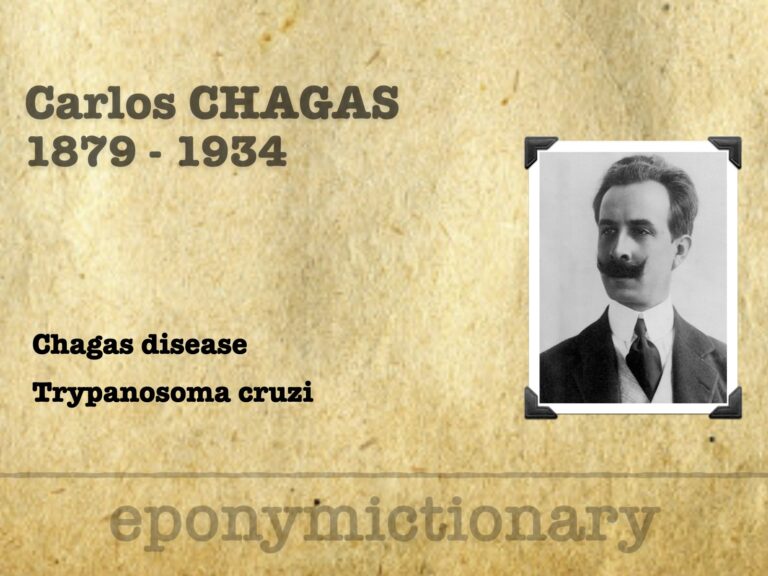
Carlos Chagas
Carlos Chagas (1879–1934), Brazilian physician–scientist who identified Trypanosoma cruzi and described Chagas disease (1908–1909).

Carlos Chagas (1879–1934), Brazilian physician–scientist who identified Trypanosoma cruzi and described Chagas disease (1908–1909).

Tardive dyskinesia is a chronic, often permanent, hyperkinetic movement disorder caused by dopamine-blocking drugs—preventable with early detection and VMAT2 inhibitors.
Transient global amnesia (TGA) is a clinical syndrome of reversible anterograde amnesia. It is an isolated disorder of memory function, generally resolving within 24 hours with a benign prognosis.
Amaurosis fugax is sudden, painless, transient monocular vision loss from retinal ischaemia—an emergency signalling high stroke risk, requiring urgent carotid evaluation and stroke unit admission
TIA is a brief neurological event with high stroke risk. Urgent imaging, specialist review, and early treatment are critical to prevent ischaemic stroke

Intraventricular rupture of brain abscess (IVROBA). Second in our Neuroimaging case study series with Teresa Crow, Troy Carnwath, Scott DiMeo, L. Erin Miller and Natalie Rall
Acute autoimmune demyelinating polyneuropathy presenting with symmetric ascending weakness, reflex loss, and autonomic symptoms—emergency exclusion of spinal lesions
Transverse myelitis is a rare neuro-inflammatory disorder of the spinal cord causing motor, sensory, and autonomic dysfunction. Urgent MRI is essential.
Trigeminal neuralgia is a painful cranial nerve disorder causing brief, intense facial pain. Diagnosis is clinical, with MRI to exclude secondary causes

Wernicke encephalopathy is an acute, reversible encephalopathy caused by thiamine deficiency, classically presenting with ophthalmoplegia, ataxia, and confusion.
Vestibular neuronitis causes acute peripheral vertigo. Corticosteroids improve recovery. Differentiation from central causes is key in ED.
Vestibular migraine presents as episodic vertigo with or without headache. Diagnosis is clinical and often made by a neurologist after excluding other causes