
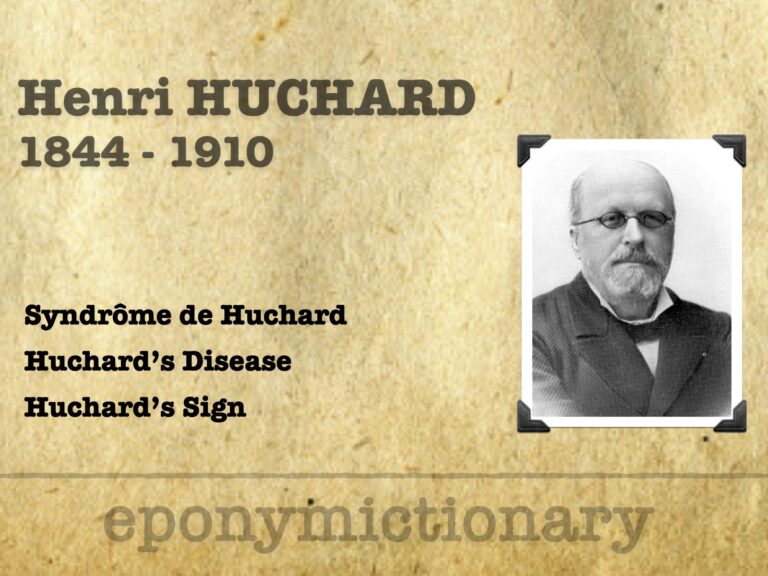
Henri Huchard
Henri Huchard (1844–1910), French cardiologist at Necker, defined “cardio-arterial” disease, described Huchard’s sign, and helped shape early hypertension care.


Henri Huchard (1844–1910), French cardiologist at Necker, defined “cardio-arterial” disease, described Huchard’s sign, and helped shape early hypertension care.
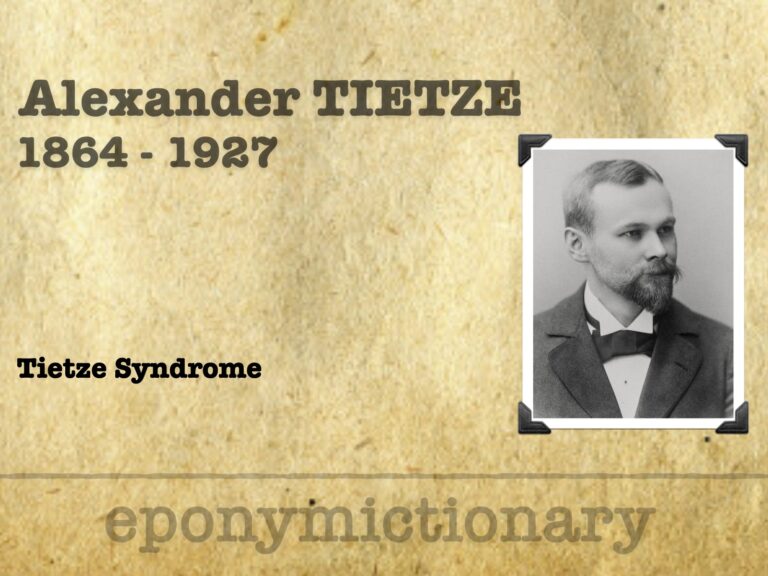
Alexander Tietze (1864–1927), German surgeon who described Tietze syndrome. Expert in emergency surgery and civic leader in Breslau during WWI.

Texidor’s Twinge (Precordial Catch Syndrome): benign, sharp chest pain in youth, first described in 1892, clarified by Miller, Texidor, and Asher in the 1950s.
Tietze syndrome: benign swelling of upper costochondral cartilage, causing localized chest pain. Often confused with costochondritis; self-limiting.

Jacob Mendez Da Costa (1833-1900) was an American physician. Eponymously affiliated with Da Costa Syndrome (1871) and Leuchonychia striata

SCAD -- an underrecognised cause of ACS in the "low risk" young female patient. Management differs to atherosclerotic MI, with conservative therapy the mainstay.