


William Bainbridge
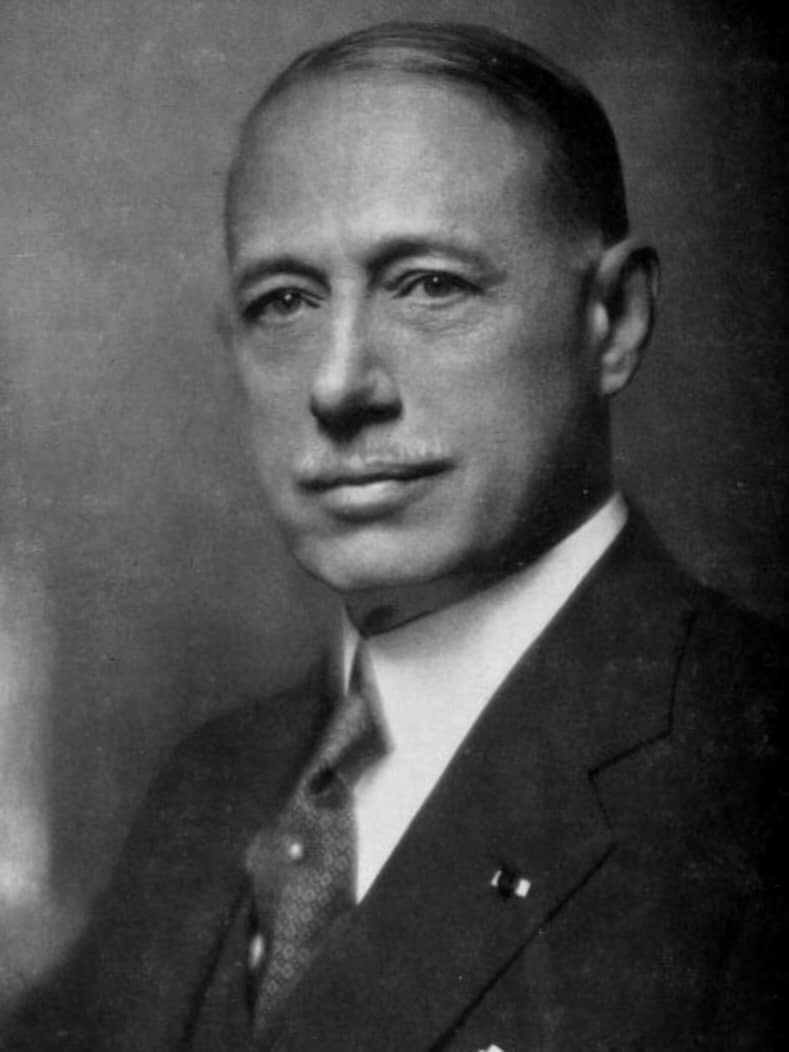
William Seaman Bainbridge (1870-1947) was an American surgeon
His clinical interests were unusually broad, spanning spinal anaesthesia, paediatric surgery, operative gynaecology, cancer surgery, public health education, physical medicine, and military medicine.
In anaesthesia, Bainbridge is remembered for early American use of spinal analgesia, particularly in children. He published on spinal injection in children, a method of cocaine sterilisation, and an early purpose-built spinal injection needle with a short cutting bevel and matching stylet.
In Cancer therapy he was associated with the New York Skin and Cancer Hospital, wrote extensively on malignant disease, and promoted early recognition and public education at a time when physician-led public health lectures could still be viewed with suspicion.
Bainbridge had a substantial military medicine career. He helped organise the Medical Corps of the United States Navy Reserve and served during the First World War. In 1921, with Belgian Colonel Jules Voncken, he helped establish the International Congress of Military Medicine and Pharmacy, later the International Committee of Military Medicine. He represented American military medical interests overseas, helped collate wartime medical lessons for peacetime and future conflict, and received numerous foreign decorations for medical and military service.
Biographical Timeline
- Born on February 17, 1870 in Providence, Rhode Island.
- 1879–1880 – Travelled with his parents on a two-year round-the-world tour of Christian missions, spending part of his childhood abroad, including Japan and India.
- 1880s – Educated at University Grammar School, Providence and Mohegan Lake Military Academy, where he graduated as Senior Officer of Cadets.
- 1893 – Received MD, College of Physicians and Surgeons, Columbia University, New York. Completed postgraduate work in pathology and bacteriology.
- 1890s – Served on the resident medical and surgical staff of Presbyterian Hospital, New York, for two and a half years, followed by residency at Sloane Maternity Hospital.
- 1896–1898 – Undertook postgraduate study in European clinics and hospitals before establishing private practice in New York.
- 1898 – Volunteered during the Spanish–American War; assigned to the Seventh Army Corps under General Fitzhugh Lee.
- 1900–1906 – Professor of Operative Gynecology, New York Post-Graduate Medical School and Hospital.
- 1900 – Published early work on spinal analgesia and cocaine sterilisation
- 1906–1918 – Professor of Surgery, New York Polyclinic Medical School and Hospital.
- 1907 – Honorary president of the first international congress for the study of tumours and cancers at Heidelberg.
- 1912 – Published Spinal analgesia: development and present status of the method : with brief summary of personal experience in 1,065 cases in JAMA reviewing the rise, decline, and revival of spinal analgesia
- 1913 – Commissioned in the Medical Corps of the United States Navy Reserve
- 1914 – Consultant to naval hospitals in the Third Naval District and lectured at the Naval Medical School, Washington.
- 1915 – Undertook a semi-official Red Cross, hospital, and sanitary survey in Europe, visiting Allied and Central Powers medical services.
- 1917–1919 – Served in the United States Naval Reserve during the First World War, promoted to Lieutenant Commander in 1917 and Commander in 1919.
- 1918 – Published The cancer problem reflecting his major professional interest in cancer surgery and public education.
- 1921 – With Belgian Colonel Jules Voncken, helped organise the International Congress of Military Medicine and Pharmacy, first held in Brussels under the sponsorship of King Albert and Queen Elizabeth of Belgium.
- 1926–1932 – Served as Commander General of the Military Order of Foreign Wars.
- 1934 – Promoted to Captain, Medical Director, Medical Corps, United States Naval Reserve.
- 1938–1946 – Served as international treasurer of the International College of Surgeons.
- 1941–1947 – President of the American Academy of Physical Medicine.
- Died on September 22, 1947 at Danbury Hospital, Connecticut, aged 77.
Key Medical Contributions
Spinal analgesia in America and children
Bainbridge was among the earliest American surgeons to adopt and promote spinal analgesia. His first major contribution was his 1900 paper, “Analgesia in children by spinal injection, with a report of a new method of sterilisation of the injection fluids“. Here he described spinal injection for paediatric surgery and a method for preparing sterile cocaine solution without heat decomposition.
In 1901 he published a “report of twenty-four operations performed during spinal anaesthesia” and in 1912 summarised his personal experience of 1,065 cases. In this Spinal analgesia review, Bainbridge described the early rise of spinal analgesia after Bier’s 1899 report, its near abandonment after complications and failures, and its later revival with improved drugs, dosing, solution density, and technique.
In his 1912 review Bainbridge discussed cocaine, stovain, novocain, tropacocain, and other agents; simple, diffusible, and non-diffusible solutions; gravity control of block height; and the importance of sterilisation. In his own 1,065 cases, he reported one death, one temporary partial paralysis with recovery, one failure from “dry spine,” and otherwise no serious permanent postoperative symptoms.
Bainbridge spinal needle
Bainbridge described an early spinal injection needle in 1900, attached to a metal syringe. The Bainbridge needle was a flexible metal spinal needle with a small circular hub, short sharp cutting bevel, and a stylet with a matching bevel.

Bainbridge cocaine sterilisation method
Bainbridge’s cocaine sterilisation method was designed to solve an early spinal analgesia problem by producing a sterile but pharmacologically active intrathecal solution. He mixed fresh cocaine crystals with strong ether, allowed the ether to evaporate, and then dissolved the resulting dry powder in sterile water. The method avoided boiling the drug, which contemporary surgeons believed might decompose cocaine and contribute to unreliable analgesia or adverse effects.
Cancer surgery and public education
Cancer surgery was one of Bainbridge’s major professional interests. He was surgeon and secretary of the research committee at the New York Skin and Cancer Hospital. He was deemed an authority on cancer and organised of early cancer education campaigns. His publications included The Enzyme Treatment for Cancer (1909), The Campaign Against Cancer: Educational, Experimental and Clinical (1911), The Conservation of the Human Breast (1915), and culminated in The Cancer Problem (1918).
Bainbridge’s cancer work combined operative innovation with public health advocacy. He promoted early recognition, public education, and organised cancer control at a time when public lectures by physicians were still viewed by some as professional advertising. He provided some of the first public lectures and clinics on malignant disease for lay audiences and nurses. His operative interests included breast cancer surgery, arterial ligation for pelvic cancer, lymphatic block, and experimental techniques to slow or control tumour spread.
Major Publications
- Bainbridge WS. Analgesia in children by spinal injection, with a report of a new method of sterilisation of the injection fluids. Medical Record (NY) 1900; 58: 937-940
- Bainbridge WS. A report of twenty-four operations performed during spinal anaesthesia. Medical News 1901; 78: 693-700
- Bainbridge WS. The enzyme treatment for cancer. 1909
- Bainbridge WS. Life’s day: guide-posts and danger-signals in health 1909
- Bainbridge WS. Arterial ligation for irremovable cancer of pelvic organs: technic adapted and amplified. 1911
- Bainbridge WS. The campaign against cancer: educational, experimental and clinical. 1911
- Bainbridge WS. Spinal analgesia: development and present status of the method : with brief summary of personal experience in 1,065 cases. 1912
- Bainbridge WS. Technic of the intra-abdominal administration of oxygen. 1913
- Quimby AJ, Bainbridge WS. Eleven cases: roentgenographic and operative findings. 1914
- Bainbridge WS. The conservation of the human breast: a contribution to the prevention of cancer. 1915
- Bainbridge WS. The cancer problem. 1918
- Bainbridge WS. Report on medical and surgical developments of the war. 1919
References
Biography
- DR. W. BAINBRIDGE, CANCER AUTHORITY; Noted Surgeon, Who Developed Technique for Operation in Specialty, Is Dead at 77. New York Times Sept. 23, 1947
- De Forest LE. Ancestry of William Seaman Bainbridge. 1950
- Dr. William Seaman Bainbridge
- Harms R, Cadogan M. History of Spinal Needles. LITFL
Eponym
the person behind the name

MBBS, Curtin University. Junior doctor working at Sir Charles Gairdner Hospital. Interested in Emergency Medicine, education and baking.

BA MA (Oxon) MBChB (Edin) FACEM FFSEM. Emergency physician, Sir Charles Gairdner Hospital. Passion for rugby, medical history, medical education, and asynchronous learning #FOAMed evangelist. Editor-in-Chief and Webmaster of Life in the Fast lane, LITFL | On Call 4e| Eponyms | Books | Horology |