

Anatomy for bronchoscopy
Airway anatomy is crucial for bronchoscopy and airway management, emphasizing orientation, normal variants, and recognizing abnormalities


Airway anatomy is crucial for bronchoscopy and airway management, emphasizing orientation, normal variants, and recognizing abnormalities
Patient preparation is vital for performing bronchoscopy safely in the ICU. Key considerations include: time out, consent, and patient monitoring, patient and equipment positioning, consideration of awake versus intubated & sedated bronchoscopy, medications, ventilator settings, and effective teamwork including prebrief.
Haemoptysis is the expectoration of blood originating from the respiratory tract below the vocal cords, ranging from minor blood-streaked sputum to life-threatening haemorrhage.
Bronchoalveolar lavage (BAL) procedure description, diagnostic performance, indications/ contra-indications, complications, comparison to alternatives, and useful videos for learning.
Bronchoscopic foreign body removal including: indications, assessment and planning, flexible versus rigid bronchoscopy, retrieval tools and techniques, and critical care scenarios.
Airway foreign bodies (AFBs) are potentially life‑threatening. This CCC post considers causes/ risk factors, pathophysiology, complications, clinical features, investigations, and management.
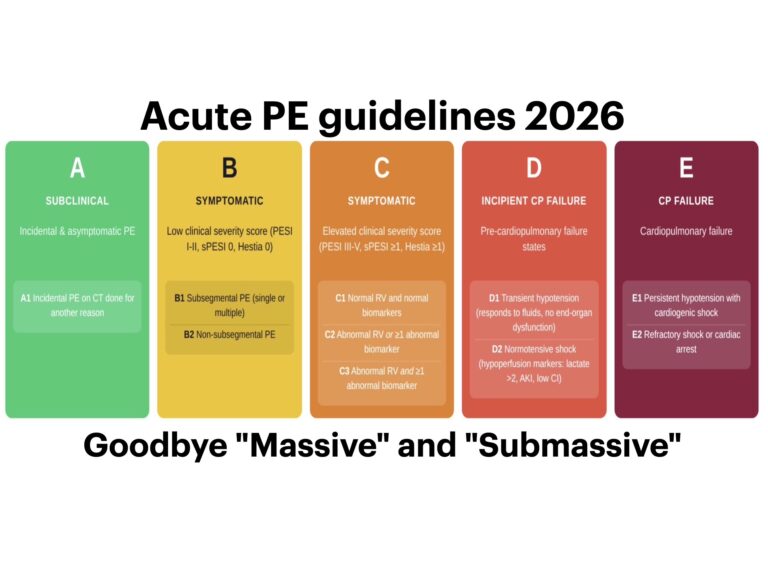
The first-ever AHA/ACC clinical practice guideline on acute pulmonary embolism drops a new A-to-E severity classification. Here’s what emergency physicians need to know...

Alexander Tietze (1864–1927), German surgeon who described Tietze syndrome. Expert in emergency surgery and civic leader in Breslau during WWI.
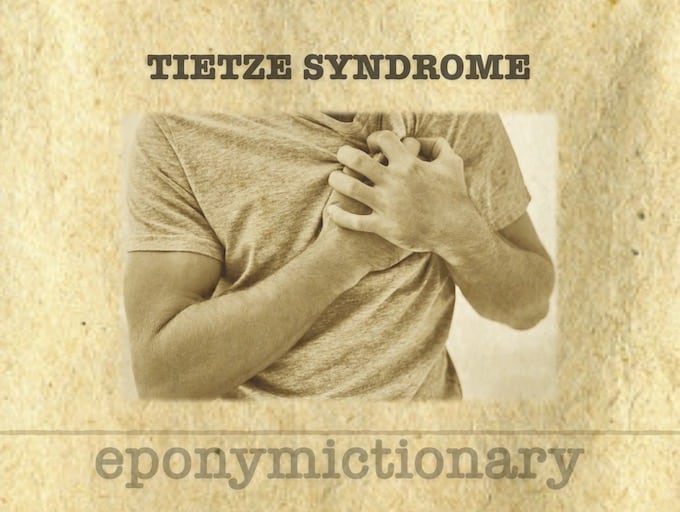
Tietze syndrome: benign swelling of upper costochondral cartilage, causing localized chest pain. Often confused with costochondritis; self-limiting.
Part 3 of the "COVID-19: Keeping the baby in the bath" series discussing whether COVID-19 is part of acute respiratory distress syndrome (ARDS) and the importance of lung compliance.
Discussing "silent hypoxaemia" and timing of intubation. Part 2 of the COVID-19: keeping the baby in the bath" series

Spontaneous breathing can occur without ventilatory support (unassisted spontaneous breathing) or be integrated with mechanical ventilation with assisted ventilation modes (assisted spontaneous breathing).