
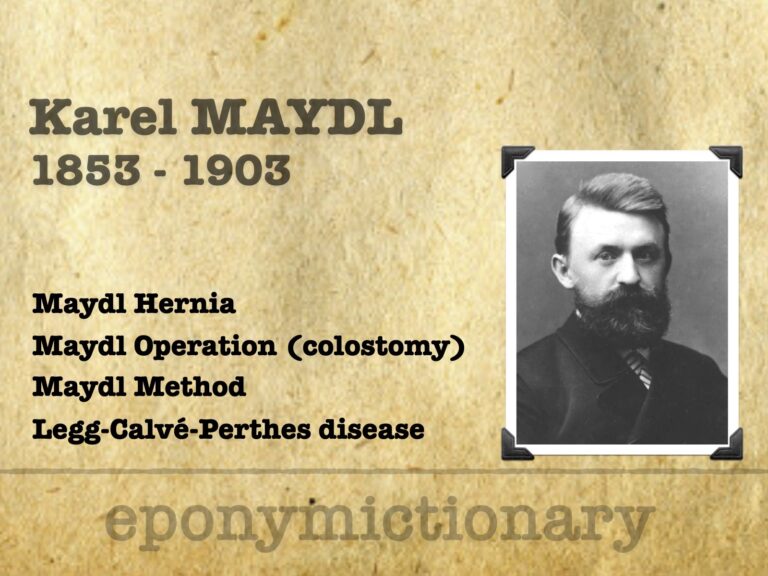
Karel Maydl
Karel Maydl (1853–1903), Czech surgeon, pioneer of colostomy, bladder exstrophy surgery, and Maydl’s hernia; early describer of Legg-Calvé-Perthes disease (LCPD)


Karel Maydl (1853–1903), Czech surgeon, pioneer of colostomy, bladder exstrophy surgery, and Maydl’s hernia; early describer of Legg-Calvé-Perthes disease (LCPD)
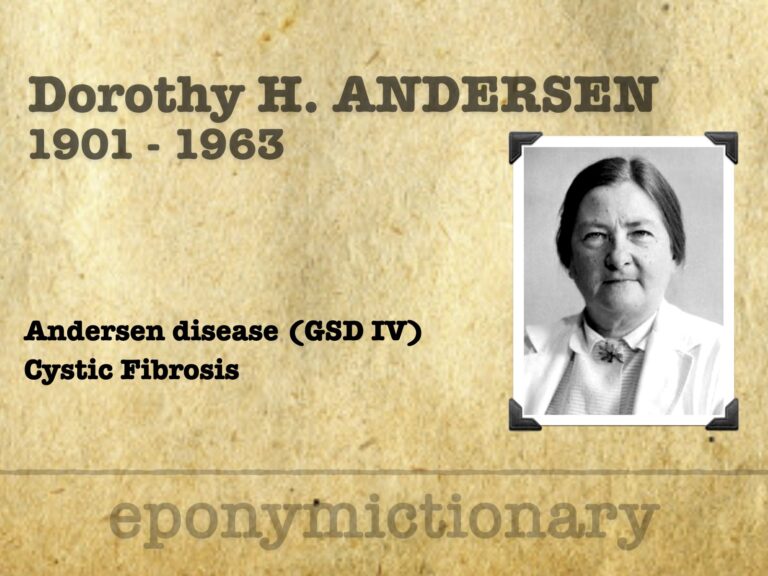
Dorothy Hansine Andersen (1901–1963) was the first to describe cystic fibrosis, shaping paediatric pathology and breaking barriers for women in medicine.

Owen Conor Ward (1923–2021), Irish paediatric cardiologist, co-described Romano-Ward syndrome; pioneer of children’s cardiac care and medical historian
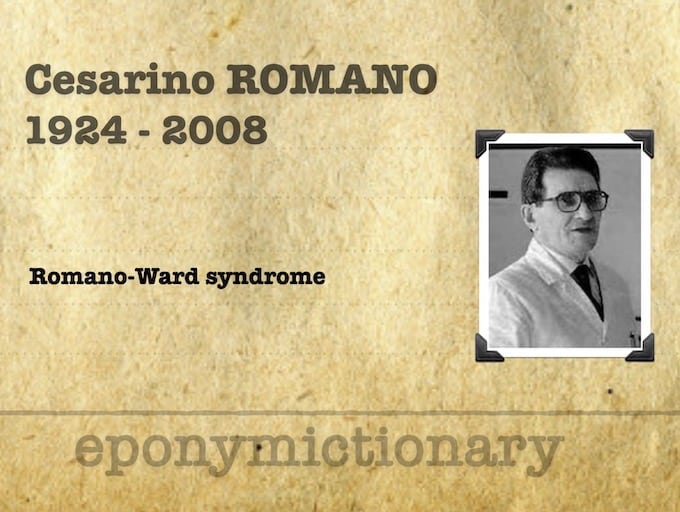
Cesarino Romano (1924–2008), Italian paediatrician, co-described Romano-Ward syndrome; led advances in cystic fibrosis, metabolic screening, and emergency care.

Norwegian internist Fred Lange-Nielsen (1919–1989), co-discoverer of Jervell and Lange-Nielsen syndrome, was a lung specialist, allergy pioneer, jazz musician, and human rights advocate.

Anton Jervell (1901–1987), Norwegian cardiologist and medical educator; co-described Jervell and Lange-Nielsen syndrome, pioneer of ECG research and cardiac electrophysiology in Norway.
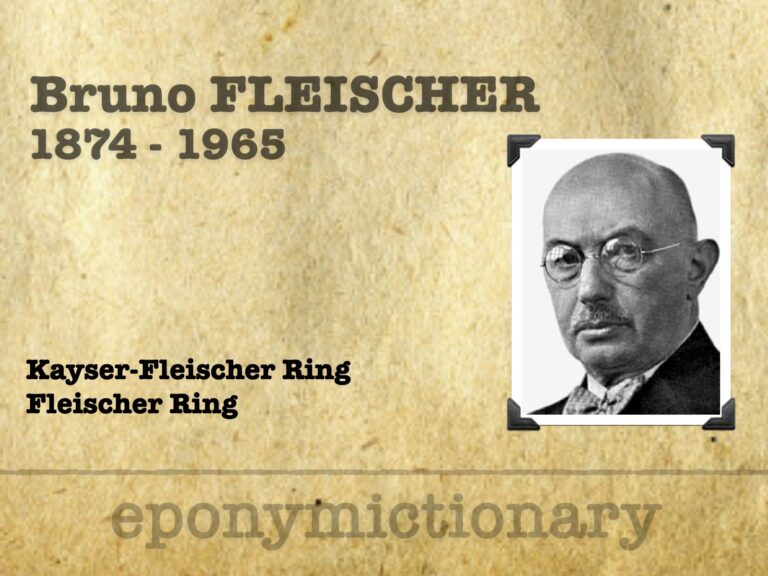
Bruno Fleischer (1874-1965) German ophthalmologist; Kayser–Fleischer ring (Wilson’s disease) and Fleischer ring in keratoconus
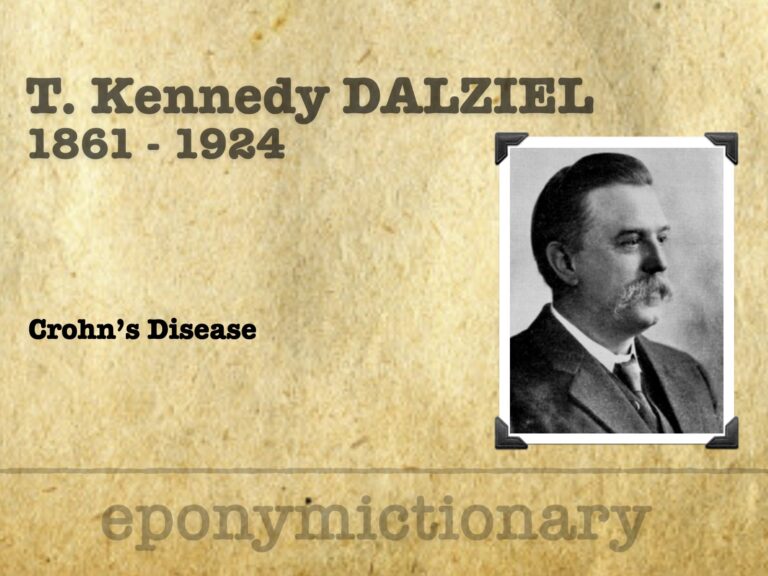
Scottish surgeon T.K. Dalziel (1861–1924) early description of Crohn’s disease, led children’s surgery in Glasgow, and was knighted for WWI medical service.
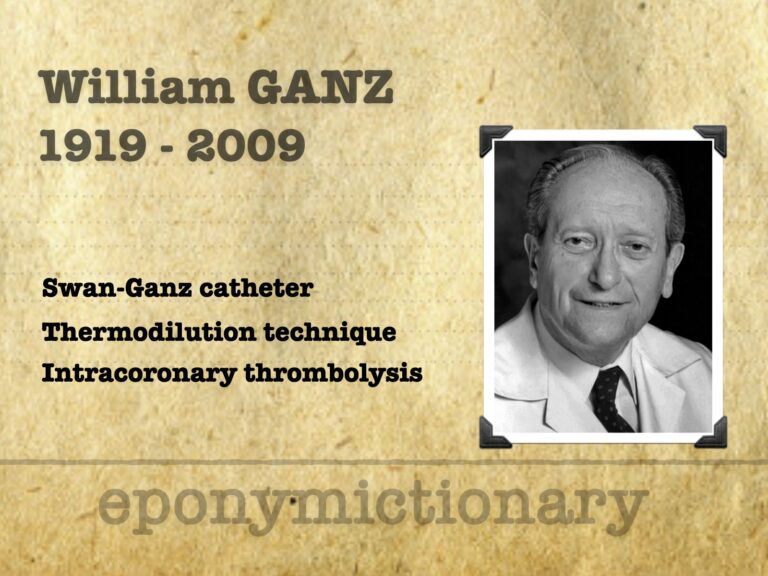
William Ganz (1919–2009), Slovakian-born cardiologist, co-invented the Swan-Ganz catheter and pioneered thermodilution in cardiovascular research
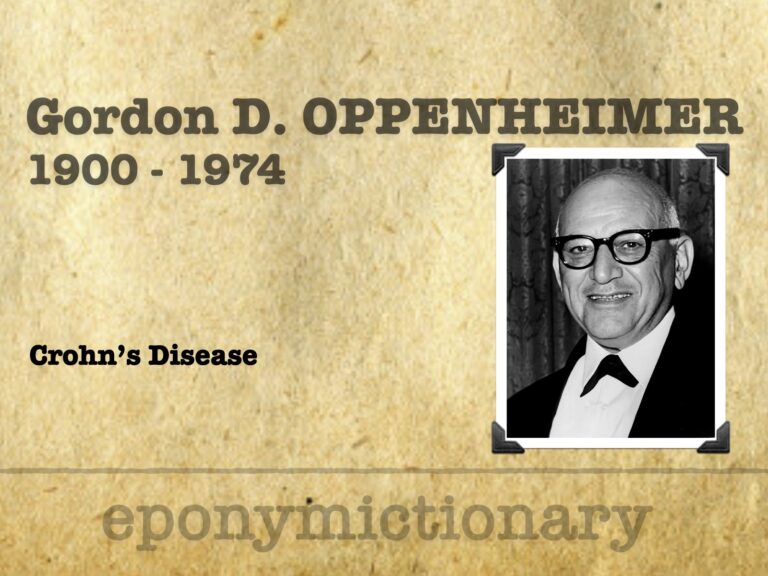
Gordon David Oppenheimer (1900 - 1974) was an American surgeon and urologist.
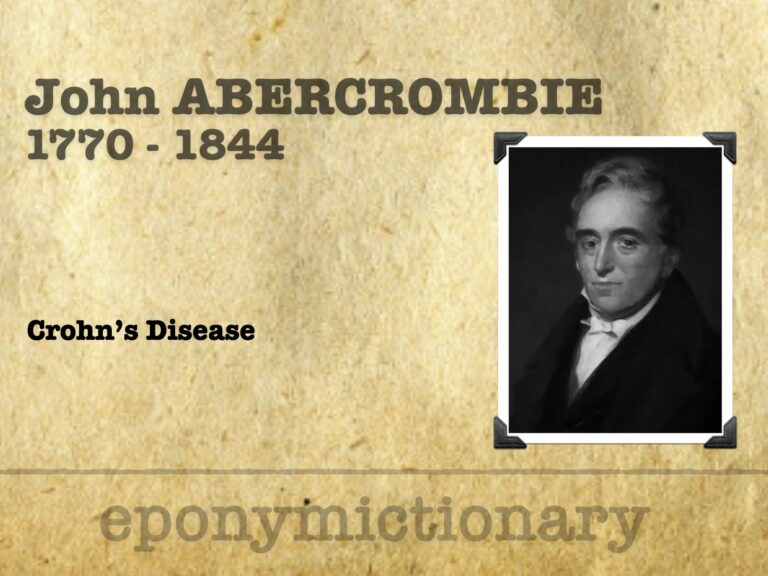
John Abercrombie (1780–1844), Scottish physician, pioneered neuropathology and GI research, and described early cases resembling Crohn’s disease in 1828
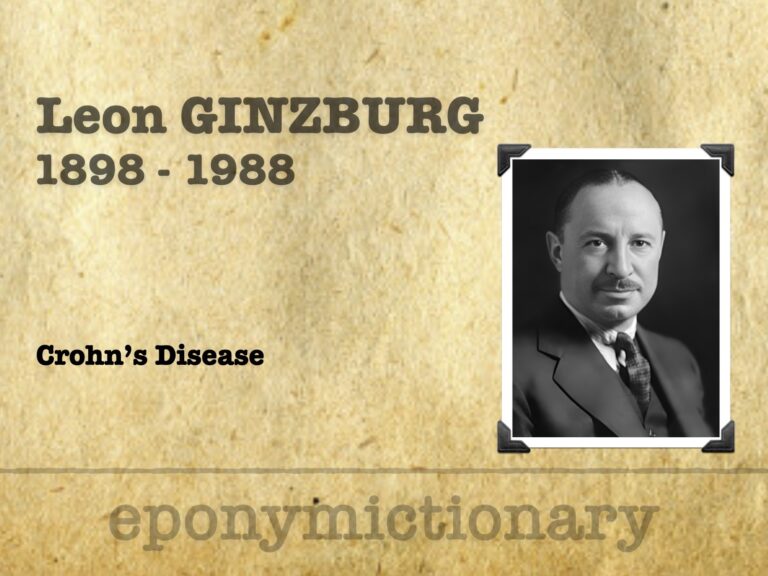
Leon Ginzburg (1898–1988), American surgeon Mount Sinai and Beth Israel; co-describer of regional ileitis (Crohn’s disease).