

Exophthalmos (Proptosis)
Exophthalmos (proptosis) is abnormal eye protrusion, often from Graves disease or orbital lesions. Urgent assessment is needed to prevent vision loss.


Exophthalmos (proptosis) is abnormal eye protrusion, often from Graves disease or orbital lesions. Urgent assessment is needed to prevent vision loss.
Acute dacryocystitis is a painful infection of the nasolacrimal duct, often with swelling, discharge, and risk of abscess or orbital cellulitis.
Corneal foreign bodies present with pain, watering, and irritation. Remove under anaesthesia, exclude penetrating injury, and arrange follow-up.
Bacterial conjunctivitis is common and treatable, but screen for serious infections like gonococcus, meningococcus, and trachoma in high-risk patients.
Acute loss of vision is an ophthalmic emergency. Assess urgently. Persistent or unexplained cases require immediate specialist ophthalmology input.
Acute non-traumatic loss of vision is an ophthalmic emergency. All patients require urgent assessment, and persistent deficits mandate immediate ophthalmology referral.
Chemical eye injuries are emergencies. Immediate irrigation, category 2 triage, and ophthalmology input are critical to preserve vision and minimise damage.

Moritz Roth (1839–1914), Swiss pathologist of Roth Spots. Advanced anatomical teaching and wrote a seminal biography of Vesalius, shaping modern medical historiography

corneal ring at the level of Descemet’s membrane, caused by copper deposition in the cornea. It is a cardinal sign of Wilson’s disease (hepatolenticular degeneration)
Emergency procedure, instructions and discussion: Ocular foreign body removal. Exactly what it says on the tin
Emergency Procedure: Ocular foreign body removal. Exactly what it says on the tin
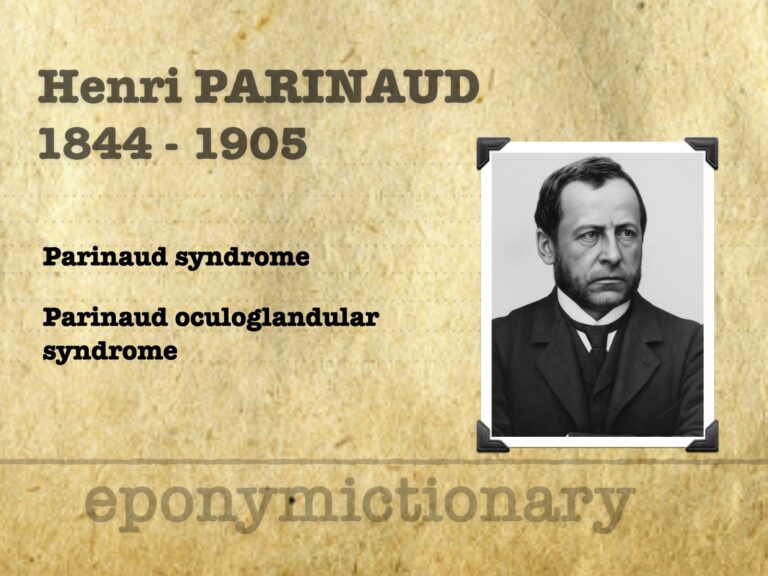
Henri Parinaud (1844-1905) was a French ophthalmologist and neurologist. Parinaud Syndrome (1883) aka Dorsal Midbrain Syndrome