


Ernst Baumann
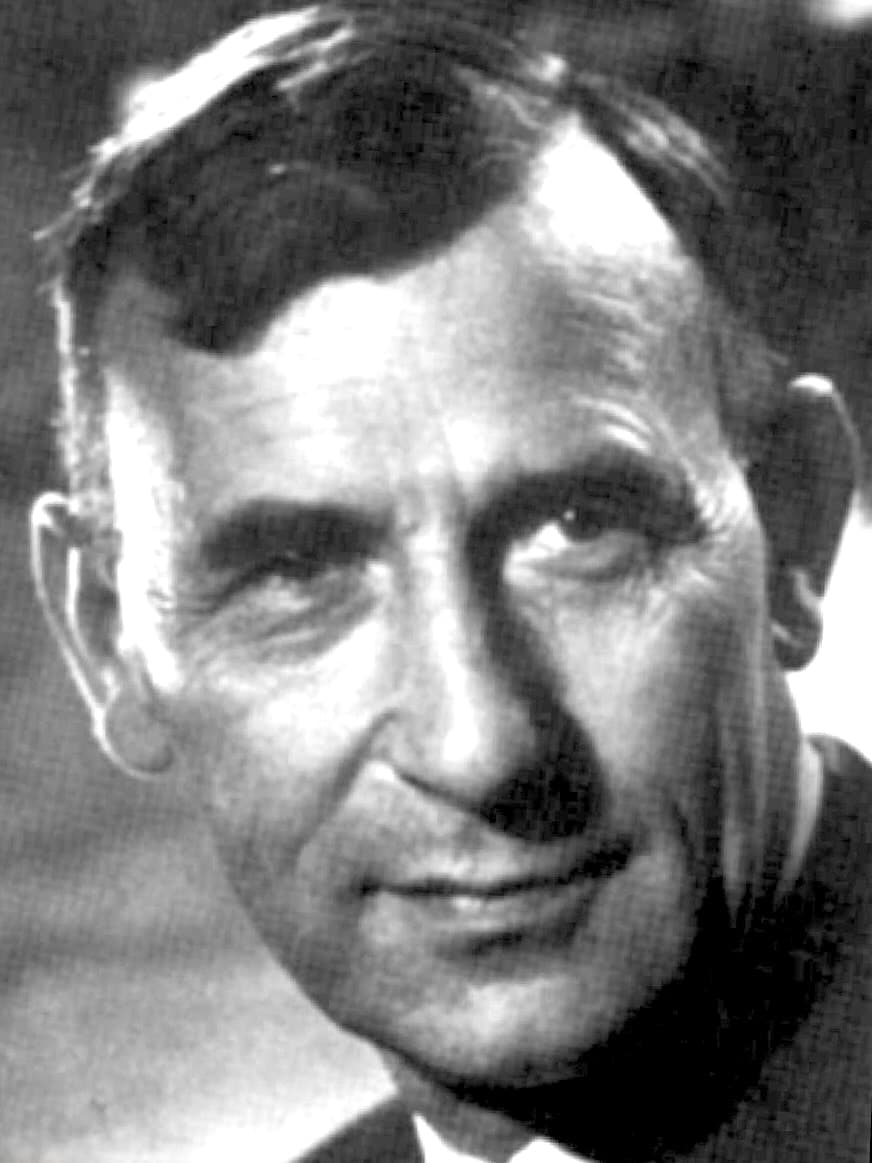
Ernst Baumann (1890-1978) was a Swiss surgeon and traumatologist
His career combined broad hospital practice with investigation of fracture mechanics and skeletal radiology. After training in Bern, Offenbach and Aarau, he became chief physician of the Bezirksspital Langenthal, where he directed surgery while remaining active in internal medicine, obstetrics, gynaecology, radiology and physical therapy.
Baumann became an international authority on injuries of the elbow. His studies of paediatric supracondylar humeral fractures introduced the radiographic measurement now known as the Baumann angle, clarified the relationship between malalignment and cubitus varus, and promoted traction methods designed to avoid the complications of plaster immobilisation.
He published extensively across traumatology, surgery and sports medicine, served as president of the Swiss Society for Trauma Medicine and Occupational Diseases, and was a founding member of the Arbeitsgemeinschaft für Osteosynthesefragen (later becoming the AO Foundation).
Biographical Timeline
- Born August 22, 1890 in Attelwil, Canton Aargau, Switzerland
- 1914–1917 – Undertook surgical training at the Stadtkrankenhaus Offenbach am Main. Completed his medical studies and doctorate at the University of Bern.
- 1917–1924 – Worked as a general practitioner in Rothrist after completing his state examination and postgraduate hospital training in Germany.
- 1924–1926 – Returned to hospital medicine as an assistant to Eugen Bircher (1882–1956) at the Kantonsspital Aarau, where he completed further surgical training.
- 1929 – Published Beiträge zur Kenntnis der Frakturen am Ellbogengelenk. The paper introduced the radiographic measurement later known as the Baumann angle and examined the relationship between fracture alignment and cubitus varus.
- 1928–1960 – Directed the Bezirksspital Langenthal for approximately 32 years. He retained responsibility for surgery, internal medicine, obstetrics and gynaecology and remained closely involved in radiology and physical therapy.
- 1941–1942 – Undertook wartime medical service at a military hospital in Smolensk. His observations of cold injury became the basis of his later habilitation with his monograph Kälteschäden im Kriege
- 1955–1960 – President of the Swiss Society for Trauma Medicine and Occupational Diseases.
- 1957 – Appointed Titularprofessor at the University of Bern.
- 1958 – Listed among the 13 founding members of the Arbeitsgemeinschaft für Osteosynthesefragen, later the AO Foundation.
- 1960 – Retired as chief surgeon at Langenthal after 32 years in the post.
- Died February 1, 1978 in Langenthal, aged 87.
Baumann combined strict surgical discipline with deep humanity, approaching the operating theatre calmly, deliberately and with careful respect for tissues. He enriched medicine and his fellow human beings.
Der Bund 1978
Medical Eponyms
Baumann angle (1929)
The Baumann angle is an anteroposterior radiographic measure of coronal alignment of the paediatric distal humerus. It is used principally to assess reduction of supracondylar humeral fractures and identify residual varus or valgus malalignment.
Baumann originally defined the angle between the longitudinal axis of the humerus and the straight lateral distal metaphyseal or capitellar physeal line. An increased original angle indicates varus alignment and a greater risk of cubitus varus. A complementary measurement taken from a line perpendicular to the humeral shaft is also widely called the Baumann angle, although its numerical value and direction of abnormality are reversed.
1929 — Ernst Baumann (1890–1978) published his original description in Beiträge zur Kenntnis der Frakturen am Ellbogengelenk. Baumann defined angle α between the humeral axis and a straight line passing through the distal lateral metaphyseal border opposite the developing capitellar and lateral trochlear ossification centre.
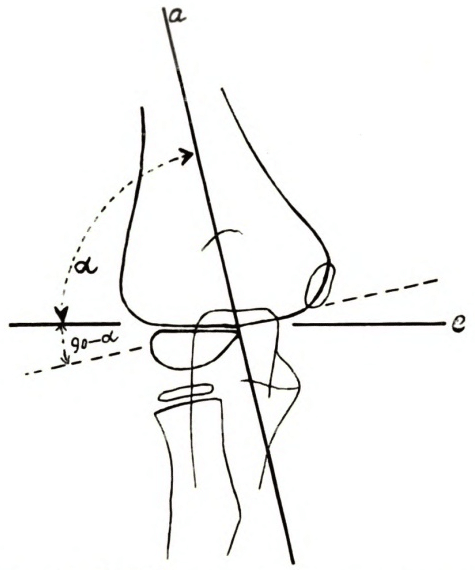
He used the measurement to quantify coronal angulation after supracondylar fracture and to estimate the magnitude of existing or anticipated cubitus varus. Baumann considered approximately 75–80° normal, allowing for minor individual variation, and suggested that the opposite elbow could be radiographed when greater precision was required.
1960 — Baumann revisits elbow-fracture treatment in his publication Zur Behandlung der Knochenbrüche am Ellenbogengelenk. He reiterated the use of radiographic distal-humeral alignment when assessing reduction of fractures around the elbow. Review of Baumann’s publications confirms that his own measurement was the shaft–physeal angle, rather than its smaller complementary angle.
Major Publications
- Untersuchungen uber eine neue Methode zur Erleichterung der Geburt, Inaugural-Dissertation 1916
- Baumann E. Beiträge zur Kenntnis der Frakturen am Ellbogengelenk. Unter besonderer Berücksichtigung der Spätfolgen. I. Algemeines und Fractura supra condylica. Bruns’ Beiträge zur klinischen Chirurgie 1929; 146: 1-50
- Baumann E. Kälteschäden im Kriege In: Schweizer Ärzte an der Ostfront, 1945: 81-107
- Baumann E. Die Drahtzugbehandlung der Knochenbrüche im Oberschenkel. Schweizerische Medizinische Wochenschrift 1947;77:574–576
- Baumann E. Über die Behandlung der Ellenbogengelenksfrakturen [On the treatment of fractures of the elbow joint]. Langenbecks Archiv für Klinische Chirurgie vereinigt mit Deutsche Zeitschrift für Chirurgie. 1960; 295: 300-4.
- Baumann E. Ellbogen In: Spezielle Frakturen- und Luxationslehre II/I
References
Biography
- Prof. Dr. med. Ernst Baumann, Langenthal, zum 80. Geburtstag. Der Bund, Band 121, Nummer 194, 21. August 1970
- Er hat die Medizin und die Mitmenschen bereichert Zum Hinschied von Prof. Dr. med. Ernst Baumann alt Spitalchefarzt Langenthal. Der Bund, Band 129, Nummer 47, 25. Februar 1978
- Acton JD, McNally MA. Baumann’s confusing legacy. Injury. 2001 Jan;32(1):41-3
- AO celebrates birthday of founding father Ernst Baumann, 2022
- Baumann, Ernst. Persönlichkeiten aus der Geschichte der Chirurgie
Eponymous terms
- Williamson DM, Coates CJ, Miller RK, Cole WG. Normal characteristics of the Baumann (humerocapitellar) angle: an aid in assessment of supracondylar fractures. J Pediatr Orthop. 1992 Sep-Oct;12(5):636-9
- Camp J, Ishizue K, Gomez M, Gelberman R, Akeson W. Alteration of Baumann’s angle by humeral position: implications for treatment of supracondylar humerus fractures. J Pediatr Orthop. 1993 Jul-Aug;13(4):521-5
- Biyani A, Gupta SP, Sharma JC. Determination of medial epicondylar epiphyseal angle for supracondylar humeral fractures in children. J Pediatr Orthop. 1993 Jan-Feb;13(1):94-7.
- Silva M, Pandarinath R, Farng E, Park S, Caneda C, Fong YJ, Penman A. Inter- and intra-observer reliability of the Baumann angle of the humerus in children with supracondylar humeral fractures. Int Orthop. 2010 Apr;34(4):553-7.
- Krengel WF 3rd, Wiater BP, Pace JL, Jinguji TM, Bompadre V, Stults JK, Schmale GA. Does using the medial or lateral humeral line improve reliability of Baumann angle measurement on plain x-ray? The effect of humeral length visualized on the x-ray. J Pediatr Orthop. 2012 Jun;32(4):373-7.
Eponym
the person behind the name

MBChB - Liverpool. RMO in Emergency Medicine at Sir Charles Gairdner Hospital, currently soaking up the sun down under. Aiming to pursue a career in anaesthetics.

BA MA (Oxon) MBChB (Edin) FACEM FFSEM. Emergency physician, Sir Charles Gairdner Hospital. Passion for rugby, medical history, medical education, and asynchronous learning #FOAMed evangelist. Editor-in-Chief and Webmaster of Life in the Fast lane, LITFL | On Call 4e| Eponyms | Books | Horology |