


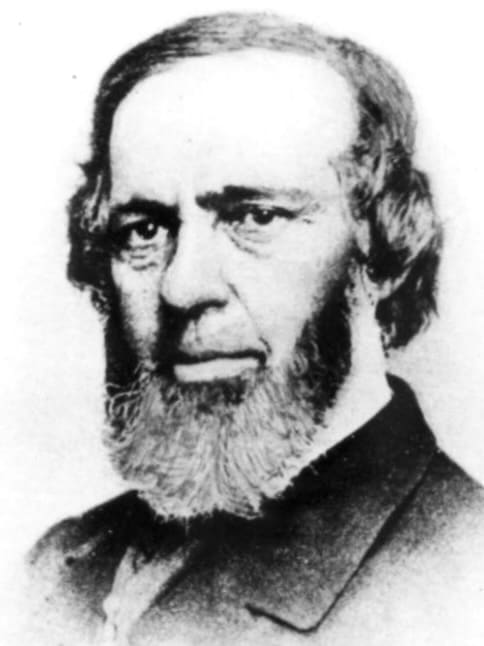
Horace Green (1802-1866) was an American physician
Green was a pioneer of laryngology whose work centred on the diagnosis and treatment of diseases of the throat and air passages. Based in New York, he developed methods of transoral laryngeal instrumentation when available optical techniques rendered examination of the larynx impossible.
Green introduced the sponge-tipped probang for topical application of medication to the larynx and introduced catheterisation of the trachea and bronchi. His innovations sparked controversy, especially over the practicality of blind airway instrumentation and the therapeutic value of silver nitrate. Although many of his treatment claims were overstated, his work contributed to the development of transoral airway examination and intervention.
Green has occasionally been credited with performing the first direct laryngoscopy. In 1845, he successfully removed a laryngeal polyp after briefly visualising the tumour during coughing and tongue depression. This should probably be described as an early example of direct transoral laryngeal surgery, prior to the development of mirror laryngoscopy.
Biographical Timeline
- Born on December 24, 1802 in Chittenden, Vermont, the youngest son of a family descended from early Massachusetts settlers. His father had served in the American Revolutionary War.
- 1824 – Graduated in medicine from the medical school at Castleton, Vermont, associated with Middlebury College. Studied under his elder brother, Dr Joel Green, with whom he later practised in Rutland.
- 1830–1831 – Attended medical lectures at the University of Pennsylvania in Philadelphia before returning to practise in Rutland.
- 1835 – Moved to New York City, where he established a medical practice.
- 1838 – Travelled to Europe, visiting London and Paris. Returned to New York and began investigating diseases of the throat and air passages, particularly methods of applying medication directly to the laryngeal mucosa.
- 1840 – Presented his method of introducing a sponge-tipped probang into the larynx to the New York Medical and Surgical Society. The claims encountered considerable scepticism.
- 1840-1843 – Served as professor of medicine and president of Castleton Medical College
- 1846 – Published A treatise on diseases of the air passages, describing the transoral application of silver nitrate to the pharynx, larynx and trachea.
- 1849 – Published Observations on the pathology of croup, advocating topical medication for inflammatory and membranous diseases of the upper airway.
- 1850 – Helped found the New York Medical College, becoming professor of the theory and practice of medicine and president of its faculty and board of trustees.
- 1852 – Published On the surgical treatment of polypi of the larynx and oedema of the glottis, describing transoral treatment and removal of laryngeal lesions before the introduction of clinical laryngoscopy.
- 1854 – Co-founded the American Medical Monthly
- 1860 – Retired from active teaching at New York Medical College and was appointed emeritus professor.
- 1864 – Published A practical treatise on pulmonary tuberculosis, examining the pathology and treatment of pulmonary consumption.
- Died on November 29, 1866 at his residence in Sing Sing (now Ossining), New York, aged 63, following a prolonged illness.
Medical Eponyms
Green probang (1840–1859)
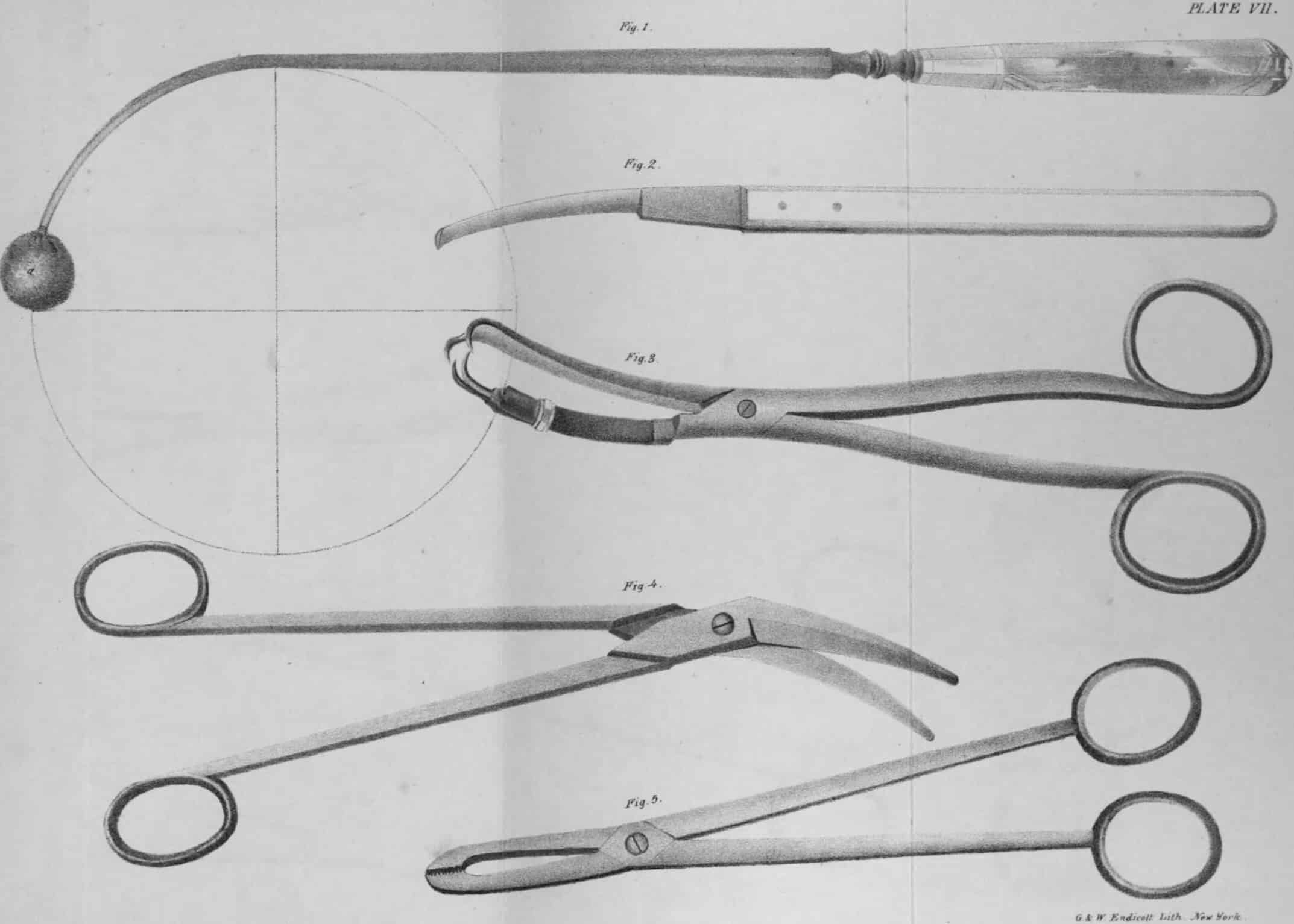
The Green probang was a curved whalebone applicator approximately ten inches (25 cm) long, with a small round sponge secured to its distal tip. Green recommended a curvature approximating a quarter-circle of four inches in diameter, allowing the instrument to be directed over the epiglottis and towards the glottic opening.
The sponge was saturated with medication, principally nitrate of silver, and introduced transorally for topical treatment of the laryngeal mucosa. Green advised gradual acclimatisation of patients to pharyngeal and laryngeal instrumentation before attempting passage through the glottis.
1840 – Green presented his method of transoral laryngeal medication before the New York Medical and Surgical Society. His assertion that the sponge-tipped instrument could pass through the glottis encountered considerable scepticism.
1846 – Green published A treatise on diseases of the air passages, describing the design and application of the probang for topical medication of the pharynx, larynx and trachea. The instrument formed part of a broader collection of surgical appliances for treating diseases of the upper air passages.
1854 – Green then introduced flexible hollow catheters, claiming that medicated solutions could be delivered into the trachea, bronchi and pulmonary cavities. His presentation to the New York Academy of Medicine in December prompted a formal investigation of these claims.
1859 – Harper’s Weekly published Dr. Horace Green and His Method, describing and illustrating his instruments and their application. The article reflected the considerable public and professional attention surrounding his methods of airway instrumentation.

Green’s work demonstrated the possibilities of transoral laryngeal instrumentation before the development of reliable laryngoscopic visualisation. Although the feasibility of entering the larynx became established, his claims for bronchial catheterisation and the therapeutic benefits of topical caustics are probably overstated.
The Green controversy (1846–1856)
Green’s claims provoked controversy over whether instruments could be passed through the glottis and whether topical medication could effectively treat diseases of the lower respiratory tract. Critics questioned whether the sponge probang entered the trachea or passed into the oesophagus. However, Green maintained that transoral catheterisation allowed the administration of medication directly into the bronchial tree.
1855 – In On injection of the bronchial tubes, and tubercular cavities of the lungs, Green challenged his critics and described experiments intended to demonstrate successful tracheal catheterisation. These included patients breathing through a hollow catheter, extinguishing a flame with expired air and inflating an attached bladder.
The New York Academy of Medicine investigated his claims. The majority questioned the reliability of the sponge probang’s passage beyond the vocal cords, while the minority defended aspects of Green’s technical achievements. During the debate on July 18, 1855, the Academy declined to adopt either report and resolved to lay the matter on the table.
1856 – Green published Bronchial injections, reporting 106 patients treated by catheter-directed medication. Although he claimed substantial clinical benefit, 14 of 32 patients with advanced pulmonary tuberculosis had died. He acknowledged uncertainty about the durability of apparent recoveries and described complications associated with laryngeal spasm and instrumentation.
The controversy raised two questions. Was transoral airway instrumentation feasible and what is the clinical effectiveness of administering topical caustics to the respiratory tract.
Key Medical Contributions
Transoral removal of laryngeal growths (1845–1852)
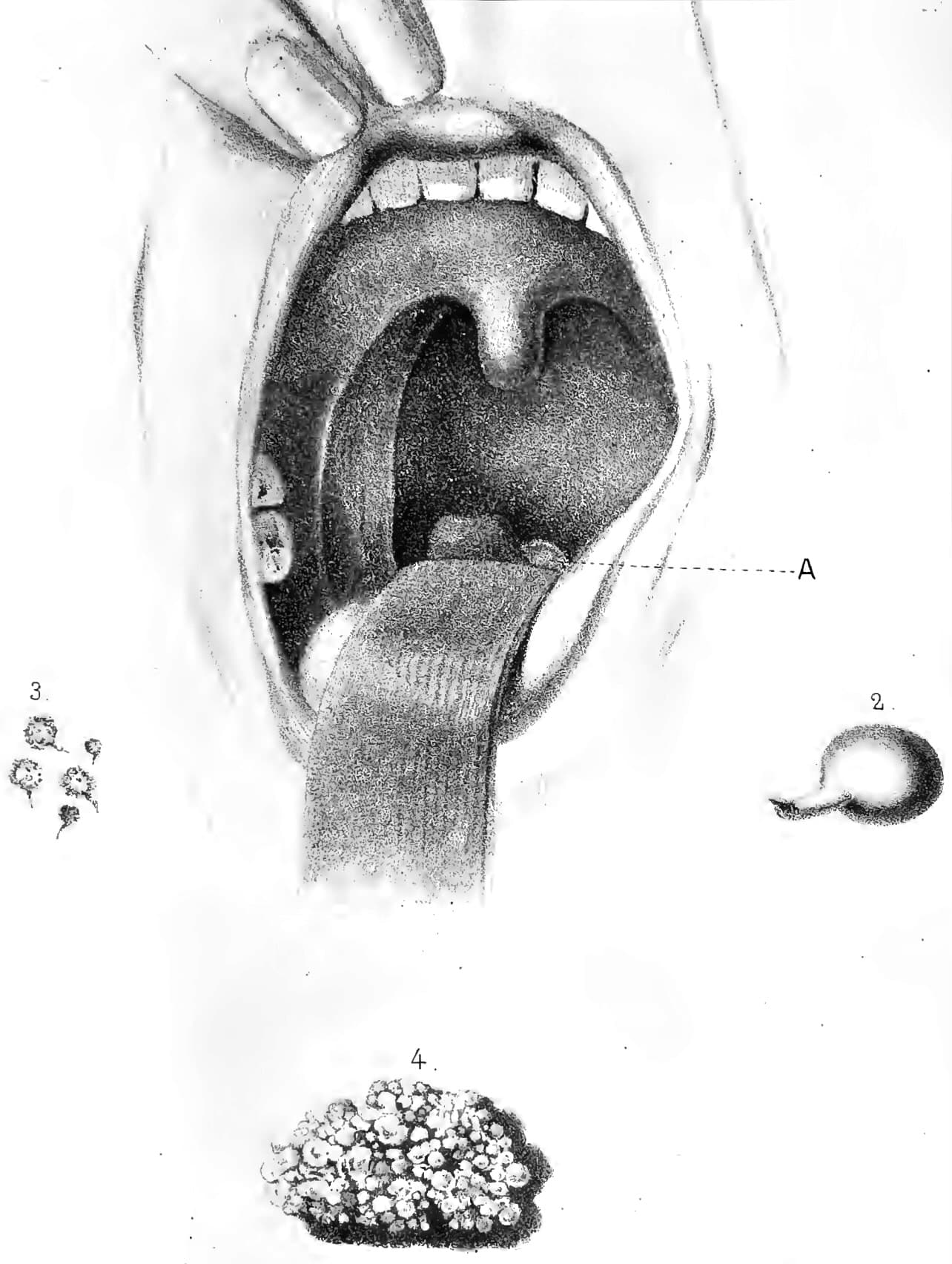
In September 1845, Green examined an eleven-year-old girl (Miss K.) with progressive hoarseness, dyspnoea and recurrent suffocative episodes. During examination with a bent tongue spatula, coughing briefly exposed a mobile polyp at the glottic opening. Green subsequently removed the growth transorally using a double hook and probe-pointed knife to grasp the tumour and divide its pedicle, without performing laryngotomy. He reported rapid improvement in respiration and restoration of the patient’s voice.
In 1846, Green treated a second patient with severe aphonia and respiratory obstruction using repeated applications of silver nitrate through a sponge probang. He described the removal and expectoration of more than thirty small, cauliflower-like laryngeal excrescences.
These experiences formed the basis of his 1852 monograph, On the Surgical Treatment of Polypi of the Larynx, and Oedema of the Glottis, in which he advocated transoral examination and intervention for selected laryngeal lesions.
Oedema glottidis and upper airway obstruction (1851–1852)
Green investigated the treatment of acute laryngeal oedema, reporting patients with severe stridor, dysphonia and impending airway obstruction. In 1852, he described several cases treated by repeated application of concentrated silver nitrate to the swollen epiglottis and arytenoepiglottic tissues, claiming rapid relief of respiratory symptoms. His reports included an episode of severe airway obstruction in January 1851, managed with topical cauterisation and additional medical treatments.
Green compared his results with contemporary approaches involving scarification, depletion and tracheotomy, acknowledging the importance of surgical airway intervention when obstruction threatened suffocation. Although he strongly advocated topical cauterisation, the effectiveness of this treatment cannot be established from his uncontrolled observations, particularly given the concurrent use of other therapies.
Major Publications
- Green H. A treatise on diseases of the air passages. 1846 [2e 1849, 3e 1852, 4e 1858]
- Green H. Observations on the pathology of croup. 1849
- Green H. An introductory address: delivered before the students and trustees of the New-York Medical College, October 28, 1850
- Green H. The prospective progress of medicine in America: a valedictory address delivered before the graduating class at the first annual commencement of the New-York Medical College 1851
- Green H. On the surgical treatment of polypi of the larynx and oedema of the glottis. 1852
- Green H. On the subject of priority in the medication of the larynx and trachea. American Medical Monthly, April 1854
- Green H. Remarks on croup and its treatment. 1854
- Green H. On injection of the bronchial tubes, and tubercular cavities of the lungs. American Medical Monthly, January 1855 […and discussion]
- Green H. Epidemics and quarantine. 1855
- Green H. Report on the use and effect of applications of nitrate of silver to the throat. 1855
- Green H. Bronchial injections : a report, with a statistical table, of one hundred and six cases of pulmonary diseases treated by bronchial injections. 1856
- Green H. Lesions of the epiglotitc cartilage. 1857
- Green H. On the introduction of the sponge-armed probang into the larynx and trachea 1857
- Green H. Selections from favorite prescriptions of living American practitioners. 1858 [2e 1860, 3e 1872]
- Green H. Observations on the pathology of croup. 1859
- Green H. On the Diffiiculties and Advantages of Catheterism of the Air-Passages of the Chest. Chic Med J. 1860 Mar;17(3):140-159
- Green H. A practical treatise on pulmonary tuberculosis : embracing its history, pathology, and treatment. 1864
References
Biography
- Death of Horace Green MD. NYT Dec 3, 1866
- Death of Dr. Horace Green. New York medical journal 1867; 4(22): 316-318
- Wright J. Horace Green in: A history of laryngology and rhinology 1914: 200-202
- Horace Green. American Medical Biographies
Eponymous terms
- Senn L. Observation de trachéotomie. Journal des progrès des sciences et institutions médicales en Europe, en Amérique, etc 1829; 17(5): 226-236
- Dr. Horace Green and His Method. Harper’s Weekly, 1859; 3(110): 88-90.
- Miller WS. Horace Green and His Probang. Bulletin of the Johns Hopkins Hospital 1919; 30(342): 245-252
- Snyder C. The investigation of Horace Green. Laryngoscope. 1975 Dec;85(12 pt 1):2012-22.
- Rutkow IM. Horace Green’s probang. Arch Surg. 2000 Aug;135(8):991.
- Zeitels SM. Horace Green: The Father of American Laryngology and Tracheo-Bronchology. ABEA
Eponym
the person behind the name

BA MA (Oxon) MBChB (Edin) FACEM FFSEM. Emergency physician, Sir Charles Gairdner Hospital. Passion for rugby, medical history, medical education, and asynchronous learning #FOAMed evangelist. Editor-in-Chief and Webmaster of Life in the Fast lane, LITFL | On Call 4e| Eponyms | Books | Horology |