


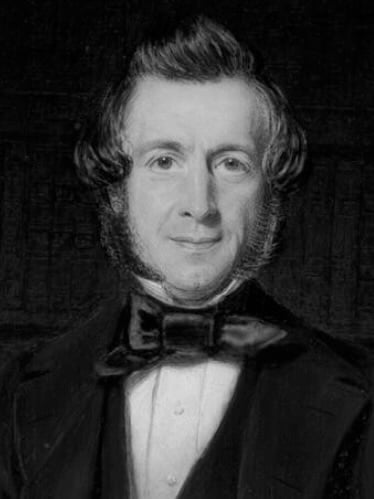
John Avery (1807-1855) was an English surgeon
Avery trained in England and Paris, and briefly served as a military surgeon during the Polish November Uprising before returning to London to establish his surgical career.
Avery developed an illuminating apparatus for examining the ear, throat and internal body cavities. The device combined artificial illumination, a perforated reflecting mirror and specialised specula and was demonstrated in 1846 and shown at the Great Exhibition of 1851. Avery’s lamp and reflector did not become widely established but was an important development in the use of reflected light for internal examination.
Avery contributed to the development of cleft palate repair, publishing clinical observations and operative refinements in 1850 and 1852. His publications describe anatomical dissection, reduction of muscular tension and postoperative management.
Biographical Timeline
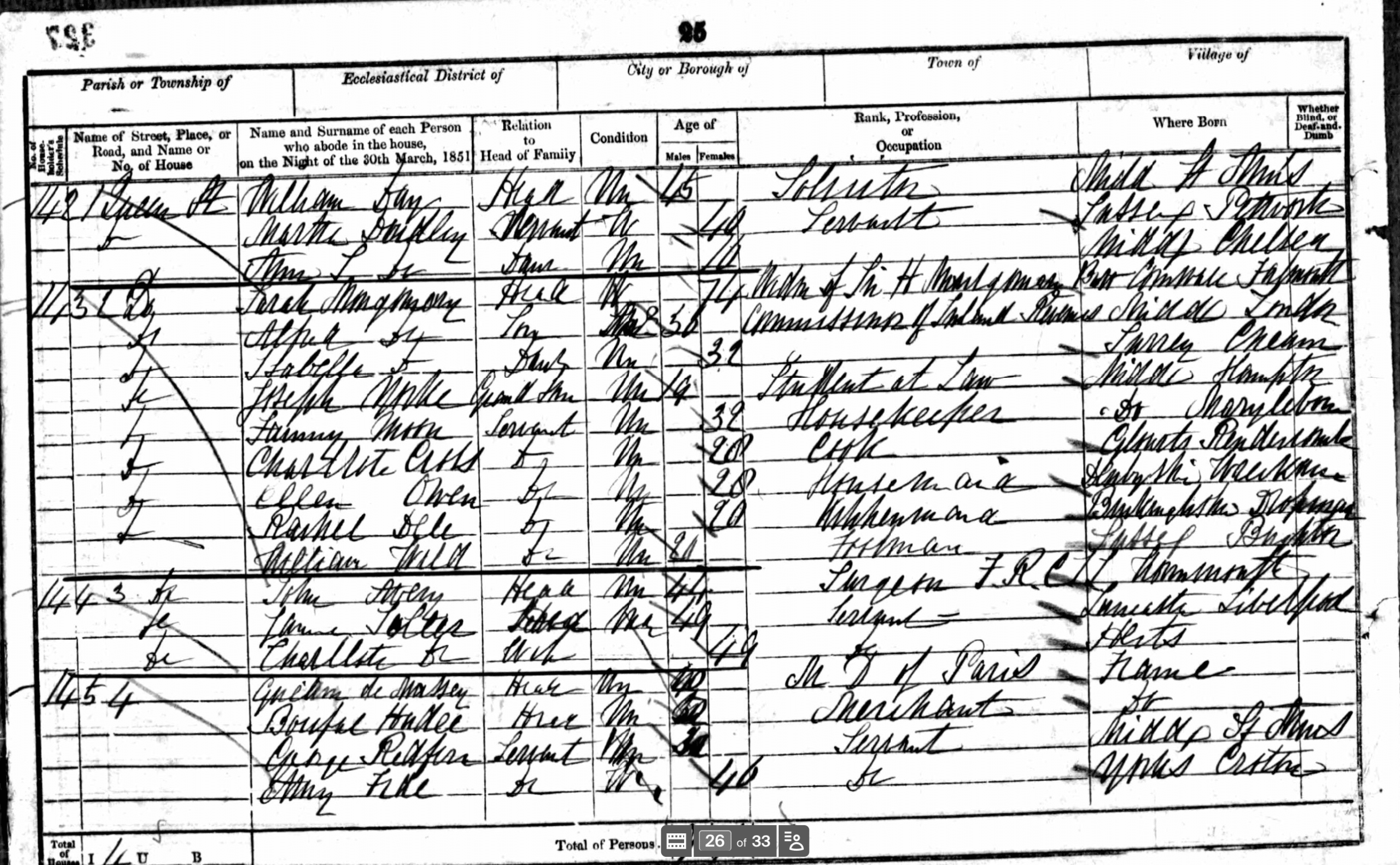
- 1807 – Born in Monmouth, Monmouthshire. His 1851 census entry records his age as 44, and obituary as aged 48 at his death on March 5, 1855. His precise date and place of birth remain unconfirmed.
- 1829 – Member of the Royal College of Surgeons of England (MRCS).
- 1831 – Awarded MD in Paris. Served as a surgeon with Polish forces during the November Uprising; captured and imprisoned before returning to England.
- 1843 – Awarded honorary Fellowship of the Royal College of Surgeons (FRCS).
- 1844–1846 – Developed illuminating instruments incorporating reflectors, lamps and interchangeable specula for examination of internal body cavities.
- 1846 – Demonstrated his illuminating instruments at the Provincial Medical and Surgical Association meeting in Norwich.
- 1850 – Published three cases of successful cleft palate repair in The Lancet, describing his application and refinement of the muscle-division technique advocated by William Fergusson.
- 1851 – Avery’s lamp and reflector were exhibited by John Weiss & Son at the Great Exhibition in London.
- 1852 – Published four additional cleft palate cases in The Lancet, describing further operative refinements and outcomes.
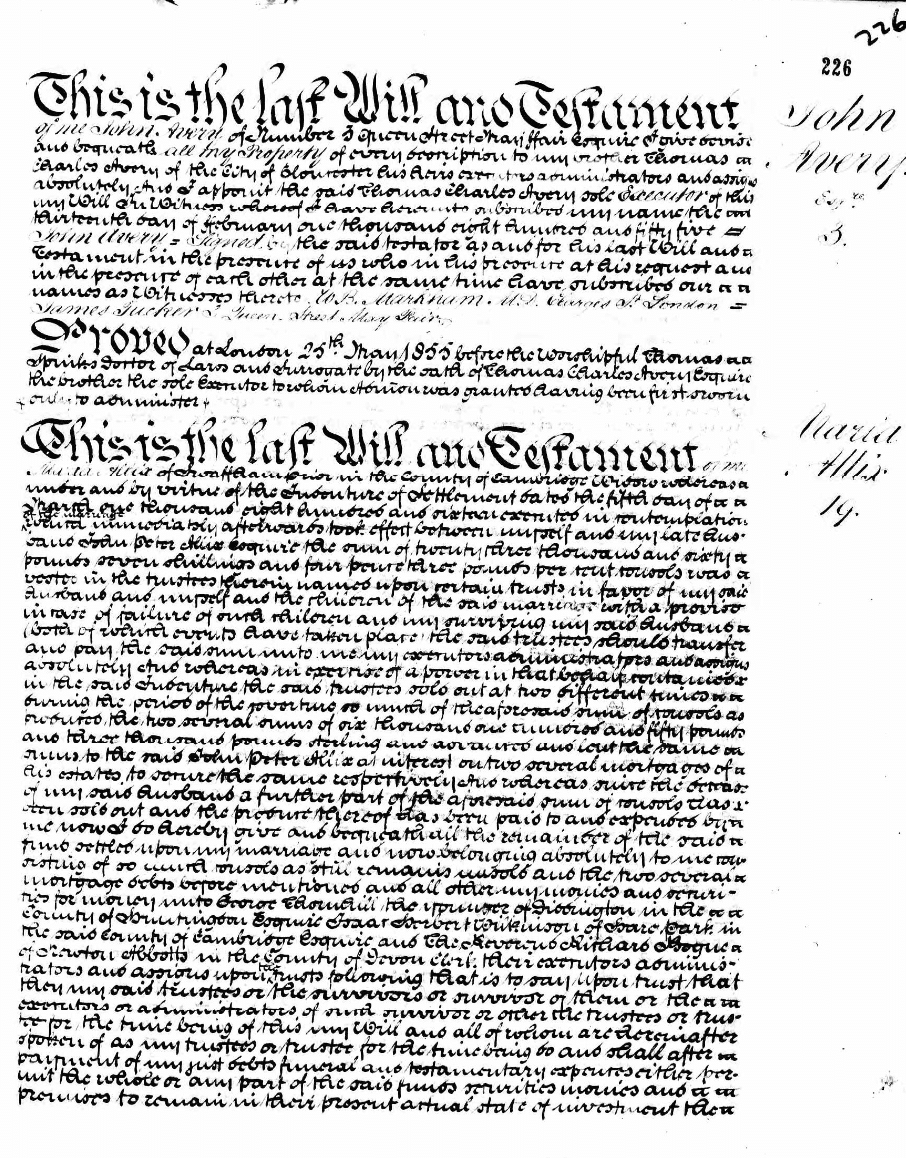
- Died on March 5, 1855 aged 48, after a prolonged illness.
Medical Eponyms
Avery’s lamp and reflector / Avery’s laryngoscope
Avery’s lamp and reflector refers to the illuminating apparatus developed by Avery for examining the ear, throat, and other internal passages. In laryngoscopy histories it is often referred to as Avery’s laryngoscope, although evidence suggests it was a broader ‘lamp, reflector, and specula‘ rather than a single dedicated laryngeal instrument.
1846 – Avery gave an account of his instruments at the Provincial Medical and Surgical Association meeting in Norwich. He described his lamp, reflector and specula and an improved method by which deep urethral stricture could be rendered visible. Those present then inspected the instruments in an adjoining room and witnessed their effects “in facilitating the examination of the glottis.”
1851 – Avery’s apparatus was exhibited by Weiss & Son at the Great Exhibition, London.
Avery’s lamp and reflector for examining the ear, throat, and different canals of the body. The peculiar features of this apparatus are, the employment of a lamp and mirror with an opening in the centre, which enables the operator to look immediately upon the object: and the use of gazeine, in the lamp, which gives a more brilliant light than can be obtained either from oil or from a candle: to this is added the necessary tubes, specula, &c.
Weiss & Son, 1851
1860 – In response to discussions of the origins of the laryngoscope, John Weiss & Son wrote to The Lancet that, “as long as fourteen years ago,” they had made an instrument “on exactly the same principle” for the late Mr Avery of Charing Cross Hospital.
1863 – In Weiss’ Illustrated Catalogue, “Avery’s lamp and reflector” continued to appear among instruments for the ear and other cavities, alongside related Avery specula/canulae.
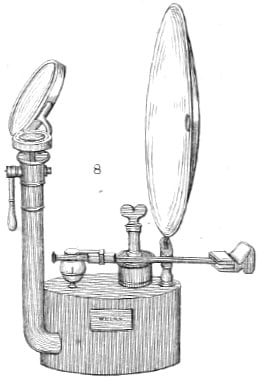
1865 – Sir Morell Mackenzie (1837-1892) included “Avery’s Laryngoscope” in his historical review and reproduced an engraving of the apparatus. He described a perforated circular reflector mounted on a frontal pad, a lamp, and a speculum bearing an angled laryngeal mirror.
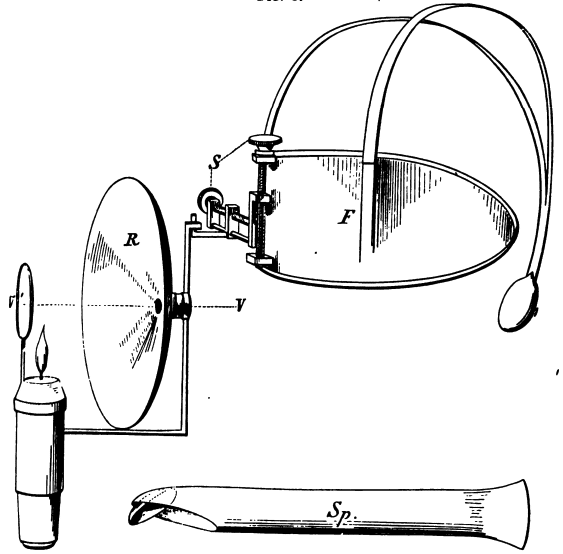
Mackenzie regarded the instrument as ingenious and notably advanced in principle, but cumbersome in practice. He thought the bulk of the apparatus and irritation caused by the speculum probably explained why Avery’s attempts did not establish a usable method of clinical laryngoscopy.
Key Medical Contributions
Cleft palate surgery (1850–1852)
In 1850 Avery published Illustrations of the successful treatment of cleft palate advocating the operative technique developed by William Fergusson (1808–1877). The procedure involved dividing the levator veli palatini and palatopharyngeus muscles, and occasionally the palatoglossus, to reduce muscular tension on the soft palate and facilitate approximation of the cleft margins. Avery emphasised careful anatomical dissection, minimal tissue injury and tension-free suturing. In more extensive defects, he incorporated mobilisation of the palatal tissues from the underlying bone, acknowledging the earlier contributions of Jonathan Mason Warren (1811–1867).
In 1852 Avery reported four additional cases, providing operative details and postoperative observations. He described improved palatal union, swallowing and speech, although residual openings and delayed healing occurred in some patients. His reports highlighted the importance of reducing muscular traction, preserving tissue viability and maintaining adequate postoperative nutrition.
Avery promoted an anatomical approach to cleft palate repair at a time when the operation remained technically demanding and its effectiveness was disputed.
Major Publications
- Avery J. Illustrations of the successful treatment of cleft palate by the division of the levator-palati, palato pharyngeus, & sometimes the palatoglossus muscles. Lancet 1850; 56(1412): 337-339
- Avery J. Illustrations of the Successful Treatment of Cleft Palate. Lancet. 1852; 60(1506): 29-31
References
Biography
- The late Mr Avery. Lancet 1855; 65(1647): 331-332
- Yearsley M. John Avery (1807–1855). Proceedings of the Royal Society of Medicine. 1913;6(Sect Hist Med): 240-242.
Eponymous terms
- Report of the fourteenth anniversary meeting of the Provincial Medical & Surgical Association, held at Norwich, Aug. 19 and 20, 1846: 65-66
- Weiss & Son. Great Exhibition illustrated catalogue. 1851: 631a: 478
- Weiss J & Son. The Laryngoscope. Lancet. 1860 Jun 16:609.
- Yearsley J. The History of the Laryngoscope. Medical Circular. 1862: 10, 24, 40
- Avery’s lamp in: A catalogue of surgical instruments, apparatus, appliances. 1862: Plate XXI
- Mackenzie M. The Use of the laryngoscope in diseases of the throat. 1865
Eponym
the person behind the name

BA MA (Oxon) MBChB (Edin) FACEM FFSEM. Emergency physician, Sir Charles Gairdner Hospital. Passion for rugby, medical history, medical education, and asynchronous learning #FOAMed evangelist. Editor-in-Chief and Webmaster of Life in the Fast lane, LITFL | On Call 4e| Eponyms | Books | Horology |