


Paediatric Intubation Checklist
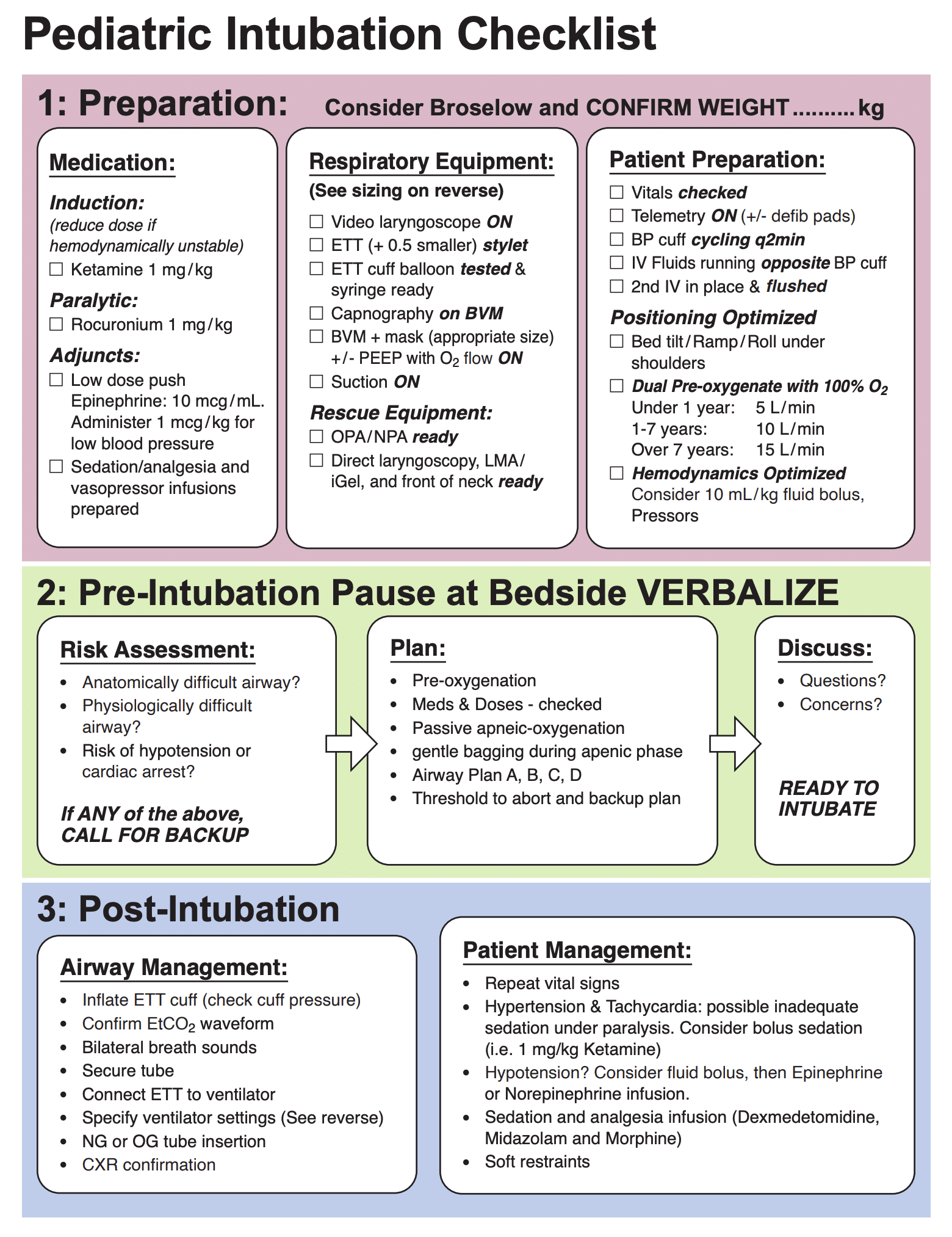
Emergency tracheal intubation in children combines technical, physiological and cognitive challenges. Limited oxygen reserve, high metabolic demand and weight-dependent equipment and medication choices mean that hypoxaemia and haemodynamic deterioration can develop rapidly. Careful preparation and a shared team plan are therefore essential.
This Paediatric Intubation Checklist is a rapid cognitive aid for clinicians already trained in paediatric emergency airway management. It supports consistent preparation, team communication and early post-intubation care; it is not a comprehensive airway manual or a substitute for clinical expertise.
The checklist was developed through collaboration between paediatric emergency physicians, emergency physicians, anaesthetists, respiratory therapists and educators across British Columbia, Canada. It follows the same three-phase structure as the Adult Intubation Checklist while incorporating the weight-based equipment, physiological priorities and ventilation considerations specific to children.
Why the paediatric checklist is different
Confirm weight first. Equipment size, medication dose and initial ventilator settings depend on an accurate or appropriately estimated weight.
Anticipate physiological difficulty. Hypoxaemia, hypotension and peri-intubation cardiac arrest may present a greater immediate threat than difficult laryngoscopy. Optimise oxygenation and haemodynamics before induction whenever time permits.
Plan ventilation during the apnoeic phase. Controlled, gentle bag-mask ventilation may be appropriate when clinically necessary to limit hypoxaemia. The decision should account for aspiration risk, airway obstruction and the child’s physiological reserve.
Continue the plan after tube placement. Confirmation and securement of the tube, lung-protective ventilation, analgesia, sedation and haemodynamic reassessment are integral parts of the procedure rather than separate later tasks.
Paediatric airway reference guide
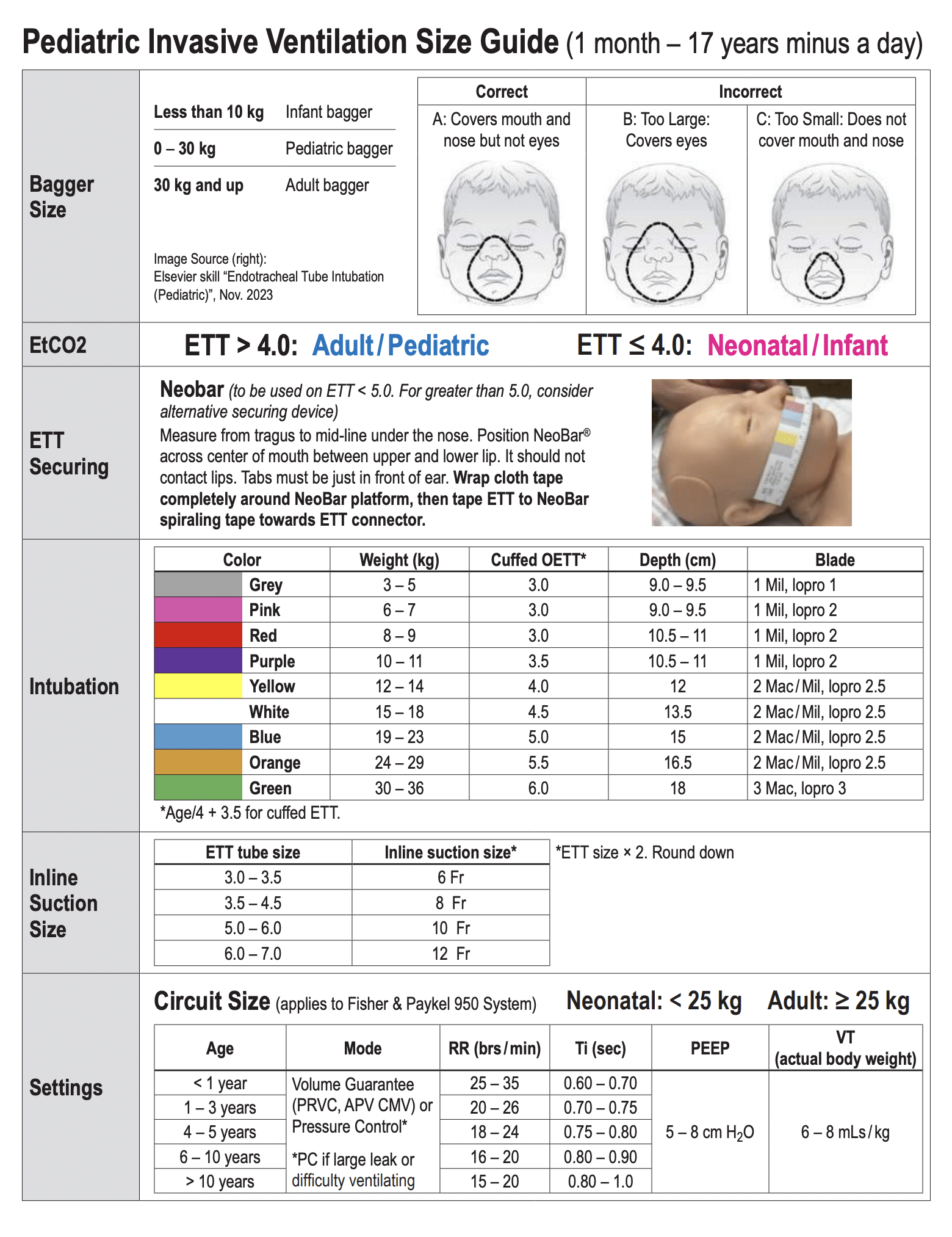
The accompanying Paediatric Airway Reference Guide is designed for use alongside the checklist. It consolidates commonly required weight-based information, including bag-mask and endotracheal tube size, tube insertion depth, laryngoscope blade selection, capnography and suction equipment, tube securement and suggested initial ventilator settings for children from one month to adolescence.
The values provide a rapid bedside starting point and should be adjusted for the child’s anatomy, physiology, clinical response, local equipment and institutional protocols.
No single checklist or sizing guide will suit every emergency department. Institutions should review and adapt these resources to local medications, equipment, staffing, retrieval pathways and paediatric airway expertise.
Paediatric Intubation Checklist and Paediatric Airway Reference Guide [PDF]
Further reading
CLINICAL CASES
Resus Room Reflection

Dr Neil Long BMBS FACEM FRCEM FRCPC. Emergency Physician at Kelowna hospital, British Columbia. Loves the misery of alpine climbing and working in austere environments (namely tertiary trauma centres). Supporter of FOAMed, lifelong education and trying to find that elusive peak performance.