
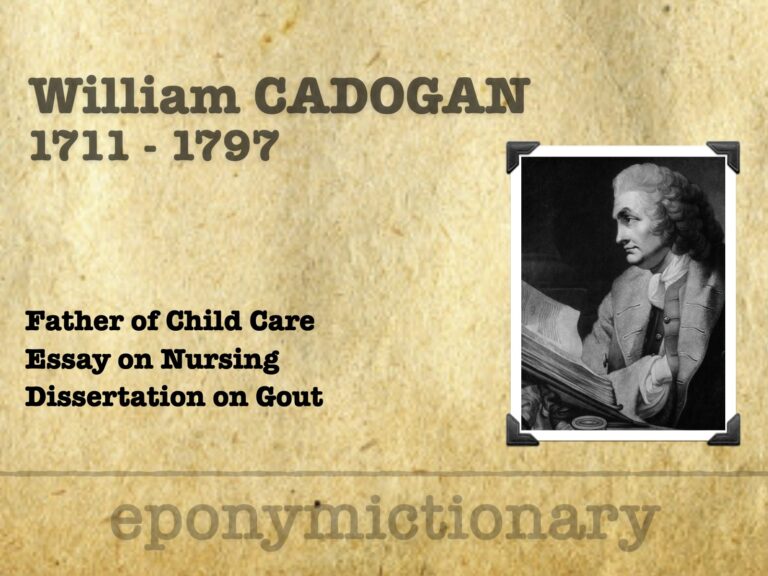
William Cadogan
William Cadogan (1711–1797), physician-reformer; wrote the 1748 Essay on Nursing and a contentious 1771 gout treatise; pioneer of childcare and lifestyle medicine

William Cadogan (1711–1797), physician-reformer; wrote the 1748 Essay on Nursing and a contentious 1771 gout treatise; pioneer of childcare and lifestyle medicine

Giovanni Mingazzini (1859-1929) Founder of the Roman School of Neurology; described lenticular hemiparesis, Mingazzini test, and Mingazzini field; pioneer in aphasia and cerebellar anatomy.
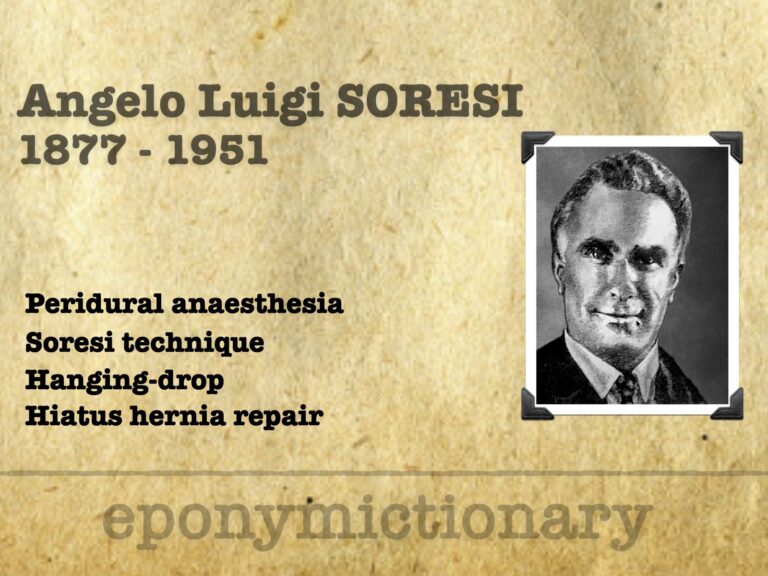
Angelo Luigi Soresi (1877–1951), Italian-born American surgeon who described peridural (epidural) anaesthesia and an early “hanging drop” endpoint for locating the epidural space (1932).

James Sherren (1872-1945) British General surgeon. Eponym: Sherren's triangle - area of hyperaesthesia associated with appendicitis
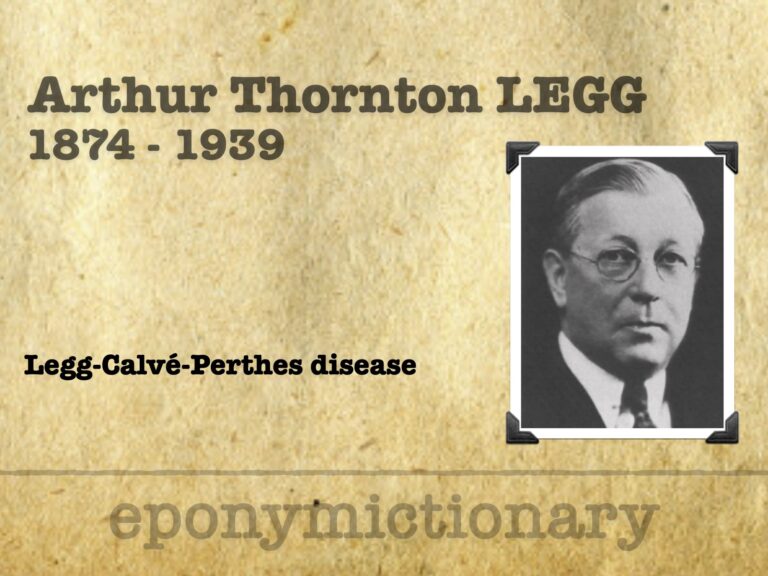
Arthur Thornton Legg (1874–1939), American orthopaedic surgeon, described Legg–Calvé–Perthes disease, clarifying its non-tuberculous origin
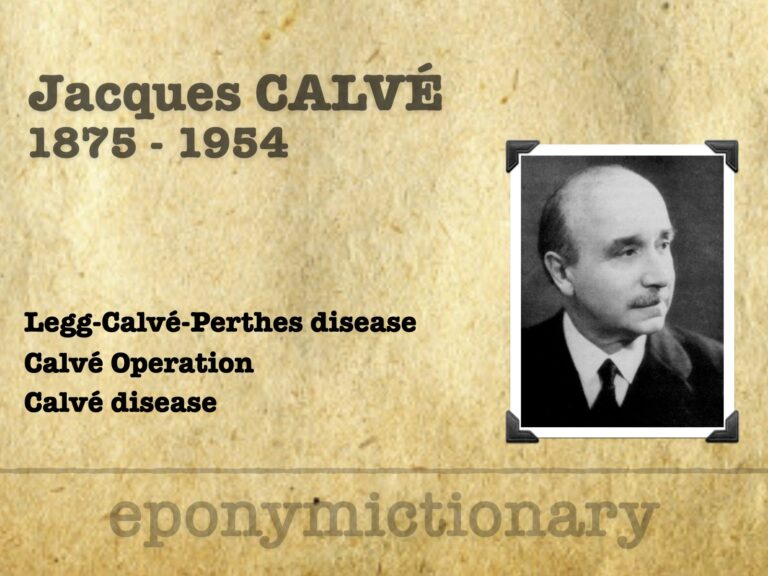
Jacques Calvé (1875–1954), French orthopaedist. Defined vertebra plana, advanced spinal TB care, and described Legg–Calvé–Perthes disease
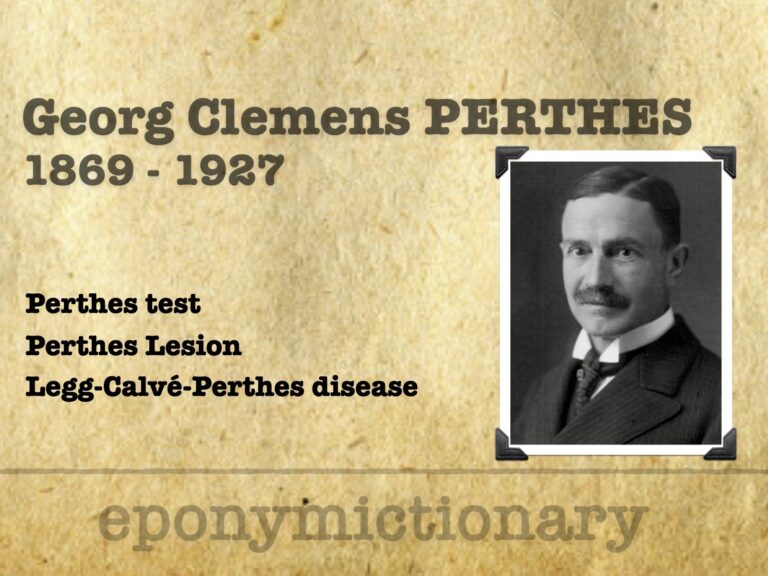
Georg Perthes (1869–1927), German surgeon. Described Perthes’ test for varicose veins (1895) and arthritis deformans juvenilis, later known as Perthes disease (1910)
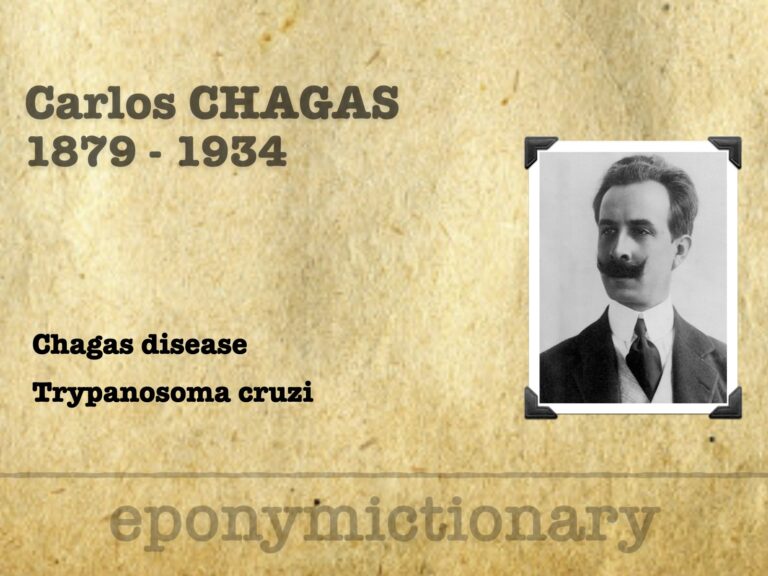
Carlos Chagas (1879–1934), Brazilian physician–scientist who identified Trypanosoma cruzi and described Chagas disease (1908–1909).

Tardive dyskinesia is a chronic, often permanent, hyperkinetic movement disorder caused by dopamine-blocking drugs—preventable with early detection and VMAT2 inhibitors.
Transient global amnesia (TGA) is a clinical syndrome of reversible anterograde amnesia. It is an isolated disorder of memory function, generally resolving within 24 hours with a benign prognosis.
Amaurosis fugax is sudden, painless, transient monocular vision loss from retinal ischaemia—an emergency signalling high stroke risk, requiring urgent carotid evaluation and stroke unit admission
TIA is a brief neurological event with high stroke risk. Urgent imaging, specialist review, and early treatment are critical to prevent ischaemic stroke