

Churg–Strauss syndrome
EGPA (Churg–Strauss syndrome): rare ANCA-associated vasculitis with asthma, eosinophilia, and systemic granulomatous inflammation of small vessels


EGPA (Churg–Strauss syndrome): rare ANCA-associated vasculitis with asthma, eosinophilia, and systemic granulomatous inflammation of small vessels
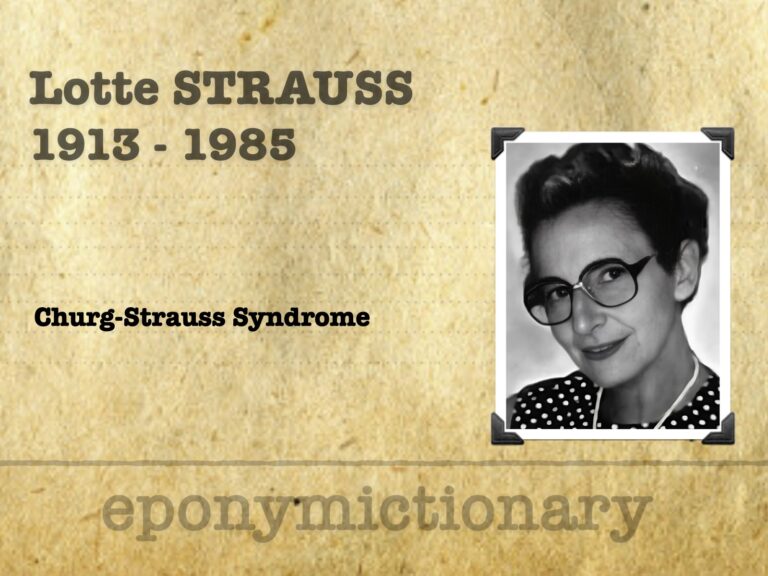
Lotte Strauss (1913–1985), pioneer in paediatric and perinatal pathology, co-described Churg–Strauss syndrome and helped found the Society for Pediatric Pathology
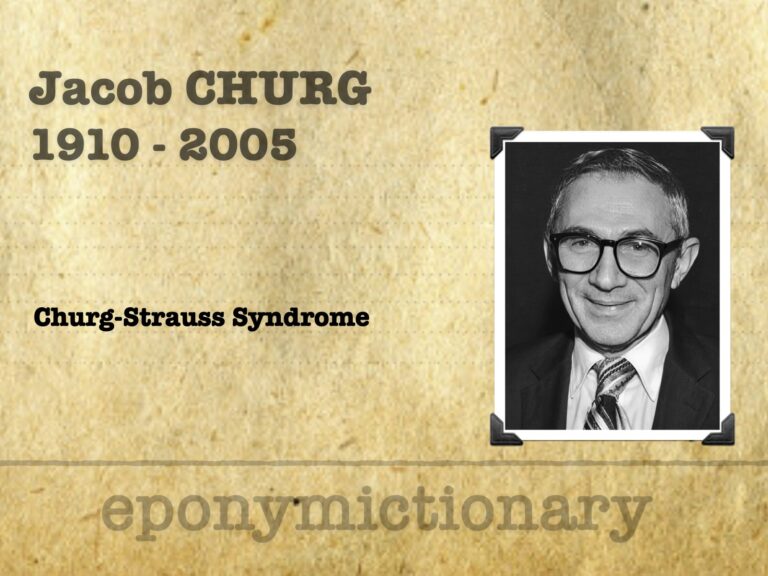
Jacob Churg (1910–2005), pioneering pathologist, co-described Churg–Strauss syndrome and transformed renal pathology through biopsy-based diagnostics

Bernhard Kayser (1869–1954) German ophthalmologist. First described the greenish-brown corneal ring now known as the Kayser–Fleischer ring in Wilson’s disease.
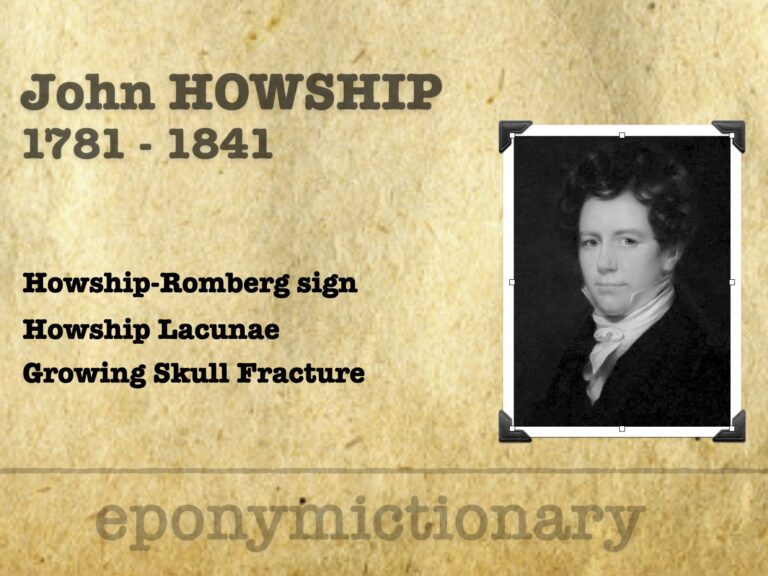
John Howship (1781–1841): English surgeon who described Howship–Romberg sign, first reported growing skull fracture, and advanced bone pathology studies

Robert Alvin Berman (1914-1999) was an American anesthesiologist and inventor including the Berman Airway, Quick Cuff and Respir-Aider

René-Jacques Croissant de Garengeot (1688–1759), Parisian surgeon, described appendix in femoral hernia, wrote on lacrimal surgery, and devised the tooth key

German-born American pediatrician Abraham Jacobi (1830–1919) founded U.S. pediatrics, led reform in child health, and shaped medical education and policy.

Pioneer of clinical cardiac electrophysiology, Sir Thomas Lewis (1881–1945) advanced ECG use, defined effort syndrome, and discovered the Lewis Triple Response.
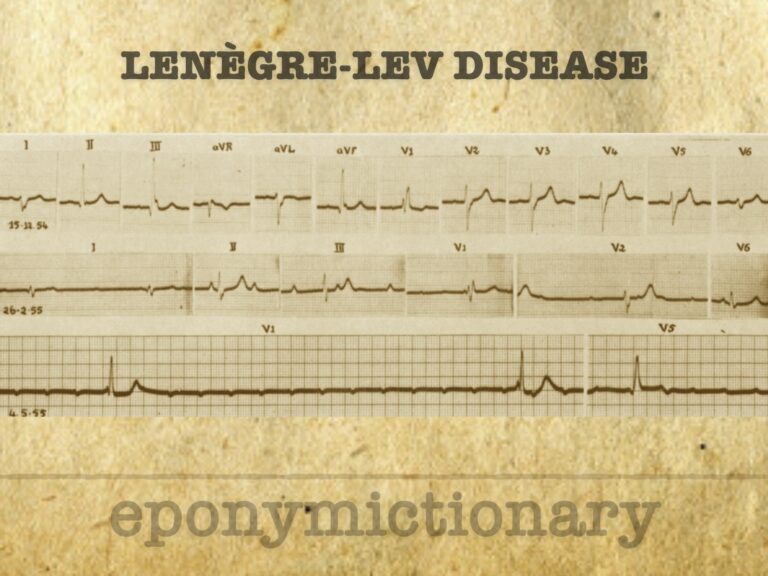
Acquired fibrous degeneration of the left and right bundle branches, eventually manifesting as permanent complete atrioventricular (AV) dissociation with cardiac pauses and Adams-Stokes attacks
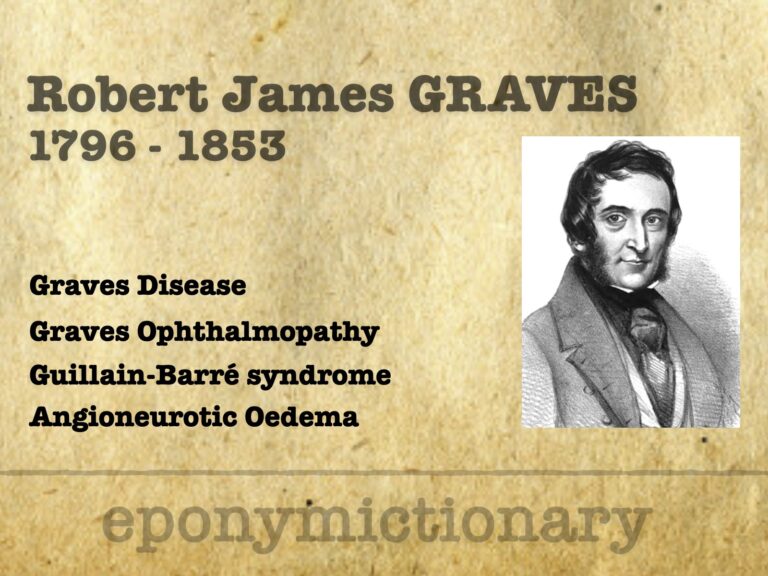
Robert James Graves (1796–1853): Irish physician, pioneer of bedside teaching, described Graves’ disease, reformed fever care, and influenced modern clinical medicine.

Charles Heber McBurney (1845 – 1913) was an American surgeon. Most famous for McBurney's point (1889) and McBurney's incision (1894) Medical Eponym.