
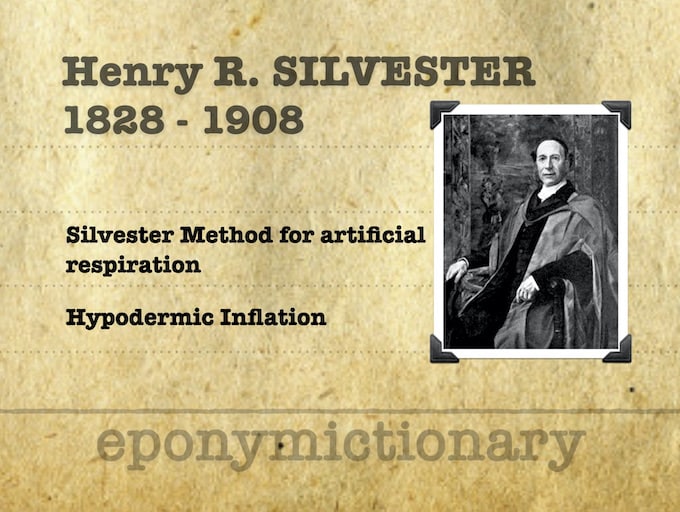
Henry Silvester
Henry Robert Silvester (1828-1908) was an English physician. Eponym: Silvester method of artificial respiration; and hypodermic inflation to prevent drowning...

Henry Robert Silvester (1828-1908) was an English physician. Eponym: Silvester method of artificial respiration; and hypodermic inflation to prevent drowning...

Edward Mott Moore (1814-1902) was an American Surgeon. Best known for his eponymous description of the Moore fracture in 1870
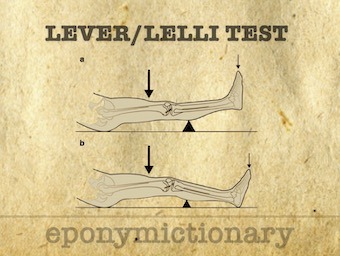
Lelli test or Lever test designed by Alessandro Lelli, Italian surgeon clinical test to diagnose Anterior Cruciate Ligament (ACL) disruption.

Alessandro Lelli - Italian orthopaedic surgeon specialising in knee arthroscopy and reconstructive surgery. Eponym: Lelli test (Lever test) Knee ACL

SonoSLAM: Tomorrow Today: Advances in US Tech! Advances in technology are making ultrasound more accessible and effective than ever.
Rick Body discusses the exciting possibilities for tomorrow’s medicine and how we could revolutionise diagnostics with AI.

John Englebert Dunphy (1908-1981). Dunphy sign [*cough test for appendicitis] increased pain, localised to the right lower quadrant.

Emil Samuel Perman (1856 - 1946) was a Swedish general surgeon. Eponymsously associated with the Perman-Rovsing sign

Niels Thorkild Rovsing (1862-1927) was a Danish surgeon Eponym linked with Rovsing sign (1907) in the diagnosis of acute appendicitis
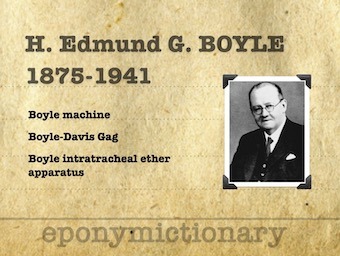
Henry Edmund Gaskin Boyle (1875-1941) was a Barbadian/British anaesthetist. Boyle machine and Boyle-Davis gag
James Bain (1934 – ) Canadian anesthesiologist. Inventor of the Bain breathing circuit; a significant advance in anaesthesia and a modification of the Mapleson D circuit.
Sepsis is a common and deadly condition, but diagnosis in not always knowable in real-time with Hallie Prescott.