
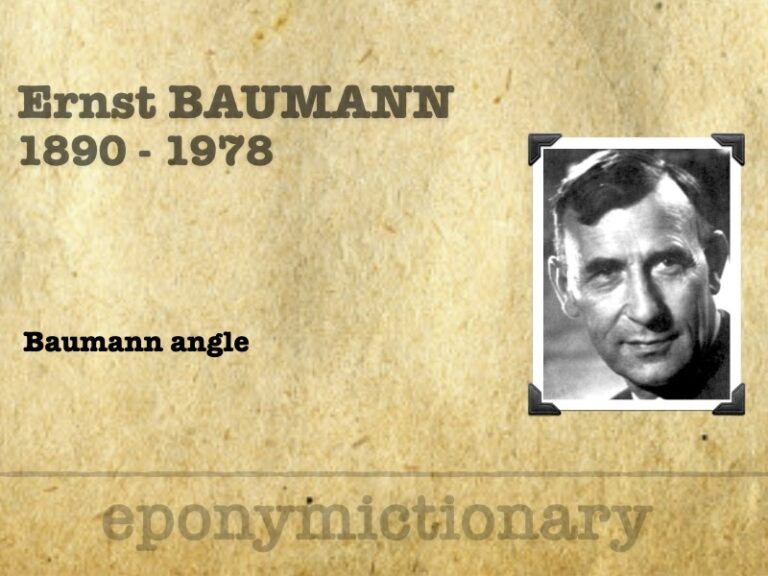
Ernst Baumann
Ernst Baumann (1890-1978). Swiss surgeon and traumatologist associated with the Baumann angle, elbow fracture care and the founding of the AO.


Ernst Baumann (1890-1978). Swiss surgeon and traumatologist associated with the Baumann angle, elbow fracture care and the founding of the AO.
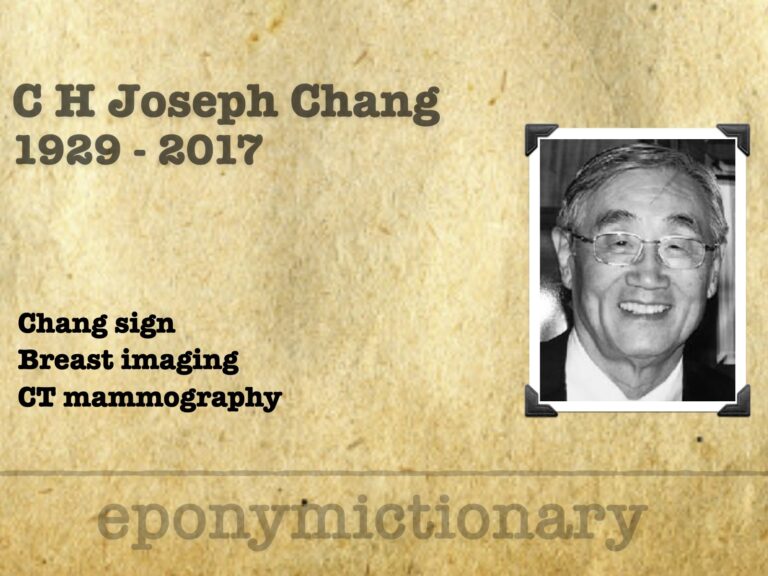
C. H. Joseph Chang (1929–2017), Korean-American radiologist known for Chang sign and pioneering work in mammography and dedicated breast CT imaging.

Ombrédanne–Armingeat syndrome: historical infant postoperative pallor–hyperthermia syndrome and relationship to malignant hyperthermia.
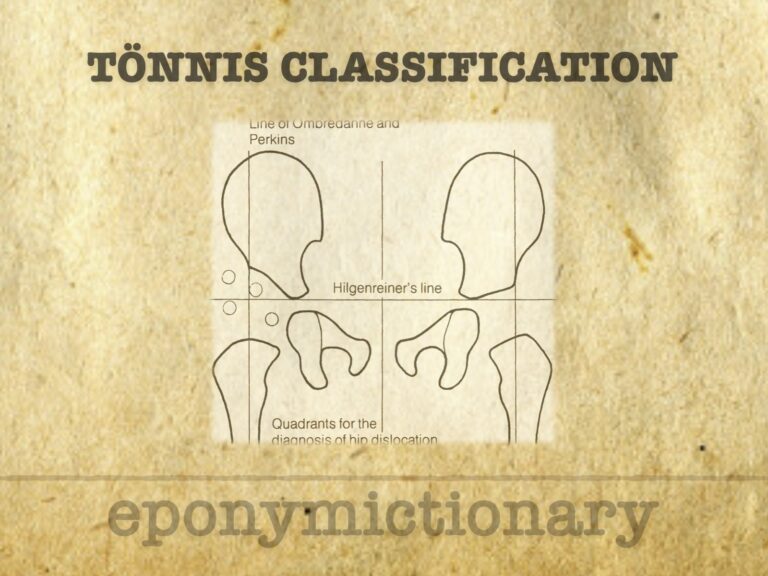
Tönnis classification for developmental hip dysplasia: radiographic grades, key landmarks, limitations, historical development and the IHDI system

John Joseph Gartland (1918-2016), American orthopaedic surgeon. Gartland classification and Gartland–Werley score for fracture outcomes.
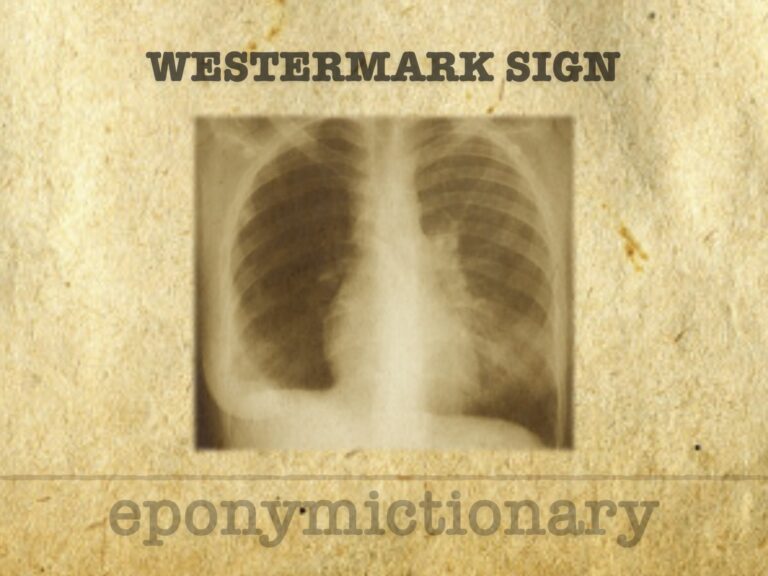
Westermark sign: regional pulmonary oligaemia on chest X-ray in pulmonary embolism, with historical origins, imaging features and modern clinical relevance.
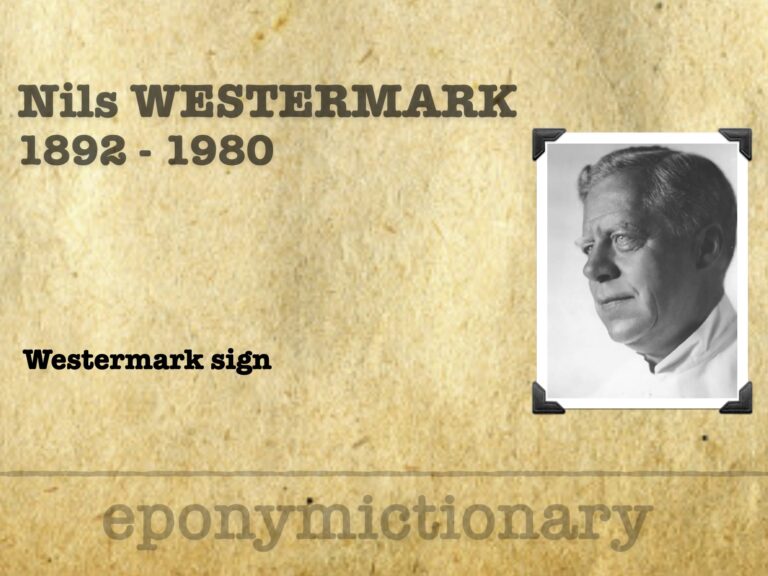
Nils Westermark (1892–1980), Swedish radiologist and Olympic silver medallist, remembered for the Westermark sign in pulmonary embolism.
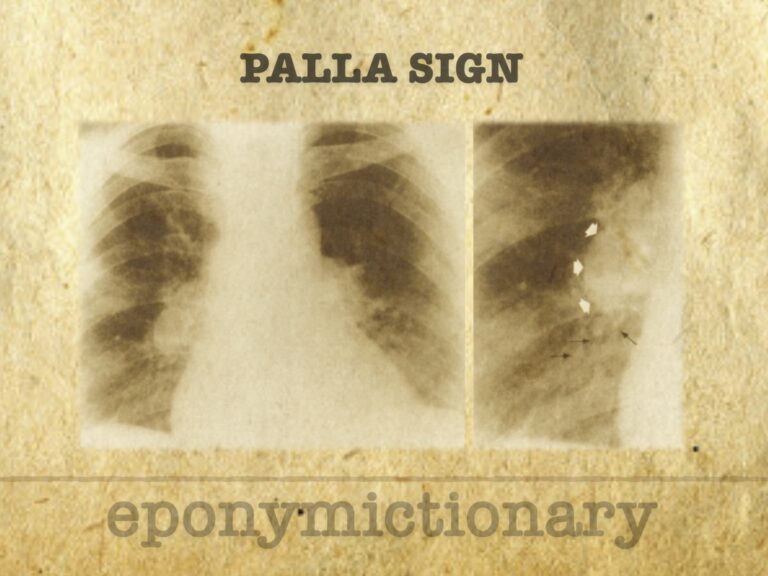
Palla sign (1983) right descending pulmonary artery enlargement and 'sausage-shaped' appearance as a potential sign of pulmonary embolism on chest XR
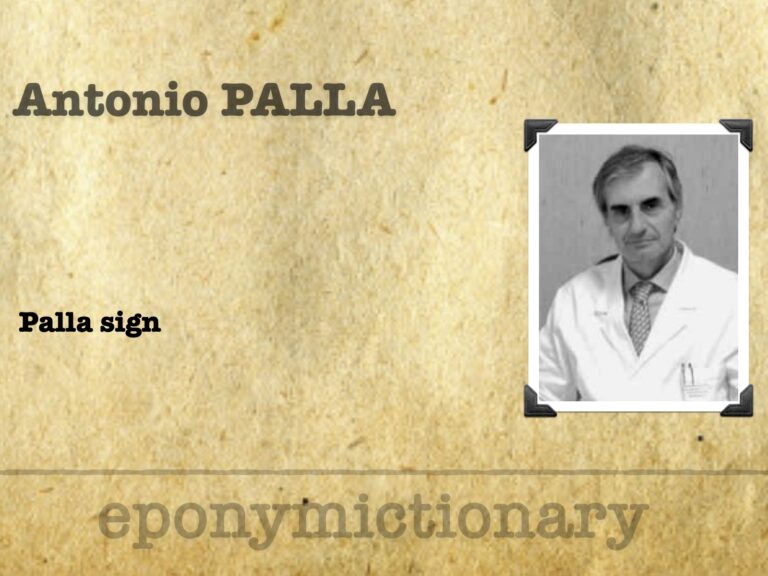
Antonio Palla (born 1949), Italian respiratory physician known for Palla sign and major contributions to pulmonary embolism and respiratory medicine.
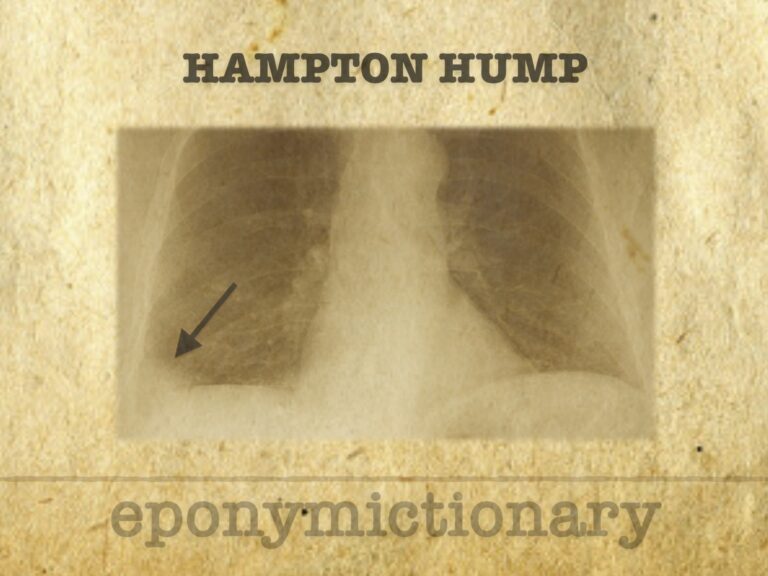
Hampton hump: pleural-based pulmonary infarction on chest X-ray, with historical origins, radiographic features, pathology and modern PE relevance.

Aubrey Otis Hampton (1900–1955), American radiologist known for Hampton hump and Hampton line, with major contributions to chest and clinical radiology.
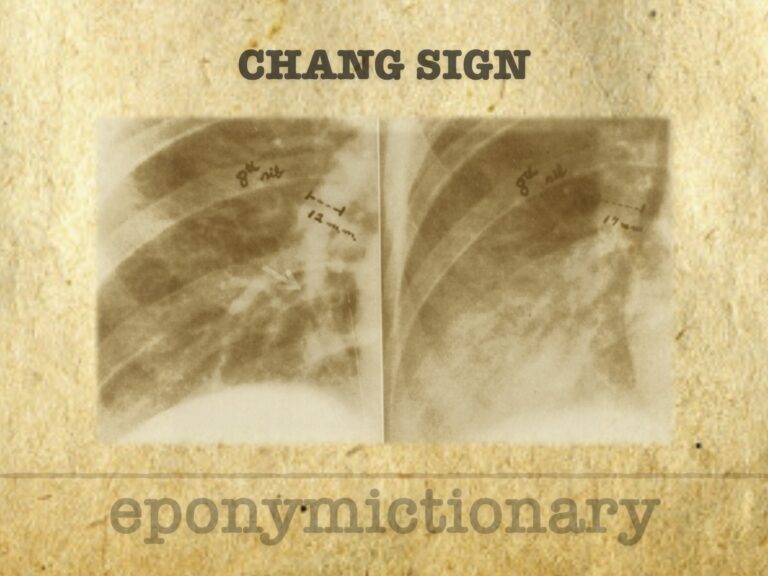
Chang sign (1965) Dilated descending pulmonary artery associated with pulmonary infarction and pulmonary hypertension following pulmonary embolism