

Armin Klein
Armin Klein (1892–1954), American orthopaedic surgeon known for Klein line and work on slipped capital femoral epiphysis, scoliosis and paediatric orthopaedics.


Armin Klein (1892–1954), American orthopaedic surgeon known for Klein line and work on slipped capital femoral epiphysis, scoliosis and paediatric orthopaedics.
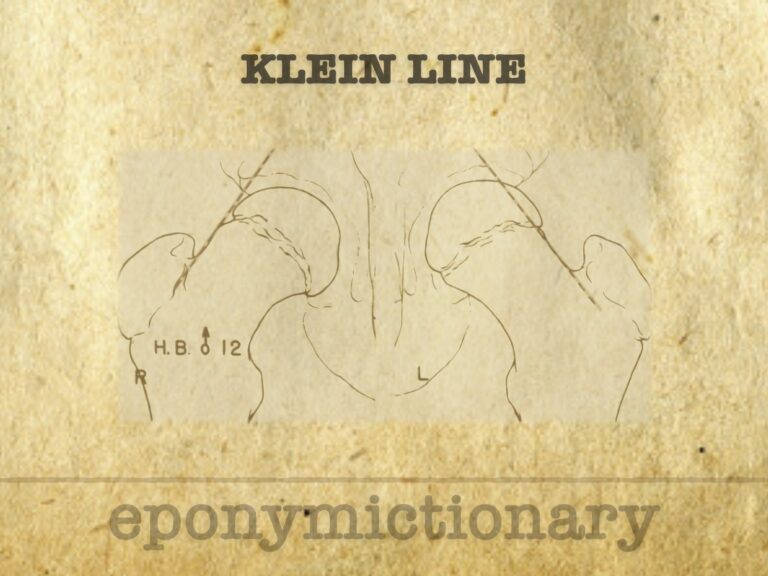
Klein line is an AP hip radiographic sign used in suspected SCFE. Review the original description, modern interpretation, limitations and modified Klein line.
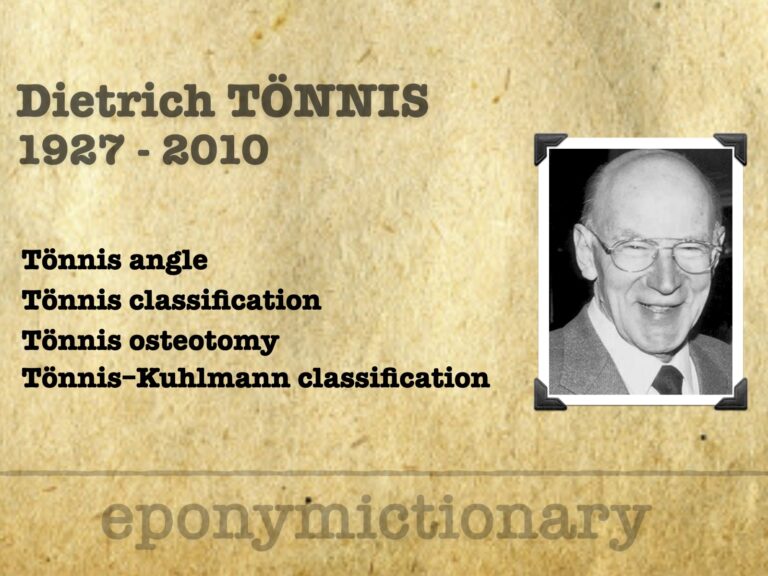
Dietrich Tönnis (1927-2010), German paediatric orthopaedic surgeon known for the Tönnis angle, Tönnis classification, triple pelvic osteotomy and work on hip dysplasia.
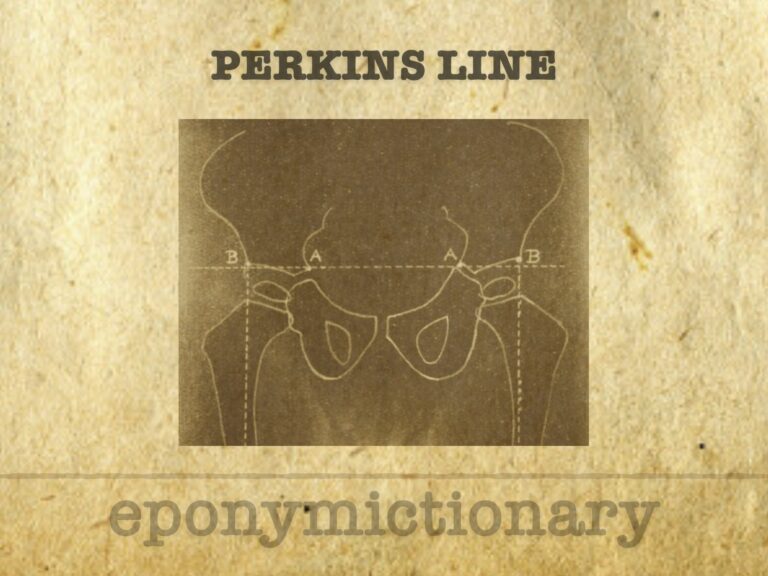
Perkins line is the vertical pelvic reference used with Hilgenreiner line in DDH assessment. Review its definition, 1928 origin, history and eponymythology

George Perkins (1892-1979) was an English orthopaedic surgeon known for Perkins line, Perkins traction, functional fracture treatment and British orthopaedic leadership.

A 69 year old male presents with two days of atraumatic progressively worsening neck and scalp pain. Interpret the CT c-spine

Lorenz Böhler (1885-1973) Austrian trauma surgeon, founder of organised accident care, Böhler angle, and controversial Nazi-era figure.
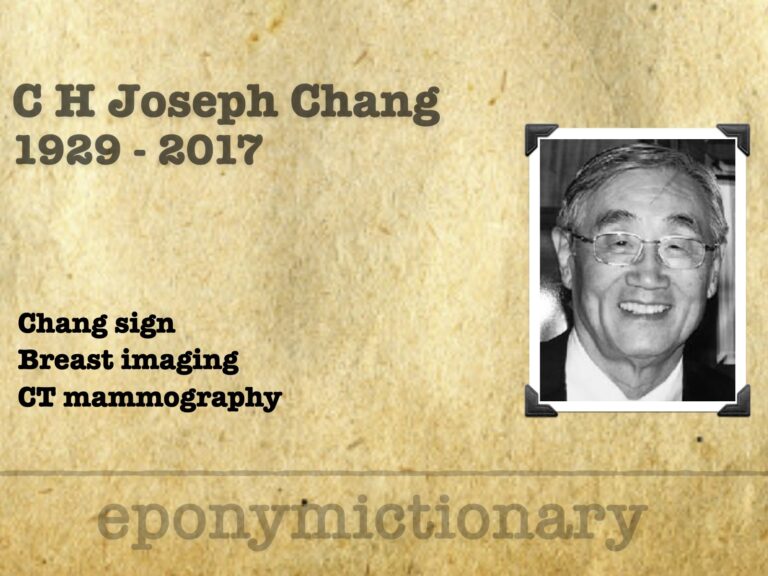
C. H. Joseph Chang (1929–2017), Korean-American radiologist known for Chang sign and pioneering work in mammography and dedicated breast CT imaging.
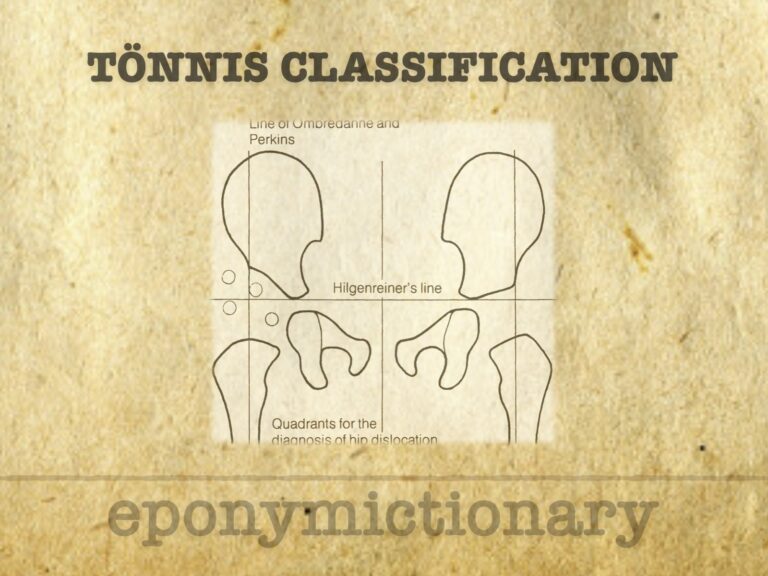
Tönnis classification for developmental hip dysplasia: radiographic grades, key landmarks, limitations, historical development and the IHDI system
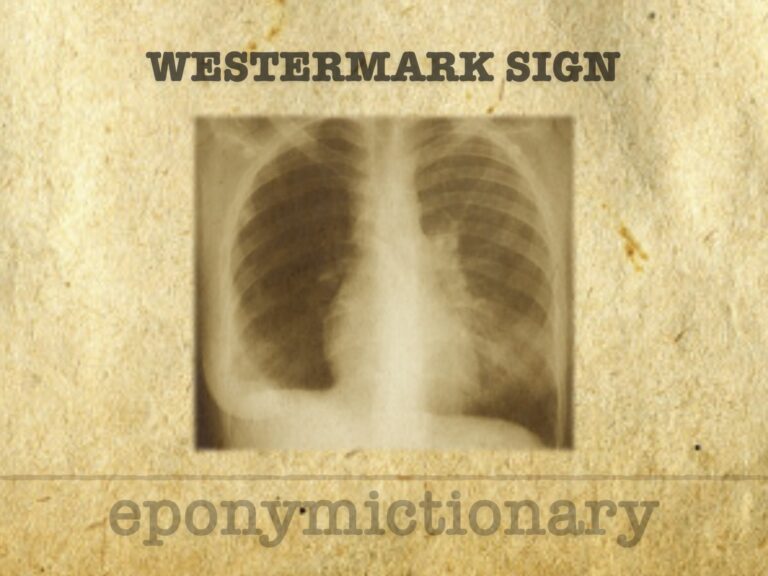
Westermark sign: regional pulmonary oligaemia on chest X-ray in pulmonary embolism, with historical origins, imaging features and modern clinical relevance.

Nils Westermark (1892–1980), Swedish radiologist and Olympic silver medallist, remembered for the Westermark sign in pulmonary embolism.
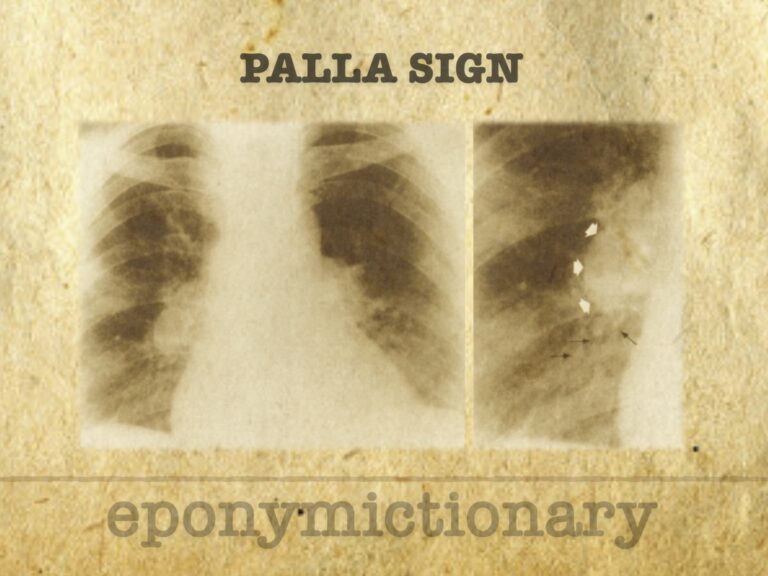
Palla sign (1983) right descending pulmonary artery enlargement and 'sausage-shaped' appearance as a potential sign of pulmonary embolism on chest XR