


Dudley Morton

Dudley Joy Morton (1884-1960) was an American physician
Morton was also an anatomist, orthopaedic surgeon and physical anthropologist whose research centred on the evolution, structure and biomechanics of the human foot. His comparative anatomical studies of primate and human locomotion led him to investigate how variations in first-ray anatomy influenced weight-bearing and forefoot function.
Morton is best remembered for his description of metatarsus atavicus (1927), characterised by a relatively short first metatarsal, and his description of dorsal hypermobility of the first metatarsal segment (1928). These concepts were later eponymised as Morton foot, Morton toe, Morton foot syndrome, Morton triad and Morton extension. Morton combined his evolutionary, anatomical and clinical work in The Human Foot (1935)
DJ Morton should not be confused with the unrelated Philadelphia surgeon Thomas George Morton (1835–1903), of Morton metatarsalgia and the Morton neuroma.
Biographical Timeline
- Born on March 27, 1884 in Baltimore, Maryland. He attended the Boys’ Latin School in Baltimore and Friends School in Providence, Rhode Island.
- 1907 – Graduated MD from Hahnemann Medical College, Philadelphia. Interned at the National Homeopathic Hospital in Washington, DC (1907–1908) and Children’s Homeopathic Hospital in Philadelphia (1908–1909).
- 1910–1911 – Undertook postgraduate study at Johns Hopkins Medical School, serving as an assistant in the surgical pathology laboratory. Married Esther Lyall Fosburgh in New York on October 14, 1911. They had a son, Dudley Joy, and daughter, Esther Stuart.
- 1912–1920 – Clinical chief and instructor at Hahnemann Medical College and Hospital, Philadelphia.
- 1916 – Served in France with the American Ambulance Corps, working as ward surgeon at Hospital B at Juilly. After the United States entered the First World War, he served as a first lieutenant in the US Army Medical Corps, with postings at Fort Oglethorpe, Georgia, and Lakewood, New Jersey.
- 1920 – Resigned Philadelphia hospital and teaching posts to concentrate on disorders and evolution of the human foot. He moved to Milford, Connecticut and undertook independent comparative research using material from the American Museum of Natural History (AMNH).
- 1922–1924 – Published his influential two-part study Evolution of the Human Foot in the American Journal of Physical Anthropology.
- 1924–1928 – Joined Yale Medical School, initially as instructor in surgery (1924–1927) then assistant professor in its orthopaedic division (1927–1928). Associate surgeon at New Haven Hospital from 1925 to 1928, with clinical investigation of foot mechanics.
- 1925 – Became a research associate at the American Museum of Natural History.
- 1927 – Published Metatarsus Atavicus.
- 1928 – Published Hypermobility of the first metatarsal bone. Appointed associate professor of anatomy at Columbia University College of Physicians and Surgeons, New York.
- 1935 – Published The Human Foot: Its Evolution Physiology and Functional Disorders, bringing his evolutionary, anatomical and clinical theories of foot function.
- 1939 – Published the popular book Oh, Doctor! My Feet!, bringing his ideas about foot mechanics and disorders to a much wider audience.
- 1944 – Resigned his Columbia appointment after sixteen years on the faculty.
- 1952 – With mechanical engineer Dudley Dean Fuller, published Human locomotion and body form: A study of gravity and man
- Died on May 22, 1960 at Roosevelt Hospital, New York City aged 76.
Medical Eponyms
Morton foot / Morton toe
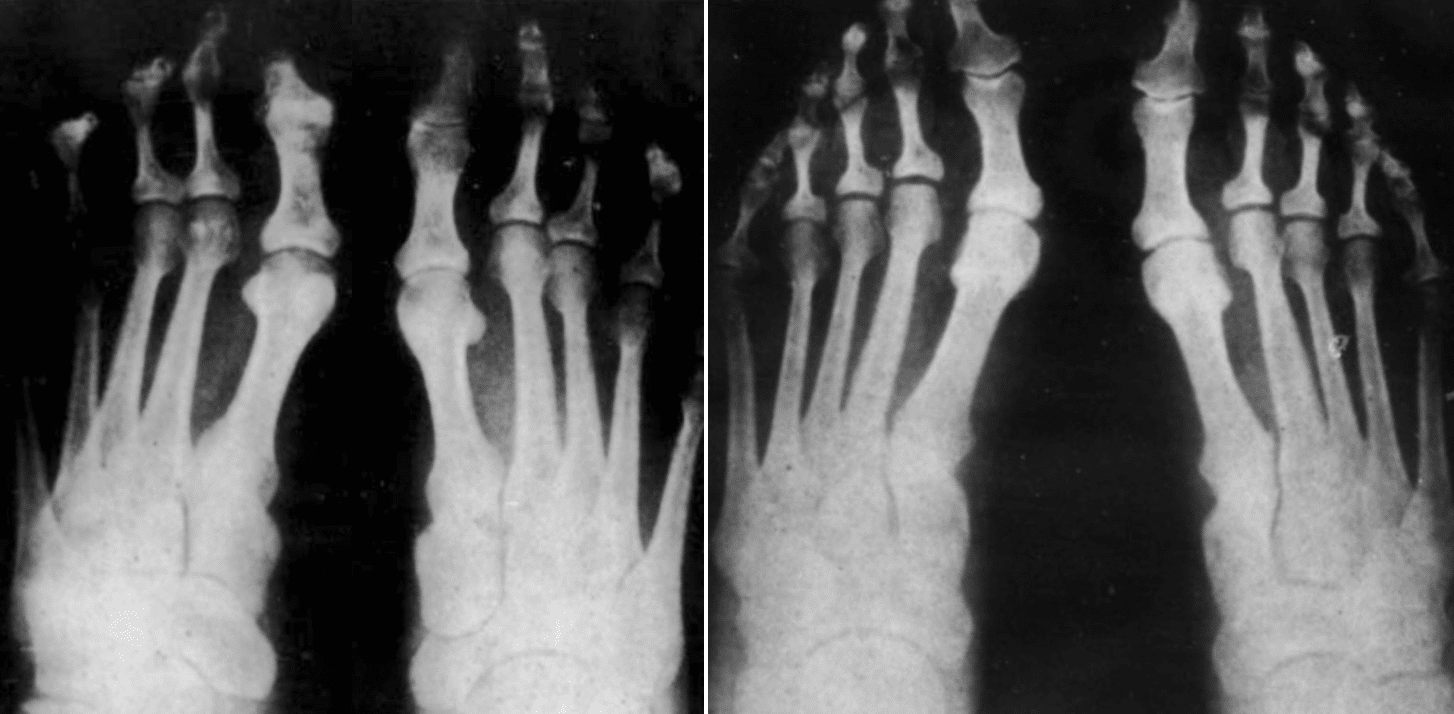
1927 – Morton described metatarsus Atavicus, characterised by a relatively short first metatarsal. He proposed that impaired first-ray leverage shifted loading onto the second metatarsal, producing compensatory hypertrophy, plantar callosity and metatarsalgia. The anatomical configuration subsequently became known as Morton foot or Morton toe.
Modern usage usually describes Morton toe as a relatively short first metatarsal compared with the second, often making the second toe appear longer than the hallux. The foot shape itself may be asymptomatic and should be distinguished from the broader symptomatic Morton foot syndrome.
Morton foot syndrome
Morton expanded the short-first-metatarsal concept into a broader model of abnormal forefoot loading. Modern descriptions of Morton foot syndrome include a short first metatarsal, altered sesamoid position and compensatory hypertrophy/loading of the second metatarsal, with plantar callosity and metatarsalgia.
First-ray hypermobility
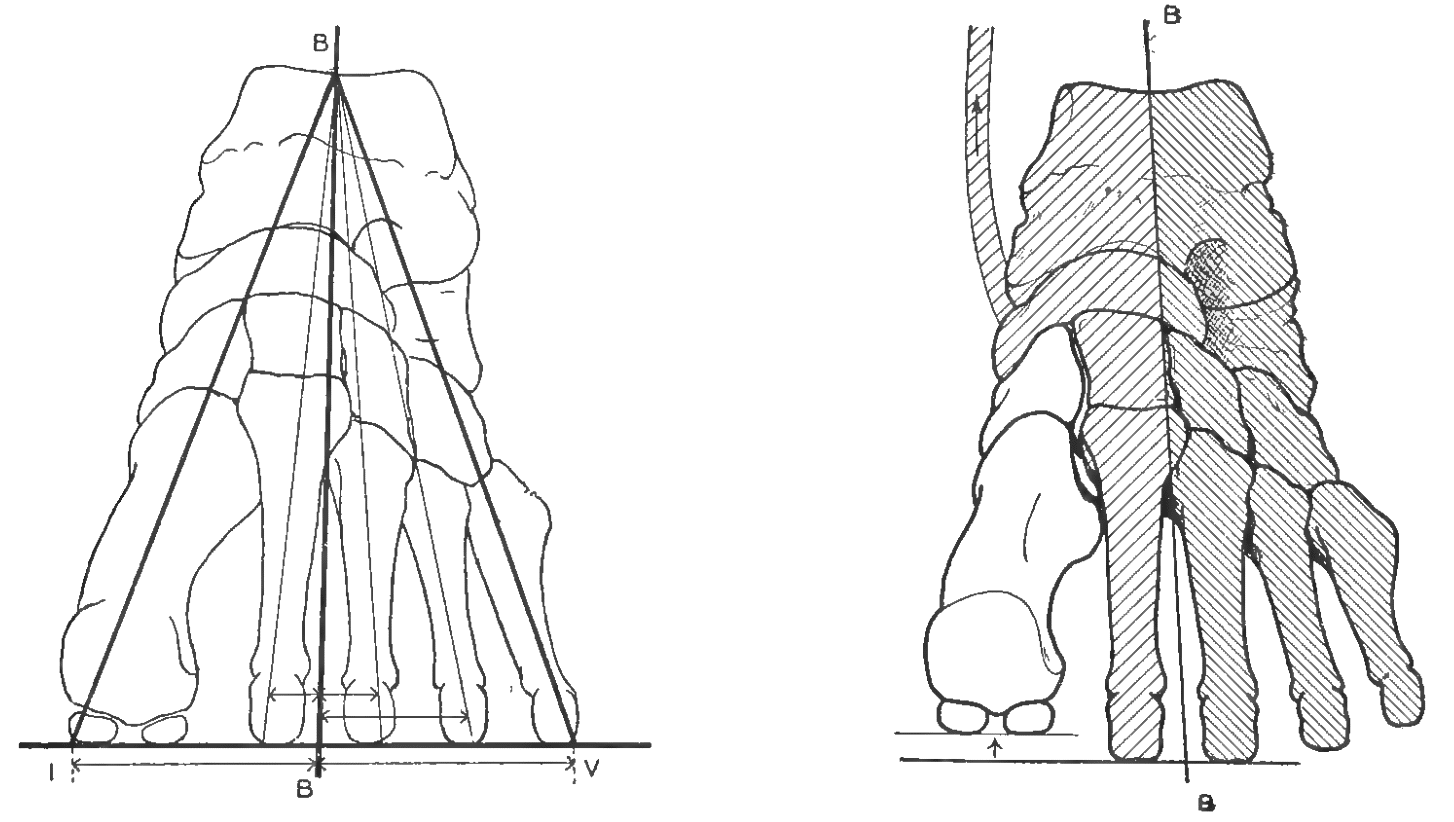
1928 – Morton described dorsal hypermobility of the first metatarsal segment as a distinct cause of deficient medial support and transfer loading to the second ray. Although it could coexist with a short first metatarsal, Morton treated the two as separate structural abnormalities.
Morton extension
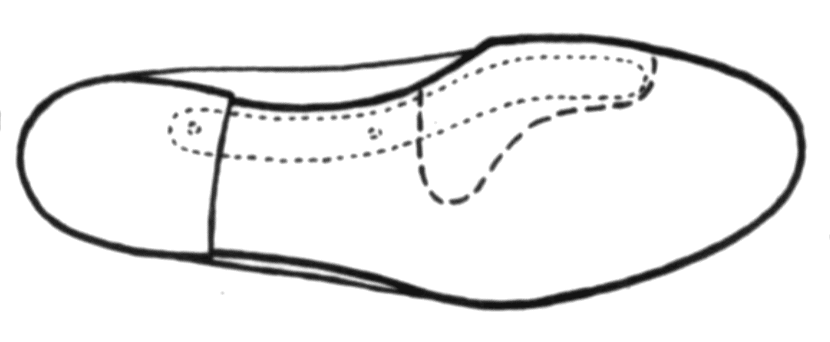
1927 – Morton illustrated an artificial extension beneath the short first metatarsal to increase its effective weight-bearing surface. The principle was later eponymised as the Morton extension. Modern orthotic usage commonly refers to a firm extension beneath the first MTP joint/hallux that limits dorsiflexion, so the contemporary term is not identical in purpose to Morton’s original device.
Morton triad
The Morton triad is a modern synthesis rather than Morton’s own terminology. In 1935, Morton published The Human Foot and proposed three structural factors:
- short first metatarsal,
- posteriorly located sesamoids,
- dorsal hypermobility of the first metatarsal segment.
The modern triad combines two abnormalities Morton described separately in 1927 and 1928 with one of their clinical consequences, plantar transfer callosity beneath M2/M3. This should not be confused with Morton’s own discussion of three structural factors.
Controversies
Dudley Joy Morton was unrelated to Thomas George Morton (1835–1903), the Philadelphia surgeon associated with Morton metatarsalgia / Morton neuroma.
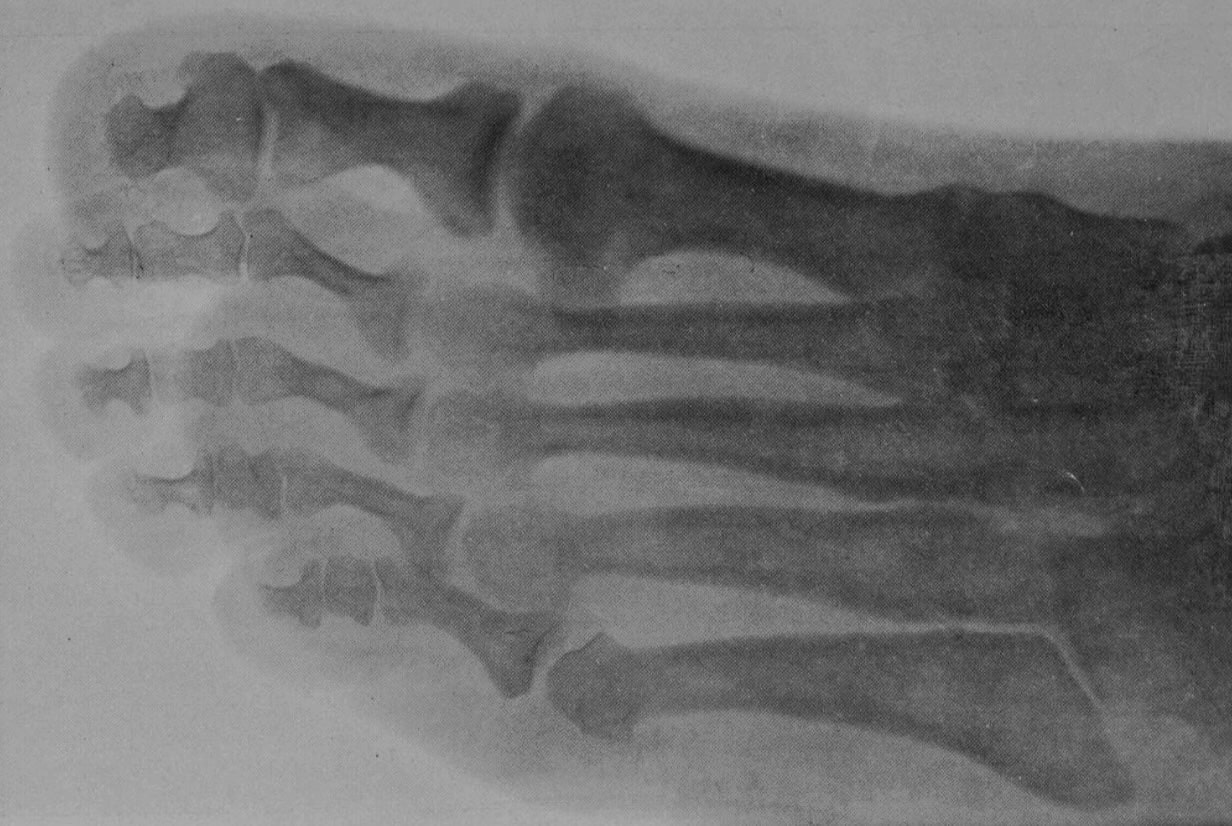
In his 1927 paper on metatarsus atavicus, Dudley cited Thomas Morton’s 1896 radiographic paper on Morton’s painful affection of the foot. Dudley writes that the severe shooting metatarsalgia associated with his short-first-metatarsal cases corresponded to the metatarsalgia described by Professor T. G. Morton, and even reproduces one of Thomas Morton’s cases as “Morton’s Metatarsalgia.”
Major Publications
- Morton DJ. Evolution of the Human Foot. Part I. American Journal of Physical Anthropology. 1922; 5(4): 305-336
- Morton DJ. Evolution of the Human Foot. Part II. American Journal of Physical Anthropology. 1924; 7(1): 1-52
- Morton DJ. Significant characteristics of the Neanderthal foot. Natural History 1926; 26: 310-14.
- Morton DJ. Metatarsus Atavicus: The Identification of a Distinctive Type of Foot Disorder. The Journal of Bone & Joint Surgery, 1927; 9(3): 531–544.
- Morton DJ. Hypermobility of the first metatarsal bone: the interlinking factor between metatarsalgia and longitudinal arch strains. The Journal of Bone & Joint Surgery, 1928; 10(2), 187–196.
- Morton DJ. Human Anatomy: double dissection method 1934 [Part II]
- Morton DJ. The Human Foot: Its Evolution Physiology and Functional Disorders. 1935
- Morton DJ. Oh Doctor! My FEET! 1939
- Morton DJ. Human locomotion and body form: A study of gravity and man 1952
Patents
- Morton DJ. Improvements in Surgical Splints. GB113221A 1917
- Morton DJ. Morton Athletic Shoe. US1610700A, Dec 14 1926
- Morton DJ. Adjustable orthopedic insoles. GB719759A, Nov. 5, 1952
References
Biography
- Dudley Joy Morton, M.D. New York State Journal of Medicine 1960: 2164
- Morton, Dudley Joy. The National Cyclopedia of American Biography 1942: 460
Eponymous terms
- Morton TG. A peculiar and painful affection of the fourth metatarso-phalangeal articulation. American Journal of the Medical Sciences. 1876; 71: 37–45.
- Morton TSK. VI. Metatarsalgia (Morton’s Painful Affection of the Foot), with an Account of Six Cases Cured by Operation. Ann Surg. 1893 Jun;17(6):680-99.
- Morton TG. The Application of the X-rays to the Diagnosis of Morton’s Painful Affection of the Foot, or Metatarsalgia. International Medical Magazine 1896; 5(5): 322-324
- Hansen ST Jr. Hallux valgus surgery. Morton and Lapidus were right! Clin Podiatr Med Surg. 1996 Jul;13(3):347-54.
- Decherchi P. Le pied de Dudley Joy Morton. Presse Med. 2005 Dec 17;34(22 Pt 1):1737-40.
- Glasoe WM, Coughlin MJ. A critical analysis of Dudley Morton’s concept of disordered foot function. J Foot Ankle Surg. 2006 May-Jun;45(3):147-55.
- Sivaji AR, Kizhakkemuriyil Scaria T, Sundaramurthi I. Morton’s Foot Syndrome: A Case Report and Overview. Cureus. 2024 Sep 5;16(9):e68731.
Eponym
the person behind the name

BA MA (Oxon) MBChB (Edin) FACEM FFSEM. Emergency physician, Sir Charles Gairdner Hospital. Passion for rugby, medical history, medical education, and asynchronous learning #FOAMed evangelist. Editor-in-Chief and Webmaster of Life in the Fast lane, LITFL | On Call 4e| Eponyms | Books | Horology |