


Trethowan sign
Trethowan sign is a historical radiographic sign of slipped capital femoral epiphysis (SCFE) on the AP pelvis or hip radiograph.
In modern terms, the sign usually denotes failure of a line drawn along the superior femoral-neck margin to intersect the capital femoral epiphysis. In effect it is the abnormal finding produced by Klein line.
The historical definition and origina is less certain.
No primary description by Trethowan has been located. The earliest printed attribution described the sign instead as loss of the normal angle between the superior border of the femoral neck and the lateral edge of the epiphysis.
The eponym refers to William Henry Trethowan (1882–1934), orthopaedic surgeon at Guy’s Hospital. It should not be confused with his son, Sir William Henry Trethowan (1917–1995), the psychiatrist, or with William Trethowan (1860–1929) one of the founders of the Royal College of Surgeons of Australasia.
History of Trethowan’s sign
Before 1934 – Trethowan was an influential orthopaedic surgeon and teacher at Guy’s Hospital. Later Guy’s sources attributed an SCFE radiographic sign to him, but no contemporary description has been located.
1934 – Contemporary obituaries in the Lancet, BMJ and Guy’s Hospital Gazette reviewed Trethowan’s career and teaching but did not mention an SCFE sign. This absence does not exclude an unpublished teaching observation, but it provides no contemporary support for the eponym.
1952 – Armin Klein (1892–1954) and colleagues published the superior femoral-neck construction in detail, noting that in early SCFE the prolonged superior neck line may intersect less of the head than normal, or fail to intersect it entirely.
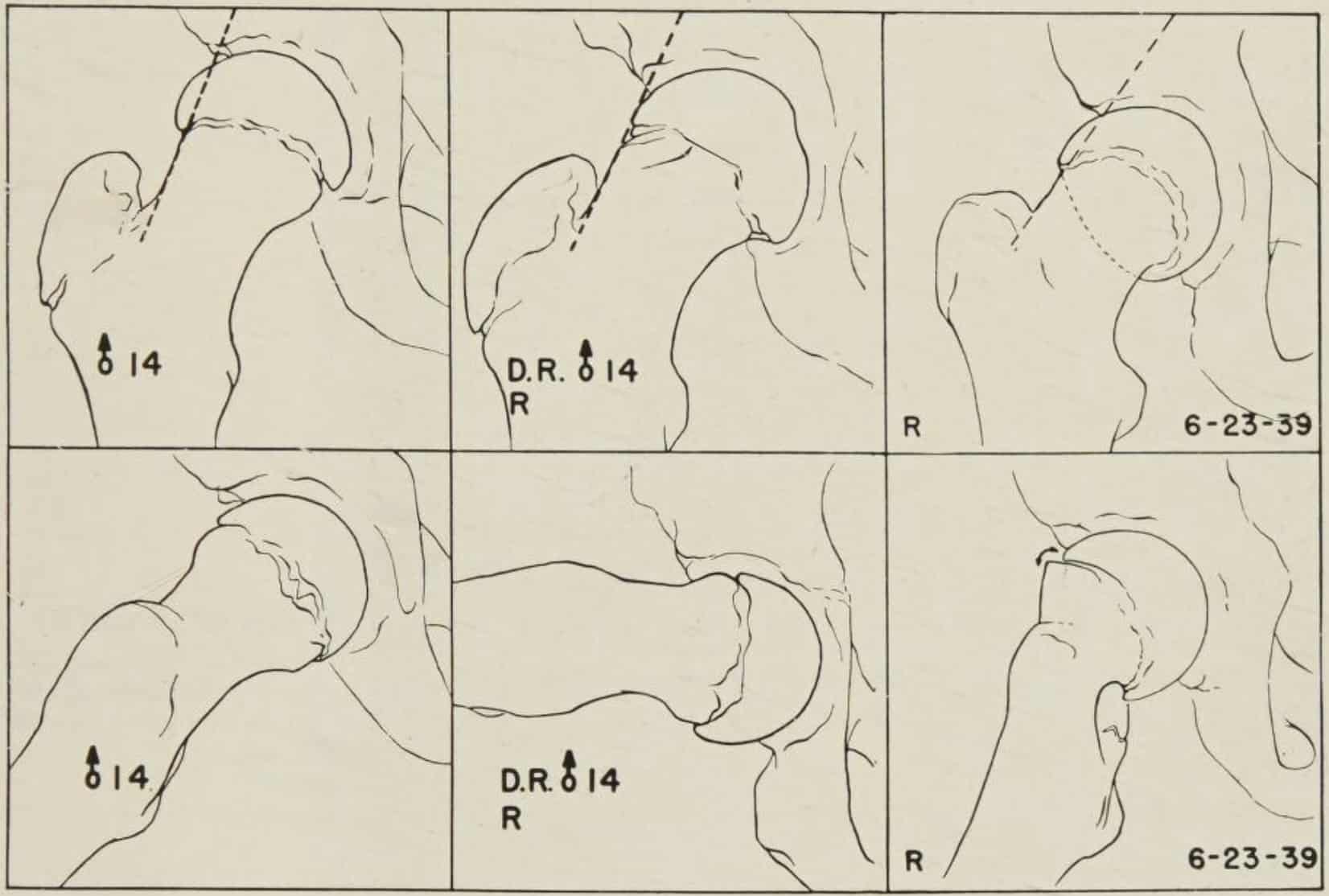
1968 – W. A. Crabbe, a Guy’s Hospital orthopaedic surgeon, published Orthopaedics for the Undergraduate. This is the earliest printed source currently located using the name Trethowan’s sign. Crabbe described “loss of the angle between the upper border of the femoral neck and the lateral edge of the epiphysis.”
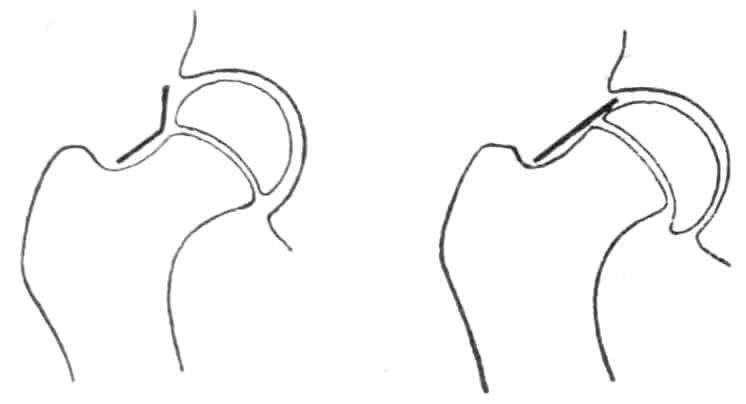
Trethowan’s sign. In minor degrees of displacement there is loss of the normal angle between the upper border of the femoral neck and the lateral border of the epiphysis. Crabbe 1968
1977 – Alan G Apley used Trethowan’s sign for the line-based description “a line along the superior surface of the femoral neck remains above the femoral head rather than passing through it.”
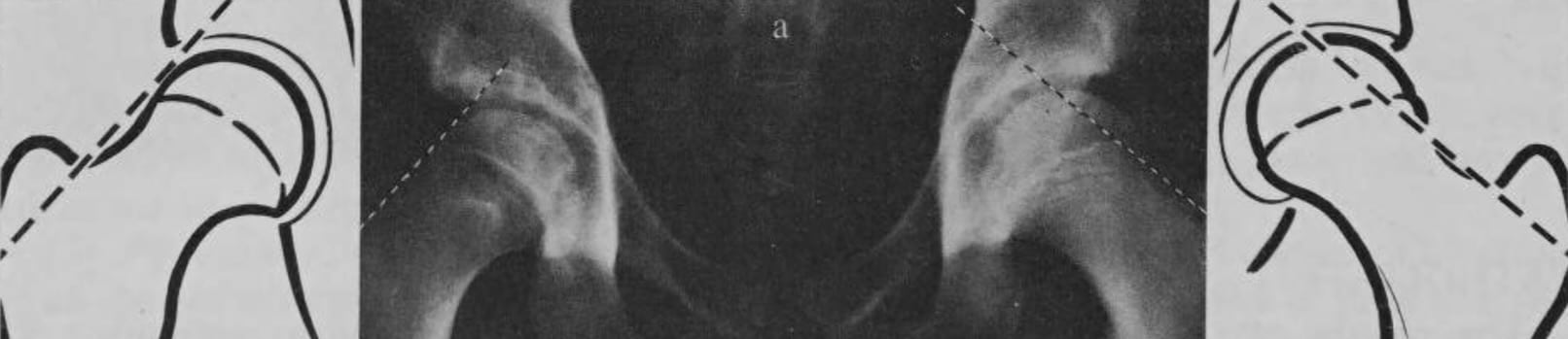
1990 – A Guy’s Gazette retrospective credited Trethowan with the description of what was then called Trethowan’s line for slipped upper femoral epiphysis, again without identifying a primary publication.
Later literature – Orthopaedic and radiological texts use Trethowan sign, Trethowan line and Klein line interchangeably.
Eponymythology
Teaching tradition or published sign?
The evidence supports a Guy’s teaching attribution, but not publication priority.
Trethowan may have taught the observation before his death in 1934, particularly given his reputation as an influential clinician whose ideas were often transmitted orally rather than published. However, no contemporary description of the sign by Trethowan has been located.
Crabbe’s 1968 account is the earliest printed attribution currently identified and describes a loss of the normal head-neck angle. Apley’s later formulation shifts the sign towards a line-intersection test, bringing it much closer to the Klein line construction.
Klein and colleagues remain the earliest verified published source currently identified for the detailed superior femoral-neck line technique. The historical route by which Trethowan sign and Klein line became synonymous remains undocumented.
Associated Persons
- Armin Klein (1892–1954)
- William Henry Trethowan (1882–1934)
Alternative names
- Trethowan’s sign
- Trethowan sign
- Trethowan line / Trethowan’s line
Related term
References
Historical references
- Klein A, Joplin RJ, Reidy JA, Hanelin J. Slipped capital femoral epiphysis; early diagnosis and treatment facilitated by normal roentgenograms. J Bone Joint Surg Am. 1952 Jan;34-A(1):233-9.
- Klein A, Joplin RJ, Reidy JA, Hanelin J. Slipped Capital Femoral Epiphysis. 1953
- Crabbe WA. Trethowan’s sign In: Orthopaedics for the Undergraduate 1968
- Apley AG. Trethowan’s sign. In: A system of orthopaedics and fractures, 1977:
Eponymous term review
- Wiliam Henry Trethowan (1882-1934). Guy’s Hospital Gazette Volume 1990; 104: 160-161
- Kyle E, Cadogan M. Hip and pelvic lines and arcs. LITFL
eponymictionary
the names behind the name

MB BAO BCh Trinity College Dublin, MSc Clinical Data Analytics University of Galway. Junior doctor in Perth, doctoral researcher in MRI radiomics. Working towards radiology training.
BA MA (Oxon) MBChB (Edin) FACEM FFSEM. Emergency physician, Sir Charles Gairdner Hospital. Passion for rugby, medical history, medical education, and asynchronous learning #FOAMed evangelist. Editor-in-Chief and Webmaster of Life in the Fast lane, LITFL | On Call 4e| Eponyms | Books | Horology |