
Bundgaard syndrome
Bundgaard et al introduced us in 2018 to "Familial ST-segment depression syndrome", a new cardiac arrhythmia syndrome predisposing to atrial fibrillation, VT, and sudden cardiac death.


Bundgaard et al introduced us in 2018 to "Familial ST-segment depression syndrome", a new cardiac arrhythmia syndrome predisposing to atrial fibrillation, VT, and sudden cardiac death.
In 2008, Haïssaguerre et al challenged the well-embedded term "benign" early repolarization by demonstrating a link between this familiar ECG pattern and idiopathic VF arrest
Aslanger et al identified a specific ECG pattern concerning for acute inferior occlusion MI in patients with concomitant multi-vessel disease, that does not display contiguous ST-segment elevation or fulfil STEMI criteria
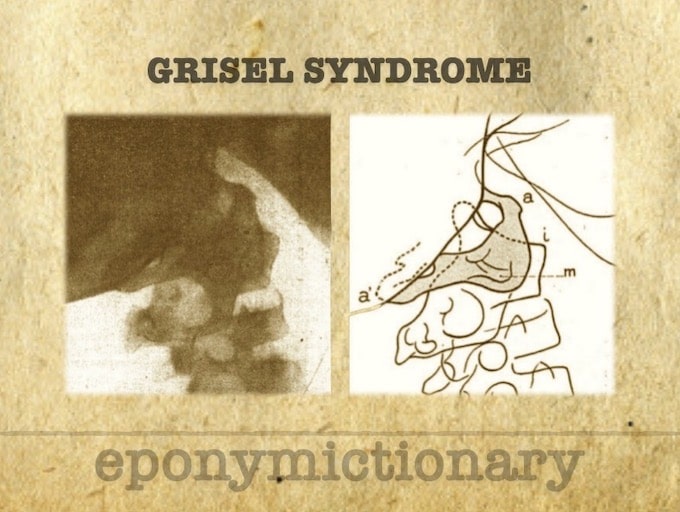
Spontaneous, nontraumatic rotatory subluxation of the atlantoaxial joint following peripharyngeal inflammation or ENT surgical procedures

Menière’s disease is a condition characterized by the triad of episodic vertigo, tinnitus, and hearing loss, caused by endolymphatic hydrops of the labyrinthine system of the inner ear.
Dressler beat: Specifically a 'ventricular fusion beat' in the presence of paroxysmal ventricular tachycardia. Wide complex tachycardia with VT
Reactive arthritis [archaic eponym: Reiter's syndrome] systemic, seronegative spondyloarthropathy secondary to a precipitating infection.
Ludwig angina: rapidly progressive gangrenous bilateral cellulitis of the submandibular space with risk of life-threatening airway compromise. 1836 - Wilhem Frederick von Ludwig was the first to clearly describe this disorder and differentiate it from other types of 'inflammation' in the neck.
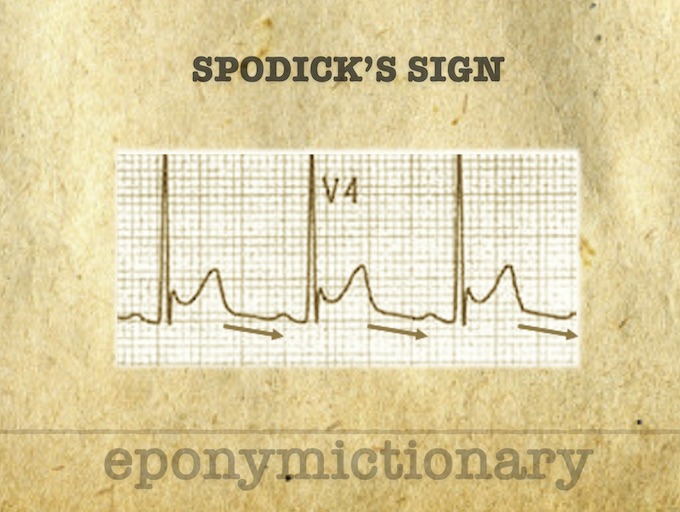
Spodick Sign: Stage I Pericarditis, a downsloping of the TP line. Described 1974 by American Cardiologist, David H Spodick (1927 – 2019)
Description Fuchs Spots is a term used to describe a raised, circular, pigmented lesion at the macular which develops after a subretinal haemorrhage has been absorbed. It is associated with moderate to high myopia. History of Fuchs Spots 1862 –…
Description Fuchs uveitis syndrome is a chronic non-granulomatous condition of uncertain cause. There is usually unilateral heretochromia iridis, white eye with stellate and grey-white keratic precipitates. There are no posterior synechiae. On Gonioscopy may see fine radial angle vessels which are…
Description Fuchs endothelial corneal dystrophy is characterised by bilateral endothelial cell loss. Examination signs include: central guttata – the presence of irregular warts or excrescences on Descemet membrane secreted by abnormal endothelial cells tiny dark spots caused by distribution of…