
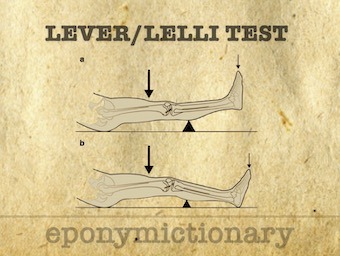
Lelli Test
Lelli test or Lever test designed by Alessandro Lelli, Italian surgeon clinical test to diagnose Anterior Cruciate Ligament (ACL) disruption.


Lelli test or Lever test designed by Alessandro Lelli, Italian surgeon clinical test to diagnose Anterior Cruciate Ligament (ACL) disruption.
George Bushar Markle IV (1921 – 1999) was an American surgeon. Eponymously linked to the Markle Sign in appendicitis (1985)
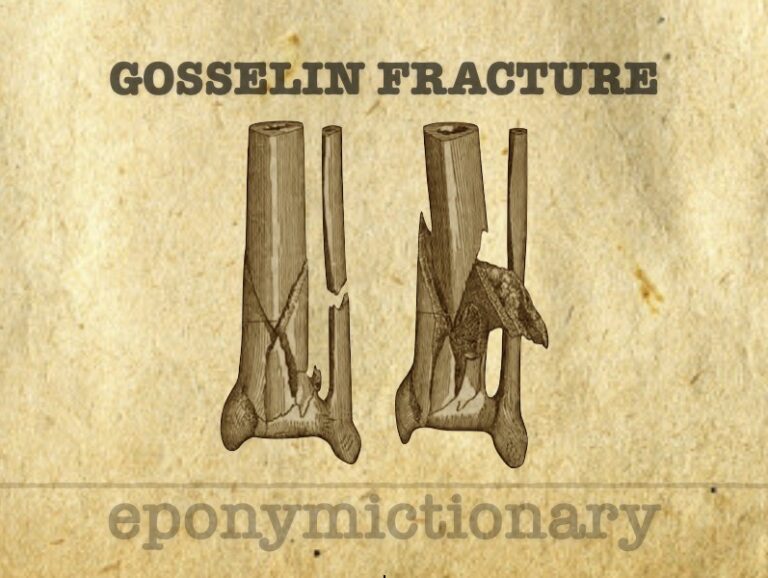
Gosselin fracture: V-shaped fracture of the distal tibia that extends into the tibial pylon and divides it into an anterior and posterior fragment. Described 1855, published 1873

The DAS Macewen medal was founded in 2009, by the Difficult Airway Society (DAS). The medal is to recognise distinguished members of the society for their service to the society and airway management.

Blue rubber bleb nevus syndrome or Bean syndrome is characterized by multiple recurrent vascular malformations involving the skin and the GI tract

Benign paroxysmal positional vertigo is one of the most common forms of peripheral vertigo. Whilst its name may not be the most imaginative or succinct, it accurately describes the syndrome
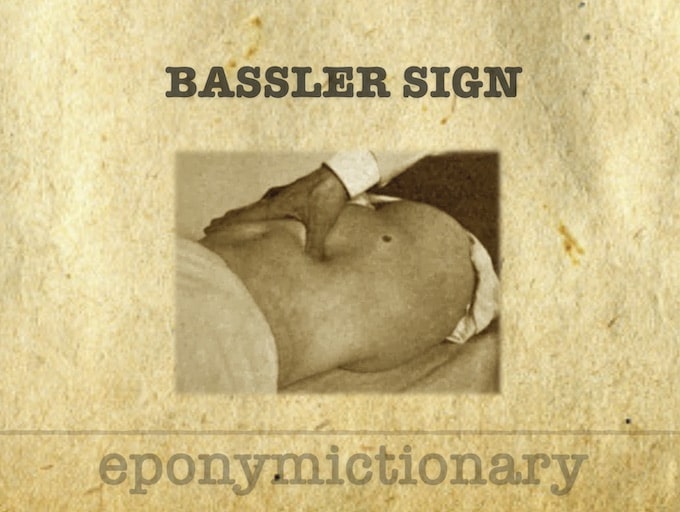
Anthony Bassler (1874-1959) was an American gastroenterologist. In 1913 he described Bassler sign: compressing the appendix to assist in diagnosing chronic appendicitis.

Piotr Porfiryevich Sitkovskiy (Петр Порфирьевич Ситковский) (1882 – 1933) was a Russian surgeon. Sitkovskiy sign (1922) appendicitis
Farouk Massouh is a British General Surgeon eponymously associated with the Massouh Sign in acute appendicitis
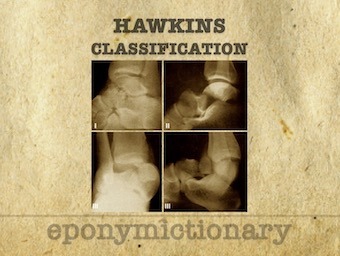
Hawkins classification: Classification system for talar neck fractures. Hawkins originally described Types I-III in 1970 with Canale and Kelly adding Type IV in 1978
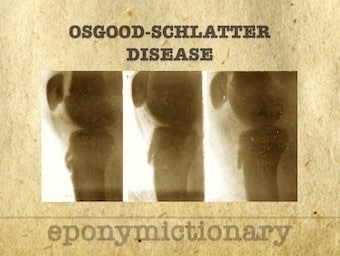
Osgood–Schlatter disease (OSD) Osteochondrosis or traction apophysitis of the tibial tubercle. Paget (1891), Osgood (1903), Schlatter (1903)

Köhler-Pellegrini-Stieda lesion: ossification near medial femoral collateral ligament adjacent to the margin of the medial femoral condyle.