
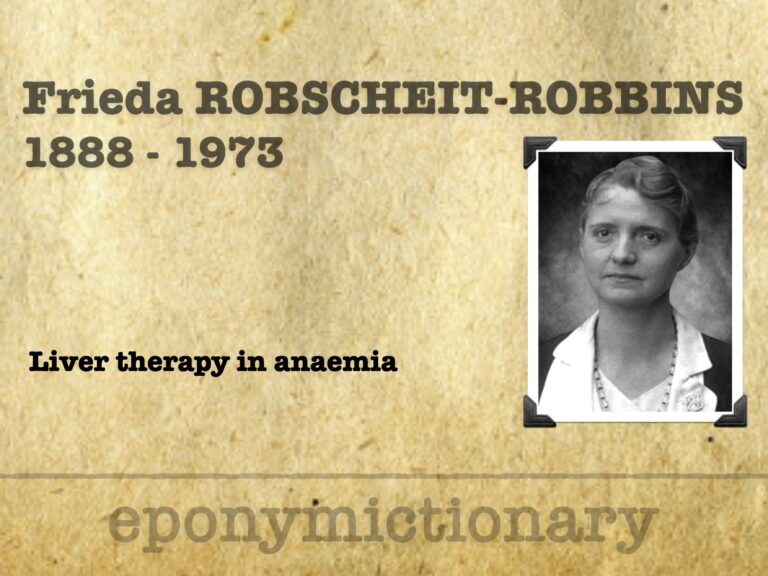
Frieda Robscheit-Robbins
Frieda Robscheit-Robbins (1888–1973), pioneering pathologist who advanced aneamia research, yet was overlooked for the 1934 Nobel despite major contributions.


Frieda Robscheit-Robbins (1888–1973), pioneering pathologist who advanced aneamia research, yet was overlooked for the 1934 Nobel despite major contributions.
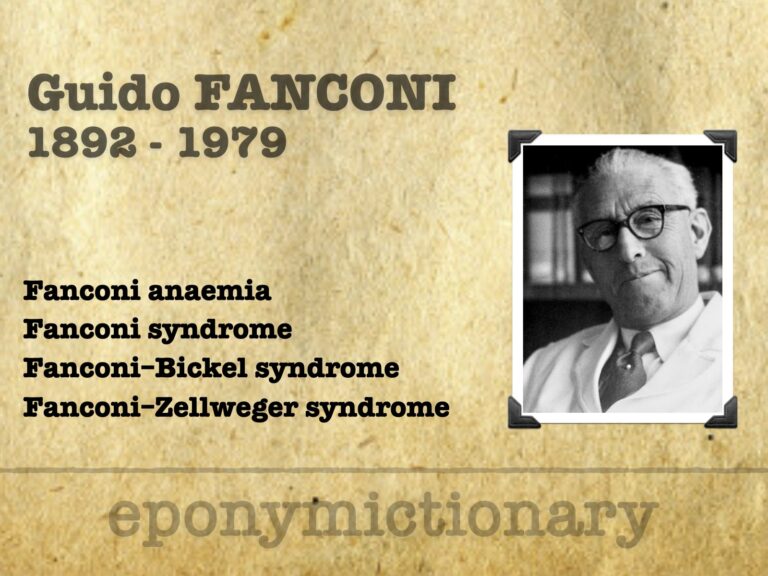
Swiss paediatrician Guido Fanconi (1892–1979) defined Fanconi anaemia and Fanconi syndrome, shaping modern paediatrics and medical genetics.
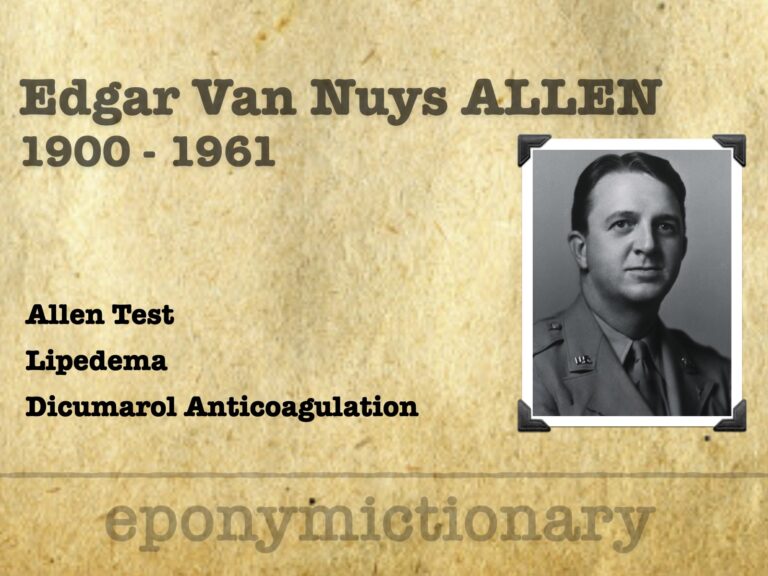
Pioneer of the Allen test and anticoagulant therapy, Edgar V. Allen (1900–1961) advanced vascular medicine with key insights into dicumarol use and lipedema
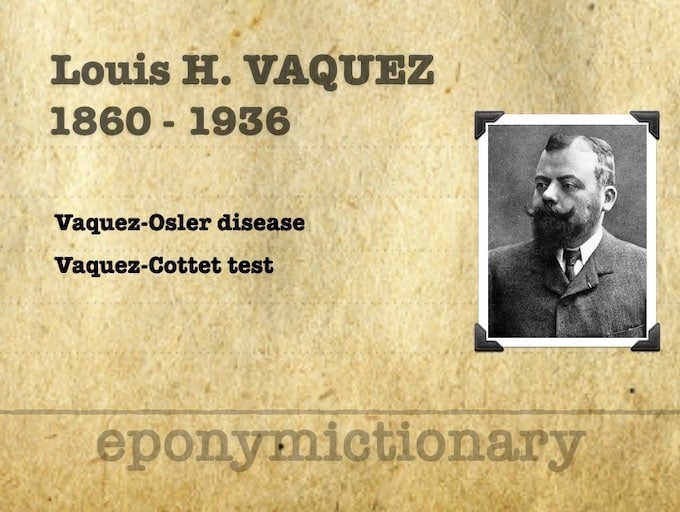
Louis Henri Vaquez (1860-1936) was a French physician and cardiologist. Described polycythaemia vera (Vaquez-Osler disease) in 1892
Platelet transfusions are undertaken for numerous reasons, such as severe bleeding with low platelet counts, or dysfunctional platelets.
Modifications to blood components that can be requested / are performed on products which include washed, phenotype matching etc.
Aka. RiaSTAP or Fibrinogen (Factor I) Concentrate DESCRIPTION INDICATIONS ADMINISTRATION / DOSING Intravenous (IV) PREPARATION PHARMACEUTICS GROUP / CROSSMATCH ADVERSE EFFECTS LOCATION OF ACTION MECHANISM OF ACTION CONTRAINDICATIONS ADVANTAGES AND DISADVANTAGES TO CRYOPRECIPITATE Advantages Disadvantages RECONSTITUTION TIPS It is a…

Dorothy Mabel Reed Mendenhall (1874 - 1964) was an American physician, pediatrician and public health specialist. Reed-Sternberg cells (1902)

Winifred Mayer Ashby (1879 - 1975) was an English born, American pathologist, pianist and medical researcher. Ashby technique (1919)

Thomas Hodgkin (1798 – 1866) was an English physician and pathologist. Eponym: Hodgkin disease (1832); Key-Hodgkin murmur (1827)

Richard Clarke Cabot (1868-1939) American physician - clinical haematology; pioneering approach to social work; Cabot-Locke murmur (1903)

Virginia Claire Canale (1936 - 2005) was a pediatric hematologist. Canale-Smith syndrome (1967)