
William Gowers
Sir William Richard Gowers (1845 - 1915) was an English neurologist. Gowers sign (1879). Esteemed author of Manual of the Diseases of the Nervous System


Sir William Richard Gowers (1845 - 1915) was an English neurologist. Gowers sign (1879). Esteemed author of Manual of the Diseases of the Nervous System
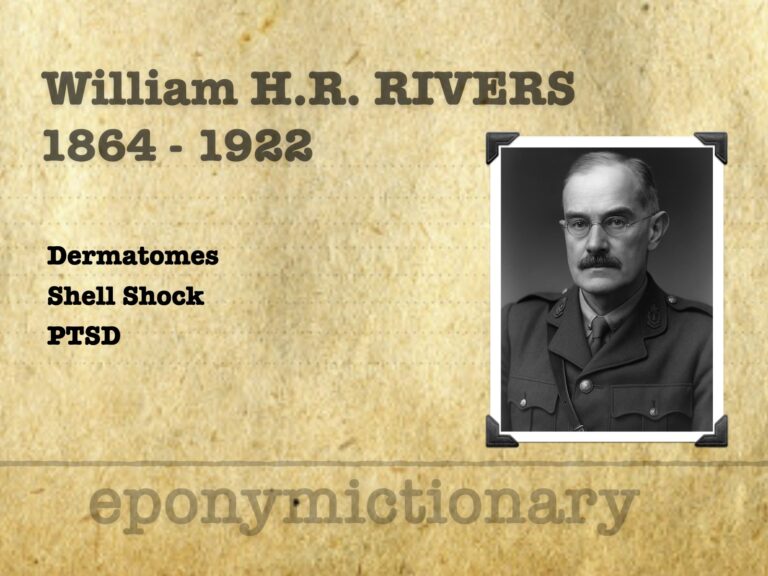
William Halse Rivers Rivers (1864–1922): neurologist, anthropologist, WWI shell shock pioneer, dermatomes co-mapper, protopathic/epicritic sensation theorist

Hans Chiari (1851-1916) was an Austrian pathologist. Eponymously affiliated with the Chiari malformation; Type II Chiari malformation (Arnold–Chiari malformation) and Budd–Chiari syndrome
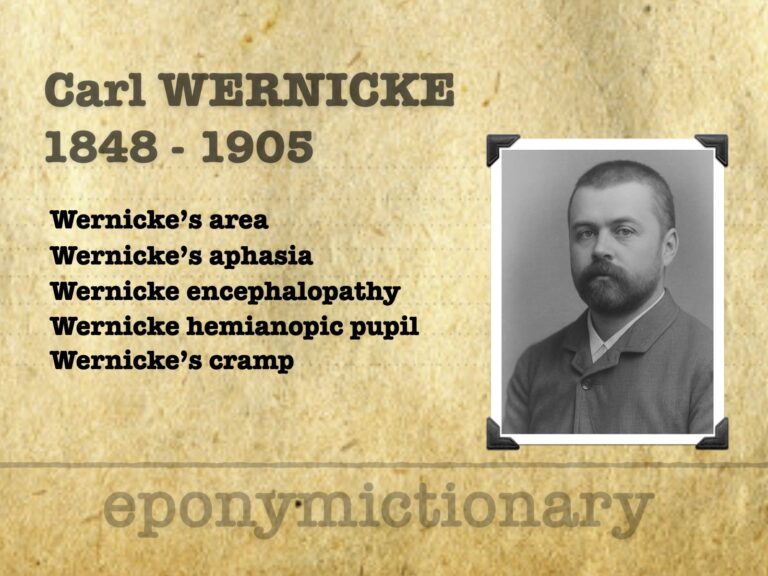
Carl Wernicke (1848–1905), German neurologist who described Wernicke’s area and aphasia, and identified Wernicke’s encephalopathy from thiamine deficiency
Lower brachial plexus injury, with consequent weakness and wasting of the C8–T1 musculature. Augusta Klumpke (1859-1927)

Carl Friedrich Otto Westphal (1833-1890) was a German neurologist and psychiatrist. Westphal sign, Westphal syndrome, Westphall-Strümpell pseudosclerosis, Westphal-variant Huntington disease, Leyden-Westphal ataxia, and the Edinger-Westphal nucleus
Subarachnoid haemorrhage. Neuroimaging case series. Images, text and cases collated by Teresa Crow MD (Emergency Medicine) and L. Erin Miller MD (Neurosurgery)
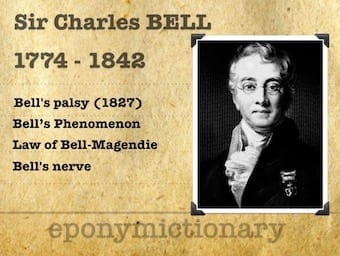
Sir Charles Bell (1774-1842) was a Scottish anatomist, physiologist, neurologist and surgeon. Eponymously affiliated with Bell's palsy
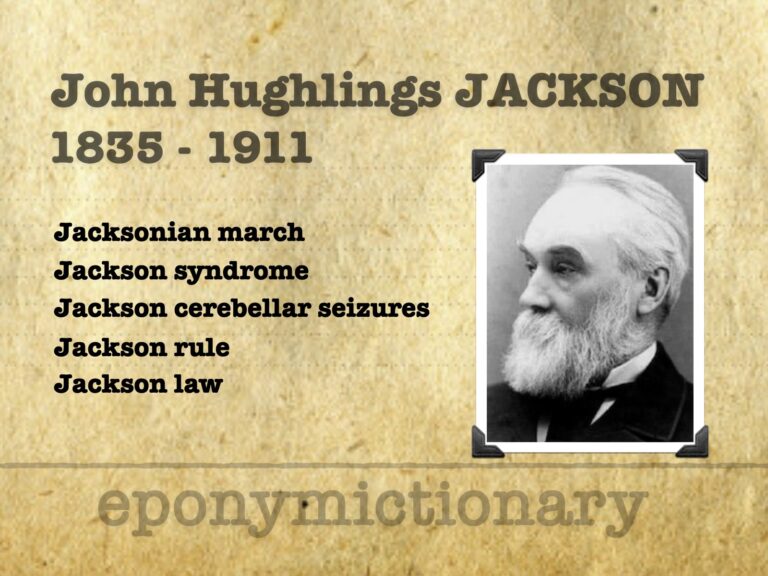
John Hughlings Jackson (1835-1911) was an English neurologist. Responsible for developing the modern concept of epilepsy. Multiple eponyms
NeuroResus is a FOAMed educational resource which defines, describes and elaborates on the practical management of all neurological emergencies
Subdural haematoma. Neuroimaging case interpretation with Madison Watts, Rebecca DeCarlo, Faith Meyers and Steven Perry

UCEM Pivotal Observational Study (n=1) for application of intra-Waiting Room Sphenopalatine Ganglion Block (iWR-SPGB)