
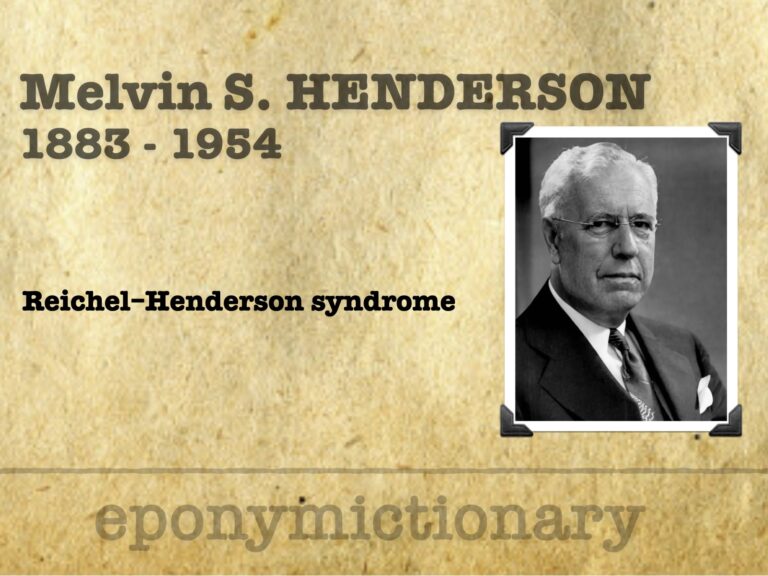
Melvin S. Henderson
Melvin Starkey Henderson (1883–1954), founding Mayo orthopaedist and ABOS president, co-described Reichel–Jones–Henderson syndrome (synovial chondromatosis).


Melvin Starkey Henderson (1883–1954), founding Mayo orthopaedist and ABOS president, co-described Reichel–Jones–Henderson syndrome (synovial chondromatosis).
Georges Charles Guillain (1876-1961) was a French neurologist. Multiple neurology-related eponyms including Guillain-Barré syndrome
Woldemar Mobitz (1889-1951) was a Russian-German physician. Applied mathematical approach to arrhythmias 1924 Mobitz Type I and II AV Block
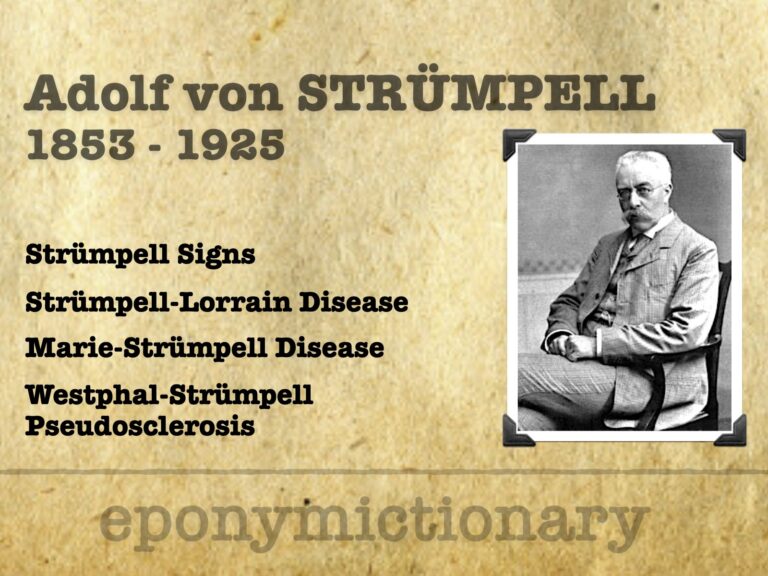
Ernst Adolf Gustav Gottfried von Strümpell (1853-1925) was a German neurologist. Strümpell signs, Strümpell-Lorrain disease, Marie-Strümpell disease and Westphal-Strümpell pseudosclerosis.
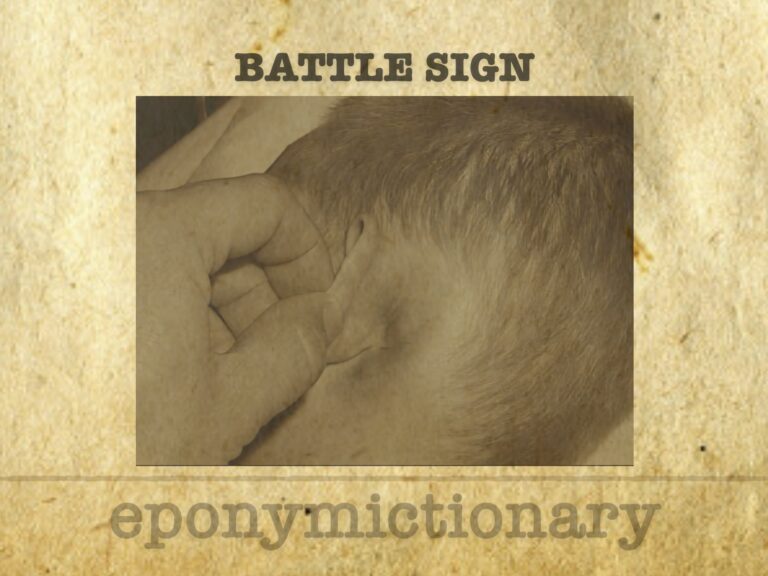
Battle sign: mastoid ecchymosis indicating basilar skull fracture, described by W.H. Battle in 1890; it holds >75% PPV for posterior fossa injury.
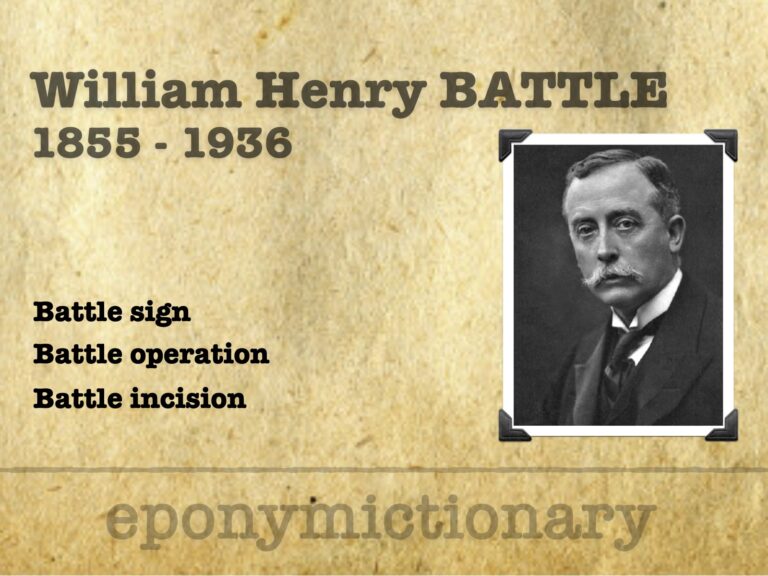
William Henry Battle (1855–1936) English surgeon. Battle incision, Battle operation and Battle sign postauricular (mastoid) ecchymosis

Carl Gerhardt (1833–1902), German internist and paediatric pioneer, described Gerhardt’s sign and advanced diagnostics, paediatrics, and laryngology
Alfred Stieda (1869-1945) was a German Surgeon. Eponym: The Stieda fracture, Stieda tubercle, Pellegrini-Stieda disease (1908)

Libman–Sacks endocarditis is a sterile cardiac valve lesion linked to lupus and antiphospholipid syndrome, often detected via echocardiography

Benjamin Sacks (1896–1971), cardiac pathologist and co-describer of Libman–Sacks endocarditis, also a Hollywood advisor and Arizona frontier historian.
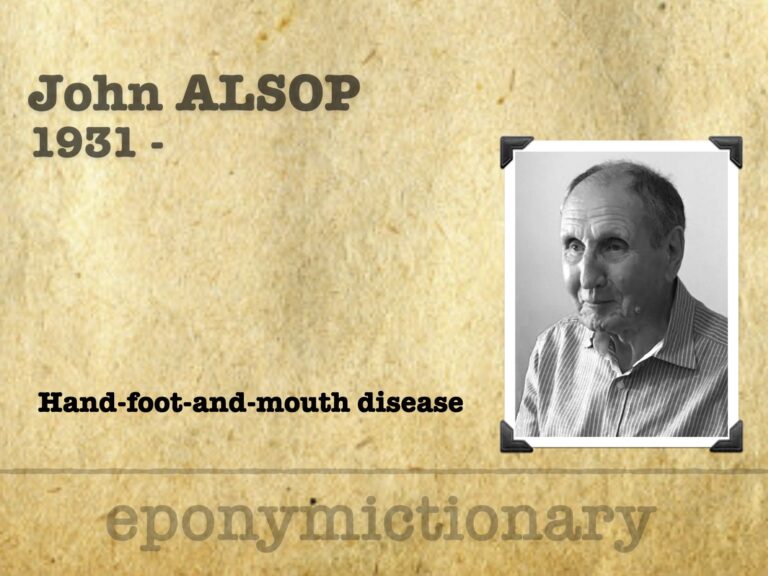
John Alsop (1931–), GP who coined "hand-foot-and-mouth disease" and published BMJ reports on outbreaks and ringworm in Birmingham, UK.
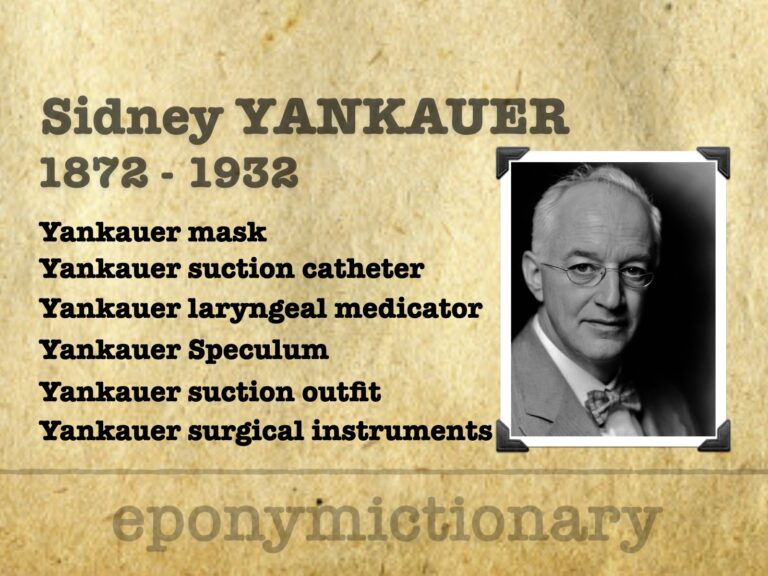
Sidney Yankauer (1872–1932), American ENT surgeon and inventor of the Yankauer suction catheter, pioneer in bronchoscopy and surgical airway care