
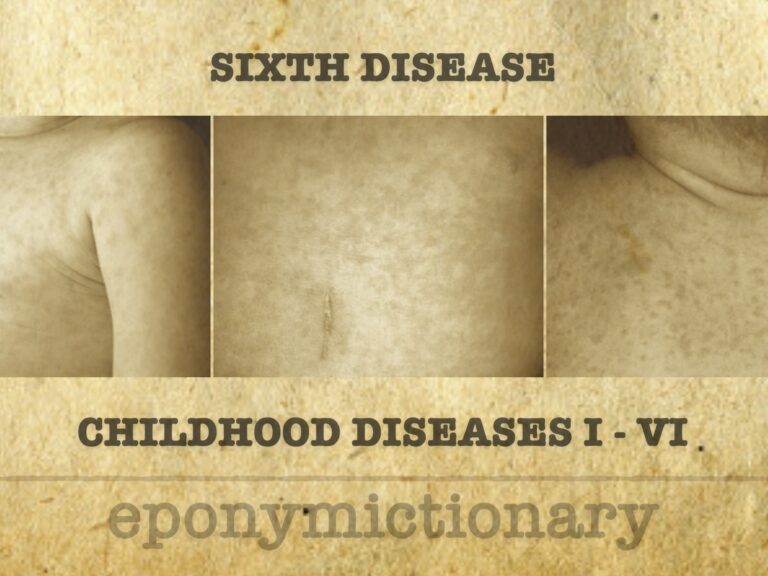
Sixth disease
Common viral illness in infants caused by HHV-6. Roseola presents with high fever followed by sudden rash; also known as sixth disease or exanthem subitum.


Common viral illness in infants caused by HHV-6. Roseola presents with high fever followed by sudden rash; also known as sixth disease or exanthem subitum.
Filatov-Dukes disease, or fourth disease, was a proposed childhood exanthem now largely dismissed as a misclassification of rubella or scarlet fever.
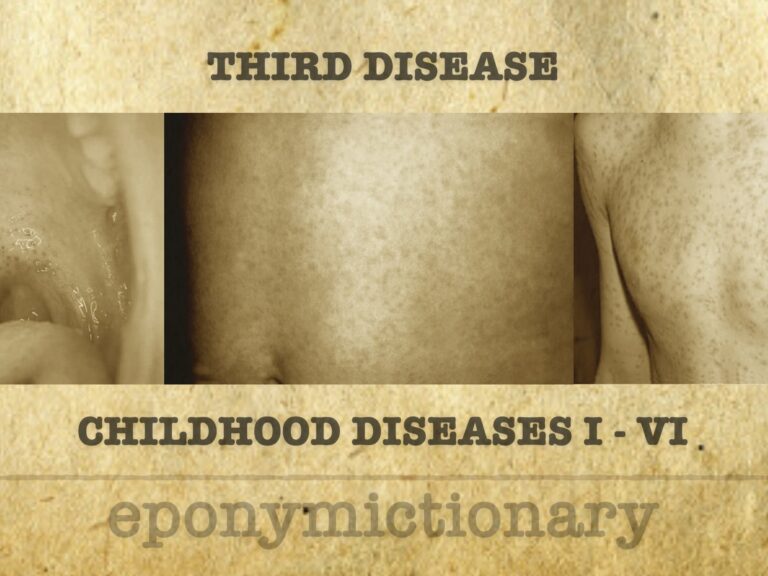
Mild viral exanthem in children; dangerous in pregnancy. Rubella causes rash and lymphadenopathy, with congenital infection leading to CRS.
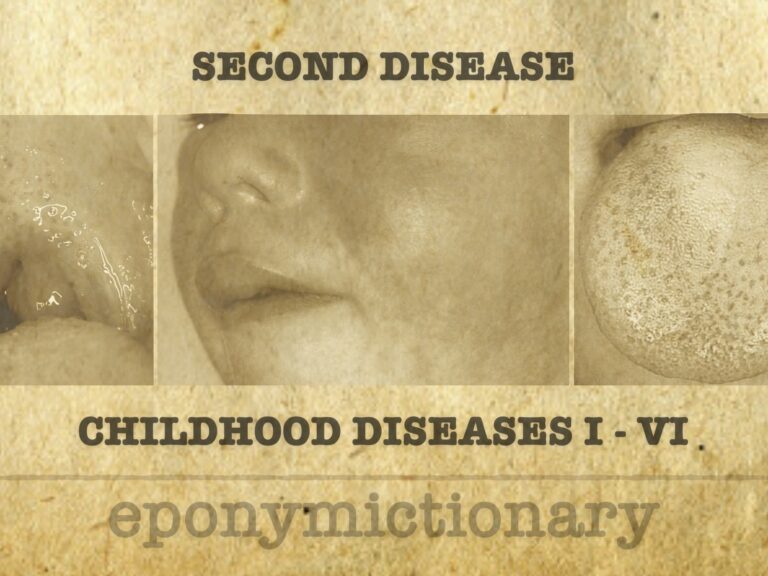
Scarlet fever (second disease). Contagious GABHS infection in kids under 10 with sore throat or rash; caused by S. pyogenes strains producing erythrogenic toxin.
Measles (First Disease): classic childhood exanthem caused by Morbillivirus, with high infectivity, pathognomonic signs, and vaccine-preventable
Clement Dukes (1845–1925), English physician and school health reformer, proposed "Dukes' disease" and transformed adolescent medical care in public schools.

Koplik spots are pathognomonic buccal lesions in early measles, first described by Henry Koplik in 1896, aiding pre-rash diagnosis and outbreak control.

Henry Koplik (1858–1927), American pediatrician, discovered Koplik’s spots—an early diagnostic sign of measles—and pioneered infant health reform
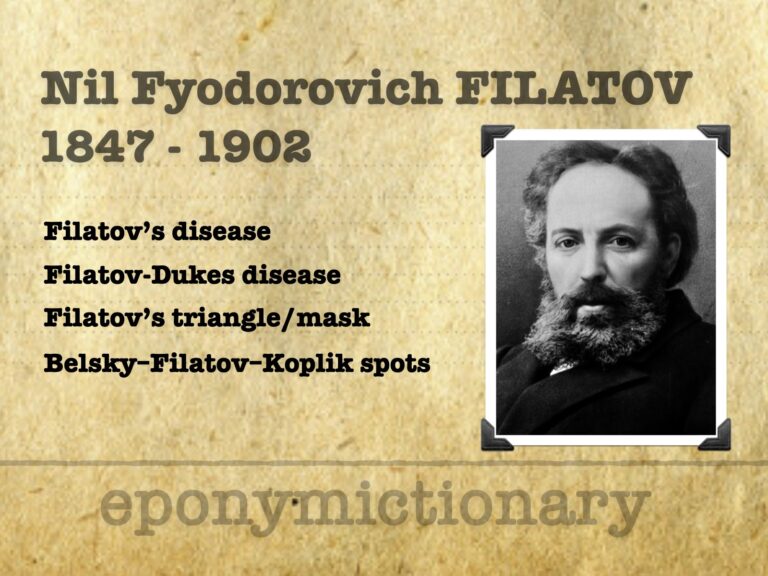
Nil Filatov (1847–1902), founder of Russian paediatrics, described key signs in measles, rubella, and mononucleosis; led Moscow’s first children’s hospital.
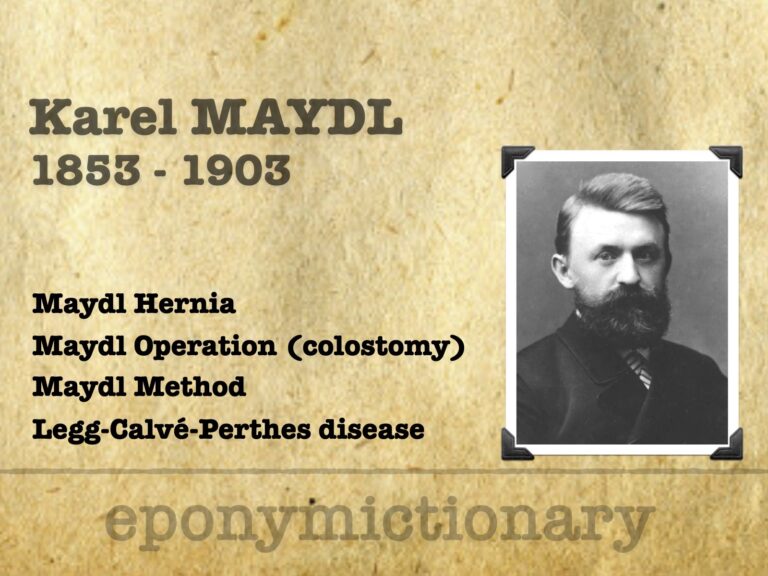
Karel Maydl (1853–1903), Czech surgeon, pioneer of colostomy, bladder exstrophy surgery, and Maydl’s hernia; early describer of Legg-Calvé-Perthes disease (LCPD)

Owen Conor Ward (1923–2021), Irish paediatric cardiologist, co-described Romano-Ward syndrome; pioneer of children’s cardiac care and medical historian
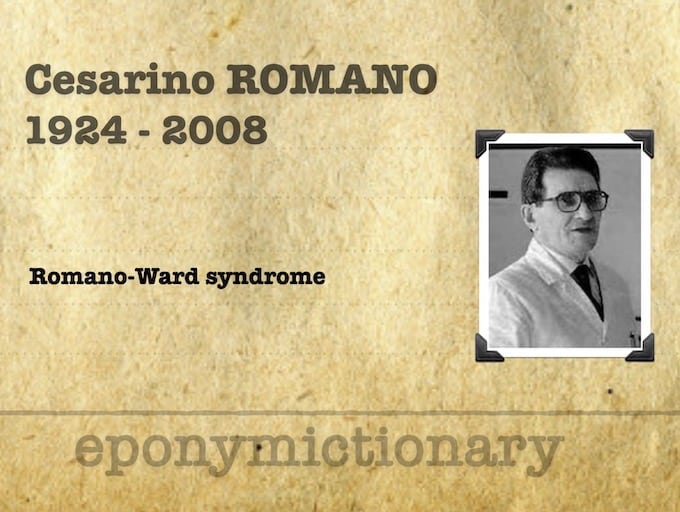
Cesarino Romano (1924–2008), Italian paediatrician, co-described Romano-Ward syndrome; led advances in cystic fibrosis, metabolic screening, and emergency care.