
Preparing for the unknown
Training and psychological preparedness is essential for prehospital and disaster clinicians, in order to effectively care for victims in austere environments.


Training and psychological preparedness is essential for prehospital and disaster clinicians, in order to effectively care for victims in austere environments.
When time is muscle every second counts. Cardiac failure may not be so terminal after all, with Emily Granger
Resuscitating a critically injured child is one of the most stressful jobs in pre-hospital medicine, with Sam Bendall
Naomi Hammond talks to us about applying research in the Neuro ICU and following up after critical illness.
Cardiac arrest physiology is an emerging field of research that may allow us to better understand why clinical trials of cardiac arrest have been so frustrating
Variceal bleeds can lead to terrifyingly messy resuscitations; this talk reviews tricks and tips for rescuing your patient from massive GI bleeding disasters.
The Resuscitology team discuss the art and science of resuscitating bleeding patients using a case-based approach.
What's next after RESCUEicp? -The results of this study may have been disappointing, but there are some questions about the trial itself which we review.
A strong interdependent system of care can improve survival from out of hospital cardiac arrest, with Tony Walker ASM
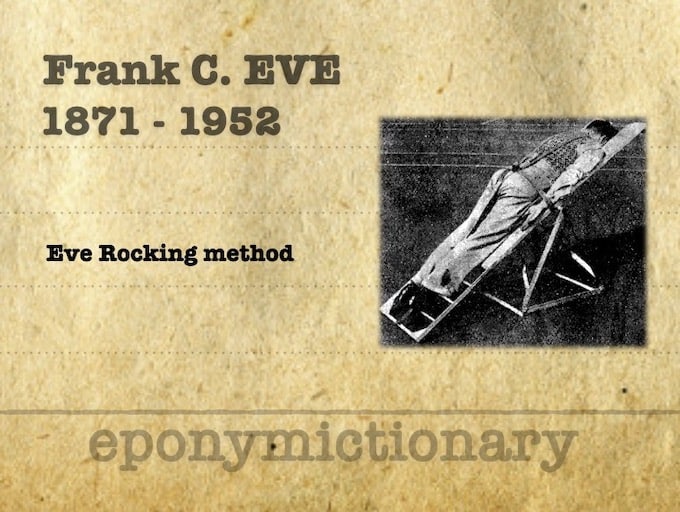
Frank Cecil Eve (1871-1952) was an English physician. Eponym: Eve’s rocking method for artificial respiration published in 1932
Not all major trauma patients are hypotensive from hypovolemia: what are the differential diagnoses? with Caroline Leech
John Myburgh hypothesises that resuscitation fluids cause more harm than they save lives.