


Air Commodore Robert Louis Soper (1908-1973) was a British anaesthetist
Soper was a Royal Air Force medical officer who rose to the rank of Air Commodore and served as consultant adviser in anaesthetics to the RAF.
In 1947, Soper introduced the Soper laryngoscope, a straight-bladed modification of the Macintosh design intended to improve direct elevation of a large or floppy epiglottis. The Soper blade represented an early attempt to combine the advantages of straight and curved laryngoscope designs.
Soper was committed to making anaesthesia practical outside the conventional operating theatre. His designed simple, robust and reliable equipment suited to military medicine and resource-limited environments including portable anaesthetic equipment and physiological monitoring.
Biographical Timeline
- Born on February 15, 1908 in Tynemouth, Northumberland, son of Captain Edward Pitt Soper, Royal Navy engineer.
- Educated at St Lawrence College, Ramsgate, and Guy’s Hospital Medical School.
- 1933 – MRCS LRCP qualified from Guy’s Hospital. Resident anaesthetist at Guy’s and resident medical officer at Chelmsford Hospital.
- 1935 – Joined the Royal Air Force Medical Branch. Granted a short-service commission as Flying Officer on probation from September 2.
- 1936 – Diploma in Anaesthetics (DA). Promoted to Flight Lieutenant.
- 1937 – Presented on anaesthetic apparatus designed for RAF use to the Section of Anaesthetics of the Royal Society of Medicine.
- 1938 – Granted a permanent RAF commission as Flight Lieutenant.
- 1940–1945 – Wartime RAF service overseas, including service at Kalafrana, Malta, and later the Bahamas. Promoted through Squadron Leader during the war.
- 1945 – Posted to Princess Mary’s RAF Hospital, Halton as senior anaesthetist. Halton remained his principal base after the war.
- 1946 – Promoted to Wing Commander.
- 1947 – As senior specialist in anaesthetics, RAF, published A new laryngoscope for anaesthetists, describing the Soper laryngoscope, a straight blade designed particularly to improve control of a large or floppy epiglottis.
- 1948 – Elected FFARCS.
- 1949 – Published A simple portable anaesthetic apparatus. Appointed an Officer of the Order of St John of Jerusalem.
- 1950 – Posted to the Central Medical Establishment as senior anaesthetist.
- 1951 – Promoted Group Captain.
- 1959 – Published Anaesthesia for major disasters
- 1961 – Promoted to Air Commodore and served as consultant adviser in anaesthetics to the Royal Air Force.
- 1967 – Appointed Commander of the Order of the British Empire (CBE), Military Division.
- 1973 – Retired from the RAF after almost four decades of service.
- Died on October 6, 1973, aged 65.
Medical Eponyms
Soper laryngoscope (1947)
In February 1947, Soper described A new laryngoscope for anaesthetists in the British Medical Journal. The instrument combined the straight blade and direct epiglottic elevation of traditional laryngoscopes with the Z-shaped cross-section introduced by Robert Macintosh in 1943.
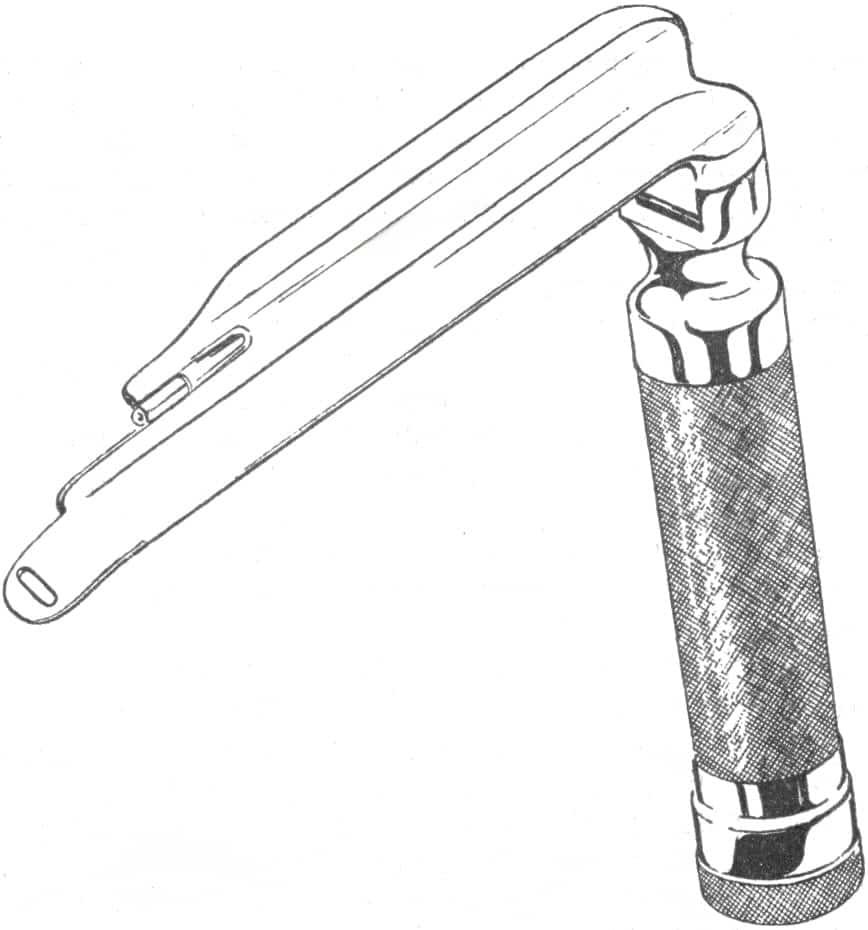
The Soper laryngoscope blade was designed to overcome perceived disadvantages of the Macintosh blade. Difficulty exposing the larynx when the epiglottis was large and floppy, and difficulty manipulating an endotracheal tube around the curved blade. The Soper design retained the Macintosh cross-section but incorporated a straight blade with a slotted distal tip to prevent the epiglottis slipping during elevation.
The blade was manufactured by the Longworth Scientific Instrument Company, Oxford, and fitted the standard Macintosh handle.
Blade evaluation
- 1984 – Jephcott described the Soper laryngoscope as an early true derivative of the Macintosh design.
- 1989 – McIntyre included the Soper blade in his review of laryngoscope designs for difficult adult intubation, illustrating its profile and reduced blade depth.
- 1993 – Marks, Hancock and Charters demonstrated that although the Soper blade provided minimal eyeline displacement, its greater forward-space requirements gave it less favourable theoretical geometric performance than the Miller and larger Macintosh blades.
- 1998 – Whittaker and Moulton found significantly longer intubation times and poorer ease-of-use scores with the Soper and Seward blades in an infant-manikin comparison involving 30 relatively inexperienced emergency clinicians.
Key Medical Contributions
Portable anaesthetic apparatus and vaporiser development (1949–1961)
1949 – Soper described A simple portable anaesthetic apparatus, designed primarily for non-specialist anaesthetists working in military and remote environments. The apparatus could deliver nitrous oxide and oxygen with ether or other volatile agents through Thornton vaporisers. An air-inlet valve allowed it to operate as a draw-over system without compressed gases, while rebreathing was also possible. The complete apparatus weighed just over 12 lb (5.4 kg).
1957 – Soper demonstrated a redesigned prototype, developed with the assistance of RAF technical officer C. W. Palmer, at the British Medical Association Exhibition. The apparatus weighed 16 lb (7.3 kg), could be carried in one hand, and could function independently of compressed-gas cylinders.
1961 – Soper published Portable anaesthetic apparaturus with vaporizer of new deisgn with incorporated bellows for manual ventilation and a new ambient-temperature vaporiser. The vaporising chamber used aluminium alloy with internal and external fins to improve heat transfer and reduce cooling during ether vaporisation. This allowed moderately constant vapour concentration without the complexity of more precisely calibrated systems.
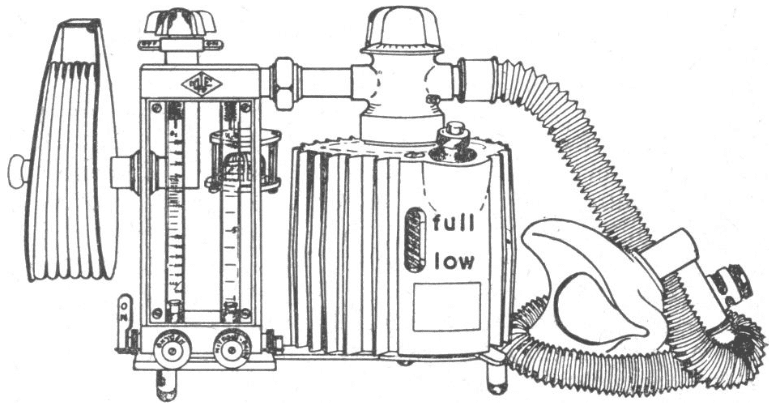
Soper acknowledged the more sophisticated work of Robert Macintosh et al on calibrated vaporisers. However his aim was to build a simpler, more robust apparatus for military operations, ships and emergency settings.
Continuous heart-rate monitoring: the cardiotachometer (1952)
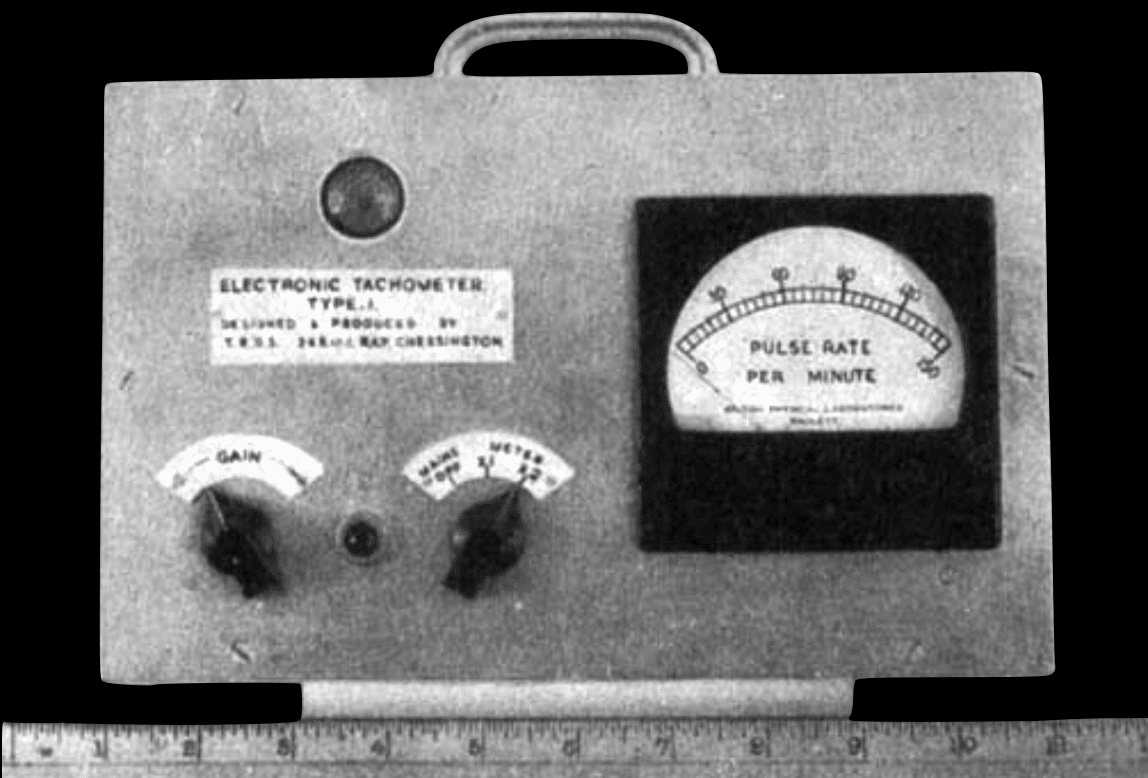
In 1952 Soper and RAF electronics officer R. Brennand published A cardiotachometer for the direct observation of the heart rate, describing an electronic instrument for continuous pulse-rate monitoring during anaesthesia.
The cardiotachometer converted electrical signals from the cardiac cycle into a continuous analogue meter reading, calibrated in beats per minute with ranges of 0–150 and 0–300. It incorporated a flashing indicator synchronised with the heart rate and circuitry intended to protect the instrument from electrical interference and overload.
The authors described its potential application in high-risk patients, cardiac surgery and hypotensive anaesthesia.
Aeromedical transport of ventilated patients (1950–1954)
Soper contributed to the development of Royal Air Force procedures for the aeromedical evacuation of patients dependent on mechanical respiratory support, particularly those paralysed by poliomyelitis.
Early evacuations relied on large cabinet respirators or iron lungs, which occupied considerable aircraft space, required continuous electrical power and created substantial difficulties during transfers between hospitals, ambulances and aircraft.
In November 1950 Soper accompanied an RAF medical team to Ceylon to repatriate a child with respiratory poliomyelitis. The patient was transferred from a cabinet respirator to a portable cuirass respirator and underwent a successful local test flight before the three-day journey to Britain. The experience helped establish procedures for subsequent evacuations.
In The air transport of poliomyelitis patients in mechanical respirators (presented 1953; published 1954), Soper described the importance of patient selection, acclimatisation to portable ventilation, reliable electrical supplies, contingency planning and a coordinated team comprising medical, nursing and technical personnel.
Anaesthesia for major disasters (1959)
In January 1959 Soper presented Anaesthesia for major disasters to the Section of Anaesthetics of the Royal Society of Medicine, examining how anaesthetic services might respond to the mass casualties expected following nuclear attack.
He outlined the potential for the destruction of hospitals, shortages of trained anaesthetists and limited availability of equipment and medical gases. He proposed training a reserve workforce of emergency anaesthetists, retaining specialists in supervisory roles, and developing simple techniques that could be delivered with portable equipment under austere conditions.
Major Publications
- Soper RL. A new laryngoscope for anaesthetists. Br Med J 1947; 1 :265
- Soper RL. A simple portable anaesthetic apparatus. Br Med J. 1949 Mar 5;1(4600):405
- Soper RL. The pneumatic balance valve and its applications: a preliminary report. Br Med J. 1951 Sep 22;2(4733):717-8
- Soper RL, Brennand R. A cardiotachometer for the direct observation of the heart rate. Anaesthesia. 1952 Apr;7(2):110-2
- Soper RL. The air transport of poliomyelitis patients in mechanical respirators. Proc R Soc Med. 1954 Mar;47(3):157-9
- Soper RL. Anaesthesia for major disasters. Proc R Soc Med. 1959 Apr;52(4):239-41
- Soper RL. Portable anaesthetic apparaturus with vaporizer of new deisgn. Br Med J 1961; 2
References
Biography
- Air Commodore R.L. Soper. Br Med J. 1973 Oct 20;4(5885):175.
- Wing Commander Robert Louis Soper. RCoA
- Sopers in Britain’s RAF
Eponymous terms
- Jephcott A. The Macintosh laryngoscope. A historical note on its clinical and commercial development. Anaesthesia. 1984 May;39(5):474-9.
- McIntyre JW. Laryngoscope design and the difficult adult tracheal intubation. Can J Anaesth. 1989 Jan;36(1):94-8.
- Marks RR, Hancock R, Charters P. An analysis of laryngoscope blade shape and design: new criteria for laryngoscope evaluation. Can J Anaesth. 1993 Mar;40(3):262-70.
- Whittaker JD, Moulton C. Emergency intubation of infants: does laryngoscope blade design make any difference? J Accid Emerg Med. 1998 Sep;15(5):308-11.
Eponym
the person behind the name

BA MA (Oxon) MBChB (Edin) FACEM FFSEM. Emergency physician, Sir Charles Gairdner Hospital. Passion for rugby, medical history, medical education, and asynchronous learning #FOAMed evangelist. Editor-in-Chief and Webmaster of Life in the Fast lane, LITFL | On Call 4e| Eponyms | Books | Horology |