

Philip Drinker
Philip Drinker (1894 - 1972) was a chemical engineer, father of American Industrial Hygiene and inventor of the Drinker respirator in 1928 and pioneer

Philip Drinker (1894 - 1972) was a chemical engineer, father of American Industrial Hygiene and inventor of the Drinker respirator in 1928 and pioneer

John Haven "Jack" Emerson (1906 – 1997) was an American inventor and humanist. Inventor of the Emerson Iron Lung in 1931, and holder of 35 medical based equipment patents

Sir Peter James Kerley (1900-1979) was an Irish radiologist. Kerley was widely published including describing (but not naming) his eponymous lines firstly in 1933 and then in again his textbook in 1950, and widely about TB diagnosis. Kerley lines A, B and C
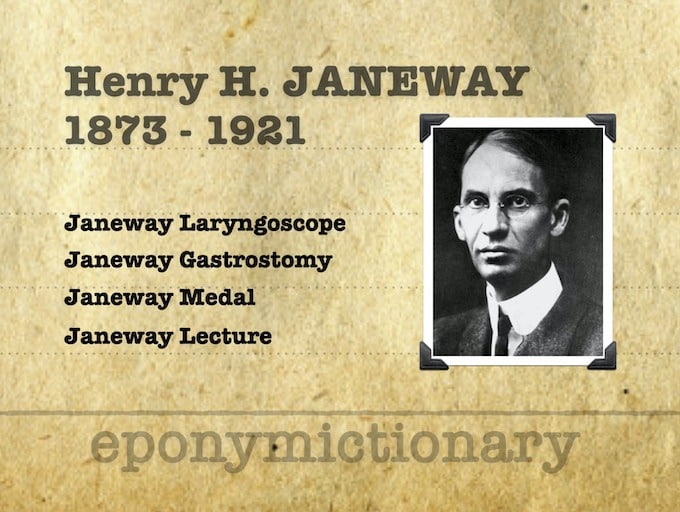
Henry Harrington Janeway (1873-1921) was an American physician and pioneer for radiation therapy in the treatment of cancer. Janeway Gastrostomy, Janeway Laryngoscope
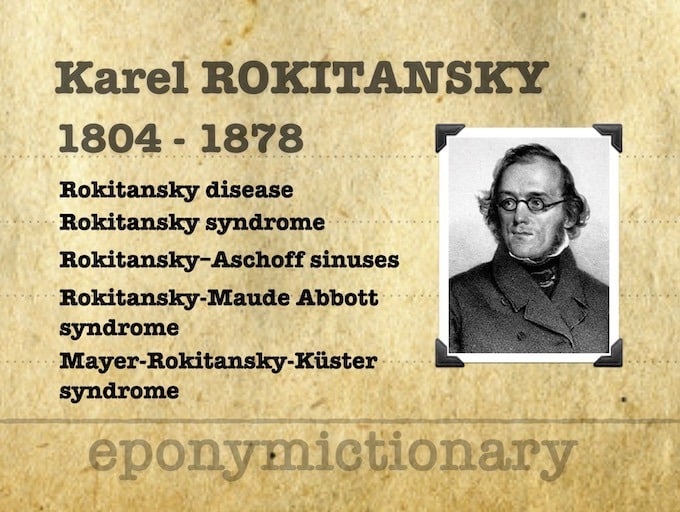
Karel (Carl von) Rokitansky (1804-1878) was a Czech pathologist. Eponymous terms include Rokitansky disease; Rokitansky syndrome; Rokitansky–Aschoff sinuses; and Rokitansky-Maude Abbott syndrome

Robbert J. de Winter (1958 – ) is a Dutch Professor of cardiology. Eponym: de Winter T wave - a new ECG Sign of Proximal LAD Occlusion
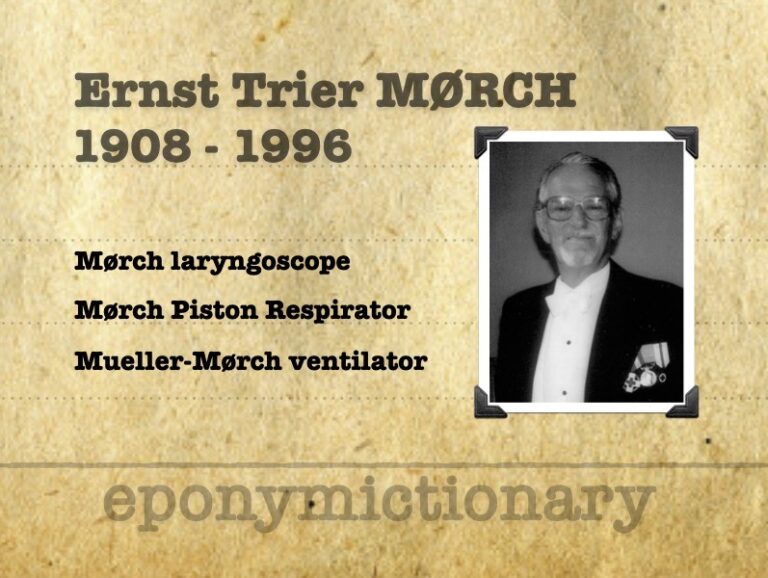
Ernst Trier Mørch (1908-1996) was a Danish-American anesthesiologist, inventor, geneticist and humanitarian. Mueller-Mørch ventilator (1954); Mørch Laryngoscope (1951)

Forrest Bird (1921-2015) was an American aviator, inventor, biomedical engineer and medical doctor: Bird Mark ventilator; BabyBird ventilator
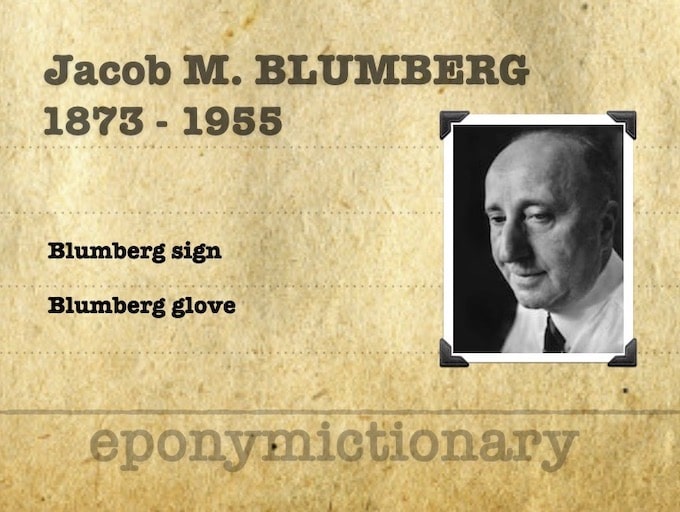
Jacob Moritz Blumberg (1873 - 1955) was a Polish-German surgeon and gynaecologist. Blumberg sign (1907); Blumberg glove (1900)

Alban Köhler (1874 – 1947) was a German Radiologist. Associated with Köhler-Pelligrini-Stieda disease; Köhler disease and Freiberg Infraction

Harris Miller Branham (1862 – 1936) was an American physician. Branham sign (1890) - bradycardia following occlusion the artery entering an arteriovenous fistula

Clinically, the Bezold-Jarisch reflex is an inhibitory reflex usually denoted as a cardioinhibitory reflex defined as bradycardia, vasodilation, and hypotension resulting from stimulation of cardiac receptors.