

Rolland J. Whitacre
Rolland John Whitacre (1909–1956), American anesthesiologist and inventor of the pencil-point spinal needle that reduced post-dural puncture headache.


Rolland John Whitacre (1909–1956), American anesthesiologist and inventor of the pencil-point spinal needle that reduced post-dural puncture headache.
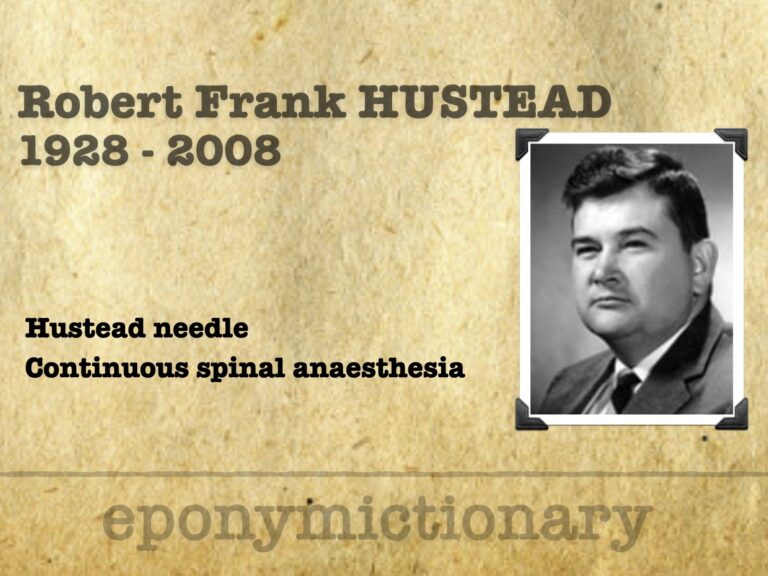
Robert Frank Hustead (1928-2008), American anaesthesiologist; refined epidural needle design, helped establish obstetric and ophthalmic anaesthesia subspecialties
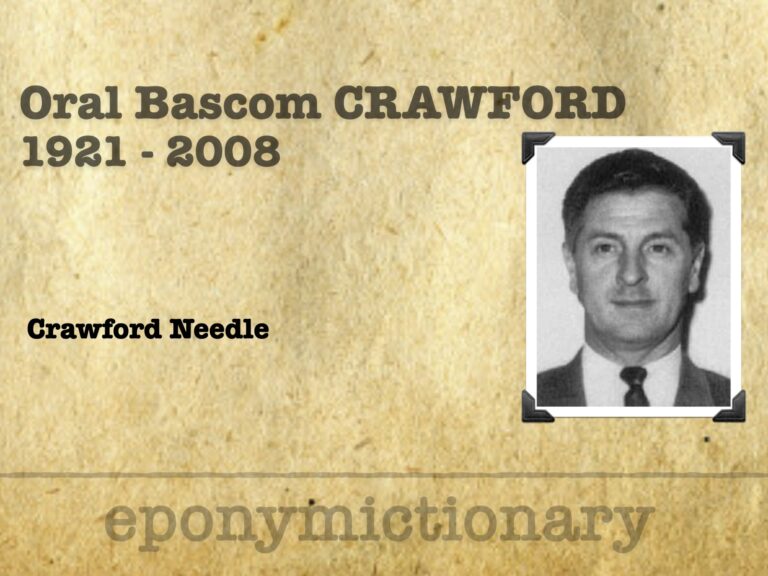
Oral Bascom Crawford Jr (1921–2008), American anesthesiologist. Early advocate of thoracic epidural anesthesia, inventor of the Crawford needle, and prilocaine investigator.
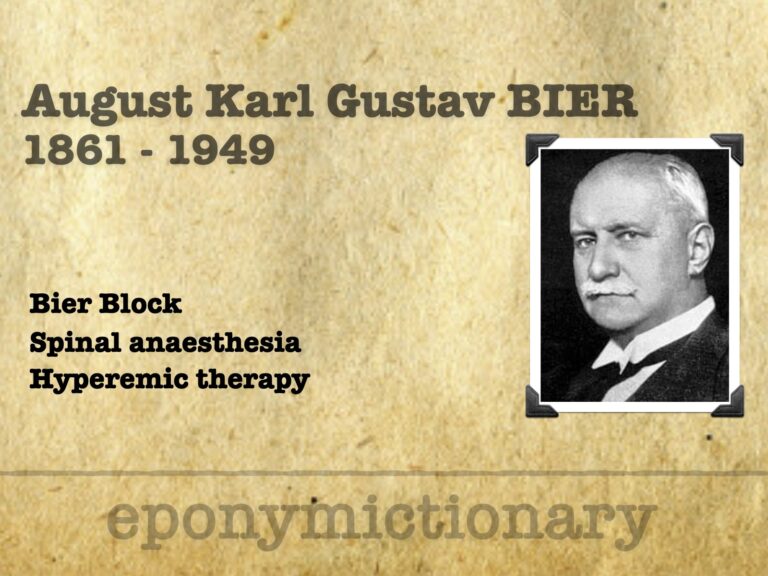
August Karl Gustav Bier (1861-1949) German Surgeon. Used Esmarch tourniquet forming the basis of his eponymous Bier block regional anaesthesia
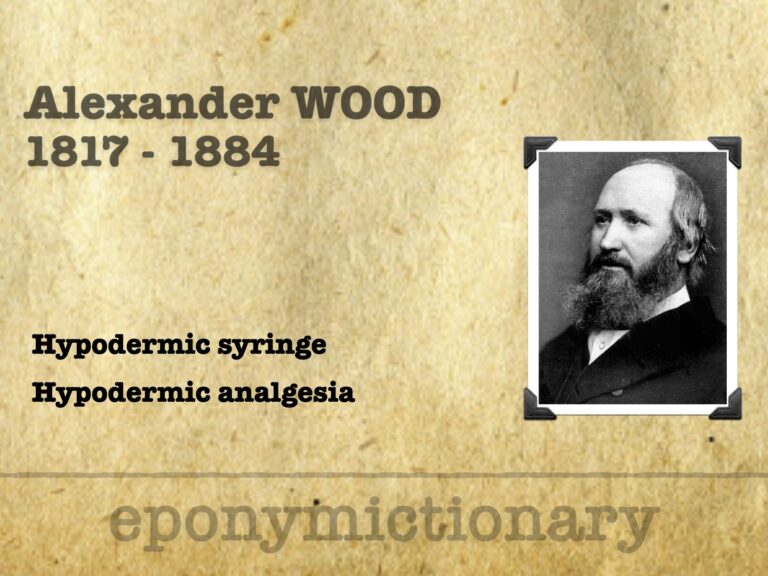
Alexander Wood (1817–1884), Scottish physician; popularised hypodermic morphine injection for neuralgia and helped establish the Wood syringe.
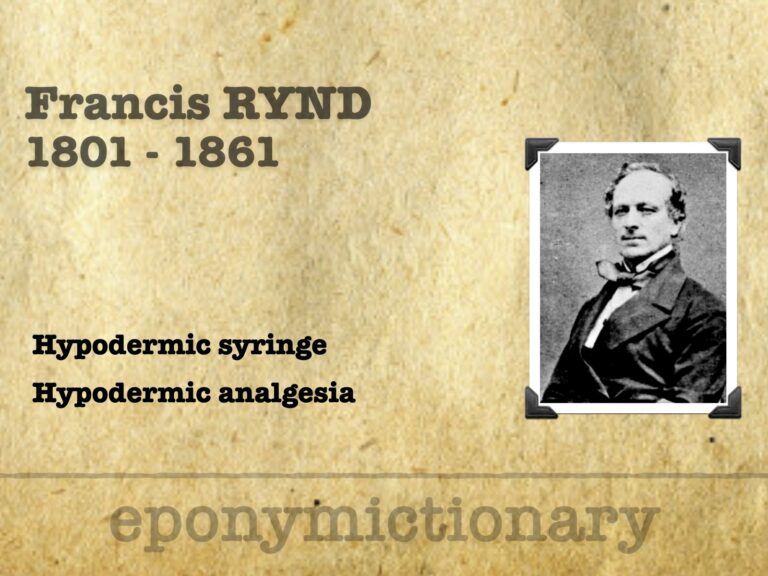
Francis Rynd (1801–1861), Irish surgeon who pioneered subcutaneous morphia injection for neuralgia (1844/1845) and described his cannula device in 1861.
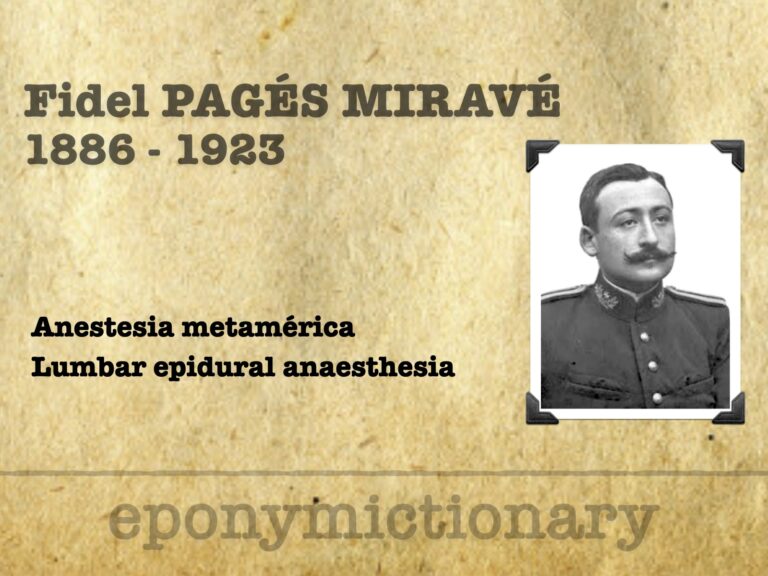
Fidel Pagés (1886–1923): Spanish military surgeon who described “anestesia metamérica” (1921), an early, practical lumbar epidural technique.

Walter Stoeckel (1871–1961), German gynaecologist who advanced caudal epidural analgesia in labour (1909) and shaped radical vaginal surgery and teaching.
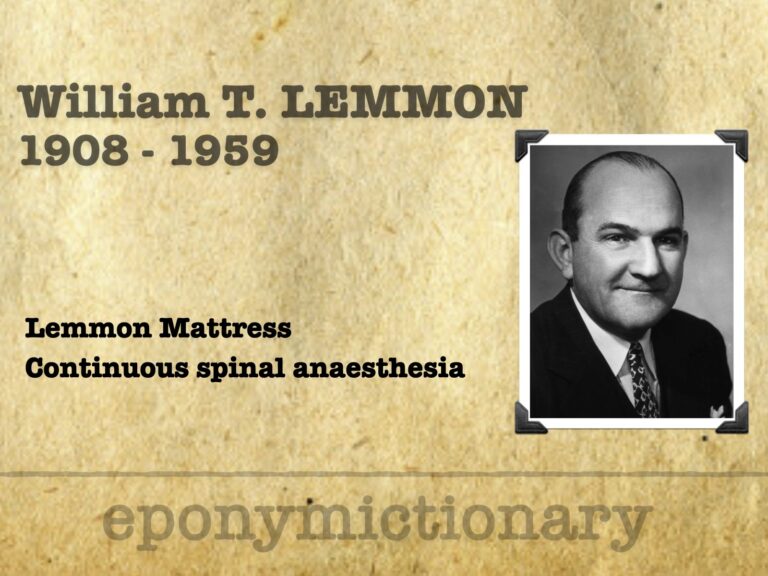
William Thomas Lemmon (1896-1974), surgeon who pioneered continuous spinal anaesthesia, and the Lemmon mattress
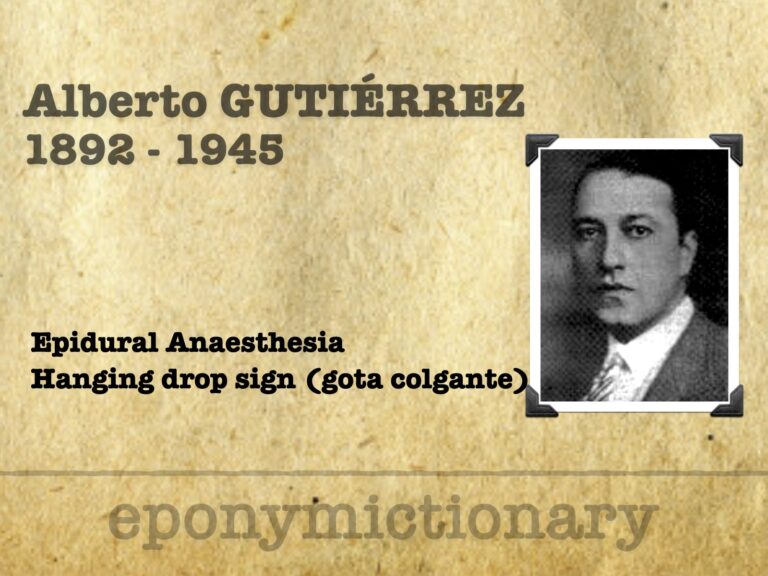
Alberto Gutiérrez (1892–1945), Argentine surgeon who described the epidural “hanging drop” sign (1933) and founded Argentina’s anaesthesia journal.
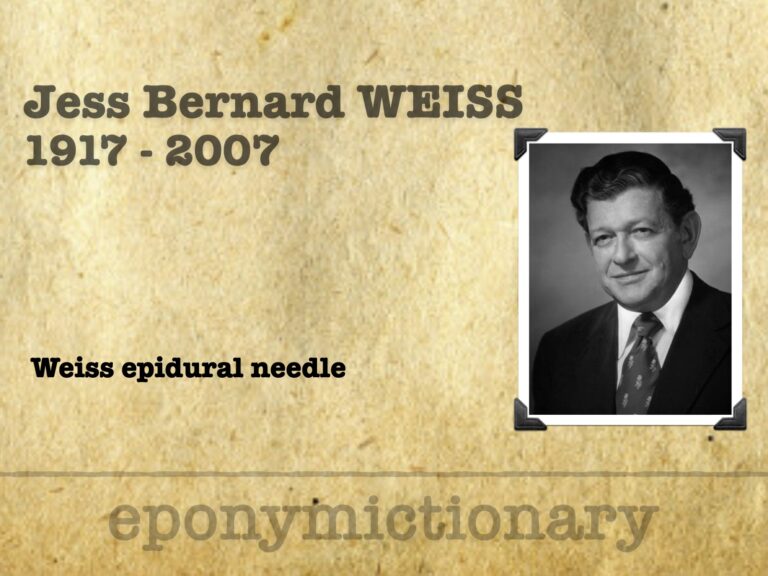
Jess Bernard Weiss (1917 – 2007) was an American anesthesiologist. Best known for designing the Weiss needle for the placement of epidural catheters
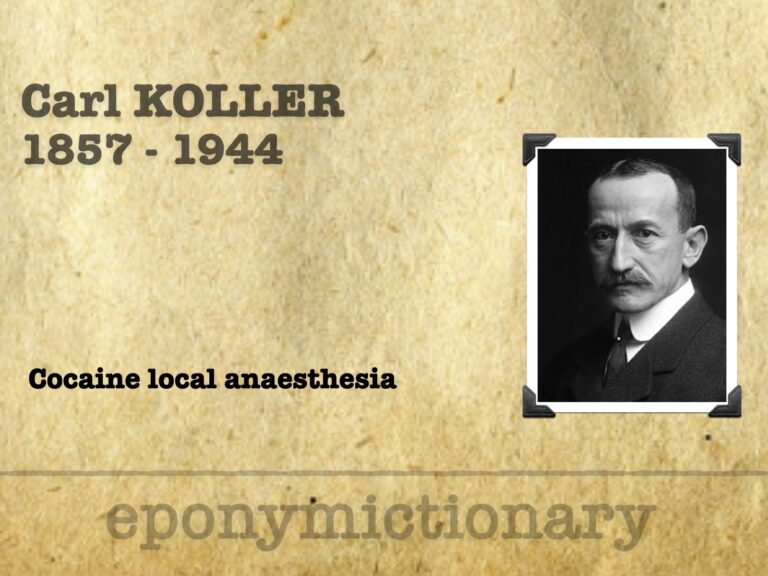
Carl (Karl) Koller (1857–1944), Austrian ophthalmologist who introduced cocaine as the first practical local anaesthetic in 1884, transforming surgery and enabling regional and neuraxial anaesthesia.