
Thomas Spens
Thomas Spens (1763-1842) was a Scottish physician. One of the first to provide a written report on what is now termed Stokes-Adams syndrome or cardiovascular syncope


Thomas Spens (1763-1842) was a Scottish physician. One of the first to provide a written report on what is now termed Stokes-Adams syndrome or cardiovascular syncope

Ruth Illig (1924 - 2017) was a German pediatric endocrinologist. Neonatal screening for congenital hypothyroidism; Illig syndrome (1970)
Biography Medical Eponyms Key Medical Attributions Major Publications References
Marcus Gerbezius (1658-1718) was a Slovenian physician. Provided first description of Stokes-Adams syndrome in 1717
Thomas Sydenham (1624 - 1689) was an English physician.

Charles McKinnon (Mack) Holmes (1935 - 2020) was a New Zealand anaesthetist.
Thomas Benton Cooley (1871 - 1945) was an American pediatrician and haematologist. Cooley Anemia (1925) [Thalassemia major]

Ida Bianco Silverstroni (1917 - 2006) was an Italian physician and haematologist. Silvestroni-Bianco anaemia (1948); heterozygotous thalassaemia
Petrus Johannes Waardenburg (1886 - 1979) was a Dutch ophthalmologist and geneticist. Waardenburg syndrome (1951); Waardenburg-Jonkers disease (1961); and Shah-Waardenburg syndrome (1981)
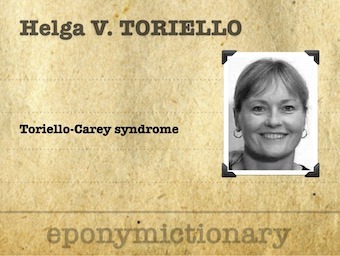
Helga V Toriello (1952 - ) PhD, FACMG. American Medical Geneticist and dysmorphologist. Toriello-Carey syndrome in 1988
January 2020 Adult Abdominal imaging cases and interpretation with Isolina R. Rossi, MD, Brian P. Shreve, MD and Kyle Cunningham, MD

Description What is the actual eponymous medical sign/syndrome/repair/classification… History 1885 – Pieter Klazes Pel first described this phenomenon in Berliner klinische Wochenschrift. A 25-year-old paper maker died after a four-month illness, in which five 10-30 day episodes of fever, each…