
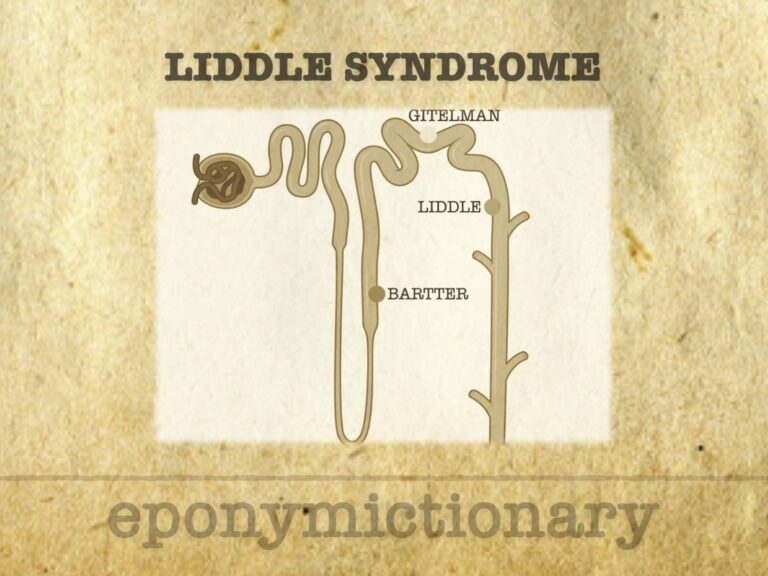
Liddle Syndrome
Liddle Syndrome: Monogenic hypertension due to ENaC overactivity in the collecting duct. Causes sodium retention, hypokalaemia, low renin and aldosterone—pseudo-aldosteronism.

Liddle Syndrome: Monogenic hypertension due to ENaC overactivity in the collecting duct. Causes sodium retention, hypokalaemia, low renin and aldosterone—pseudo-aldosteronism.
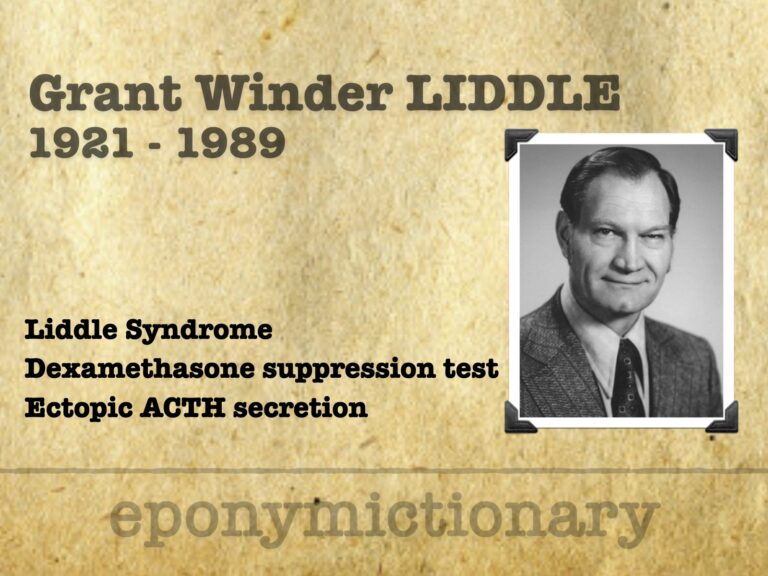
Grant Winder Liddle (1921-1989) American endocrinologist. Pioneer of endocrine diagnostics; discovered Liddle syndrome, developed suppression tests, and defined ectopic ACTH
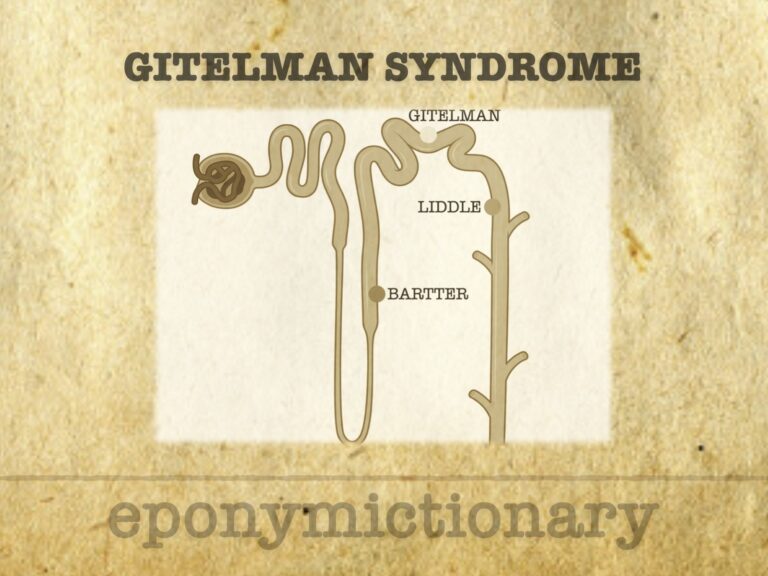
Gitelman Syndrome: Inherited defect in Na⁺-Cl⁻ cotransport in the distal tubule, causing hypokalaemia, alkalosis, hypomagnesaemia, and hypocalciuria—thiazide-like effect.

Hillel J. Gitelman (1932–2014) American nephrologist. Described Gitelman syndrome, a renal tubulopathy mimicking thiazide effect with hypokalaemia and hypomagnesaemia.
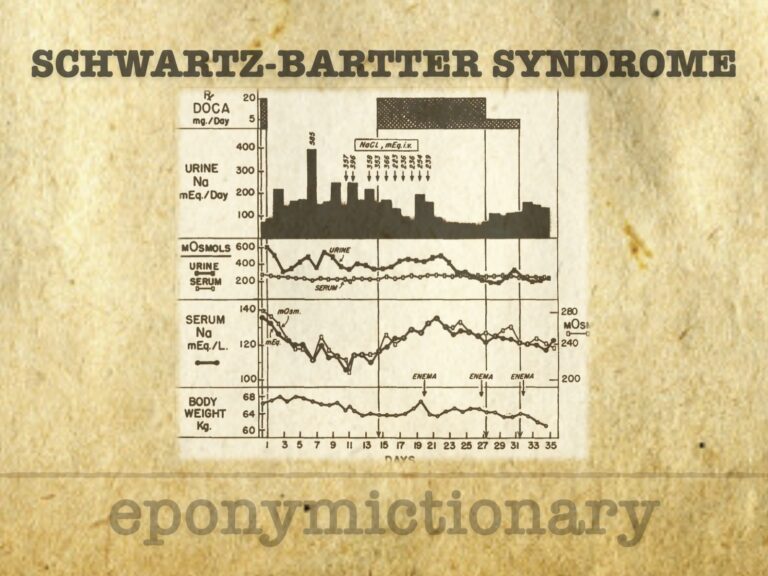
Schwartz-Bartter Syndrome (SIADH): Excess ADH leads to water retention and dilutional hyponatraemia, with low serum sodium and osmolality but inappropriately concentrated urine.

William B. Schwartz (1922–2009) American nephrologist. Co-described SIADH, pioneered decision theory, medical AI, and ethical health care rationing.
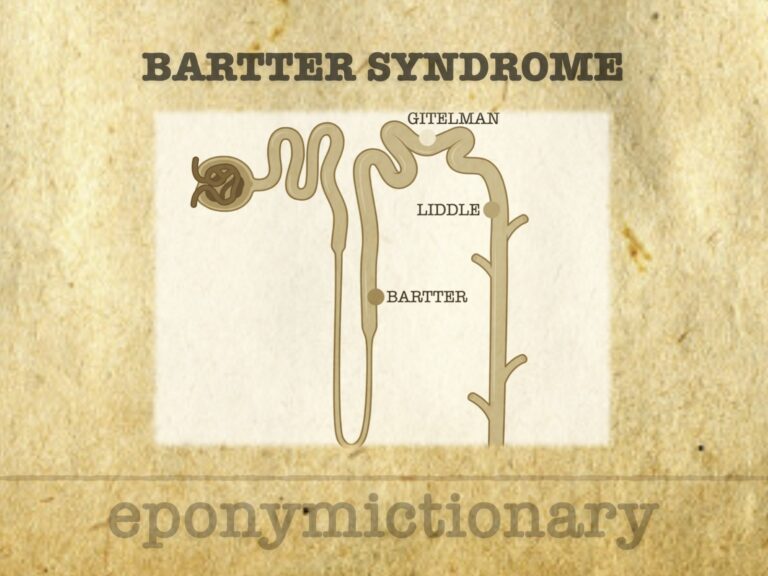
Bartter Syndrome: Renal tubulopathy with hypokalaemic alkalosis, high renin and aldosterone, normal BP, and polyuria—mimics loop diuretic effect at the thick ascending limb.

Frederic Crosby Bartter (1914–1983) American endocrinologist. Defined Bartter syndrome, co-described SIADH, and advanced adrenal and renal physiology.

Swiss paediatrician Guido Fanconi (1892–1979) defined Fanconi anaemia and Fanconi syndrome, shaping modern paediatrics and medical genetics.

A 30 year old woman who is currently 30 weeks gestation presents to the ED with abrupt, severe right loin pain.

Exploring the Point of Care Ultrasound Essentials course with a video demonstrating the renal and bladder ultrasound examination to identify hydronephrosis.

In this video Joel Topf looks at three types of potassium wasting nephropathies: Polyuria; distal RTA; and hypomagnesemia...and how each can lead to hypokalemia.