

Incidence and prevalence
Incidence = number of individuals who develop a disease in a given period of time. Prevalence = the current number of cases in a given population


Incidence = number of individuals who develop a disease in a given period of time. Prevalence = the current number of cases in a given population
Measures of Central Tendency; these indices allow a sample or population to be summarised using a single value.
An odds ratio (OR) is a measure of association between an exposure and an outcome. The OR represents the odds that an outcome will occur given a particular exposure, compared to the odds of the outcome occurring in the absence of that exposure.
It is unethical and a waste of time and resources to embark on a study when there is a high chance of a false negative result (Type II error). The commonest cause of this is having a sample size that is too small
Qualitative data consists of categorical measurements determined by description rather than a numerical measurement
The Randomised Controlled Trial (RCT) is the 'gold standard' in evidence-based medicine, representing the highest levels of evidence
Confidence intervals are the range around the sample mean within which you predict the means of the population to lie
OVERVIEW In general terms, validity is “the quality of being true or correct”, it refers to the strength of results and how accurately they reflect the real world. Thus ‘validity’ can have quite different meanings depending on the context! Reliability…
Diagnostic tests and terms: sensitivity; specificity; positive predictive value; negative predictive value; likelihood ratio; receiver operator characteristic curve (ROC curve)

In part one of a series on clinical trials, David Denman discusses CONSORT diagrams and the CONSORT statement using the DECRA trial as an example.

We recently featured a video on what could turn out to be the emergency medicine/ critical care 'Trial of the Year'... That's right, the FEAST Trial:
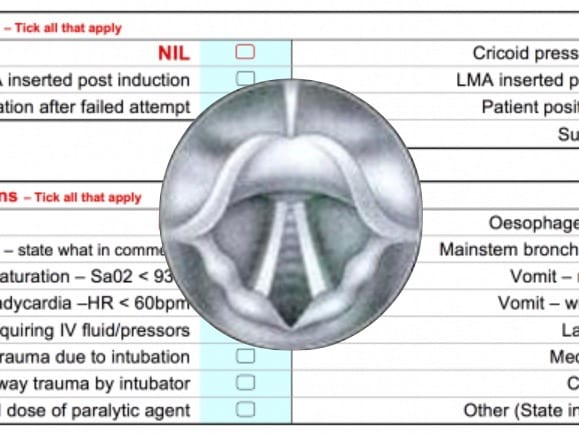
How often does a junior medical officer (or in-fact one of your senior colleagues) in your ED have four attempts at intubating a patient before he, or she, finally succeeds?