
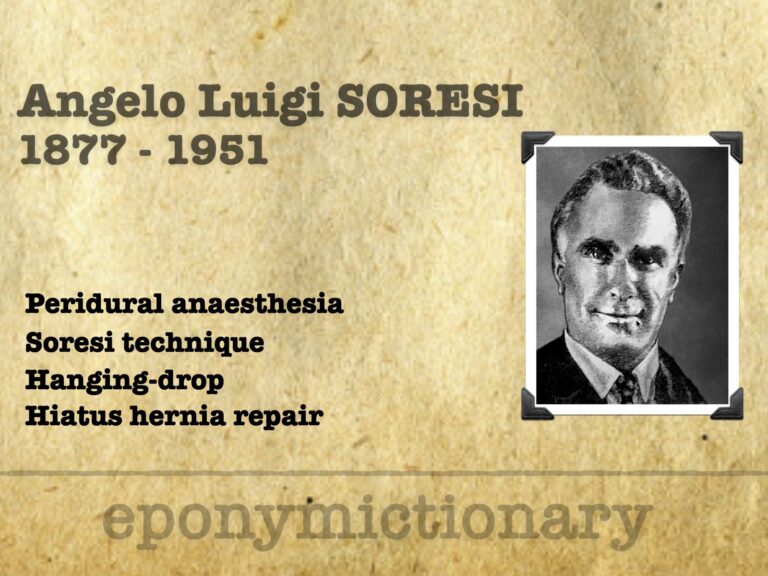
Angelo L. Soresi
Angelo Luigi Soresi (1877–1951), Italian-born American surgeon who described peridural (epidural) anaesthesia and an early “hanging drop” endpoint for locating the epidural space (1932).

Angelo Luigi Soresi (1877–1951), Italian-born American surgeon who described peridural (epidural) anaesthesia and an early “hanging drop” endpoint for locating the epidural space (1932).

James Sherren (1872-1945) British General surgeon. Eponym: Sherren's triangle - area of hyperaesthesia associated with appendicitis
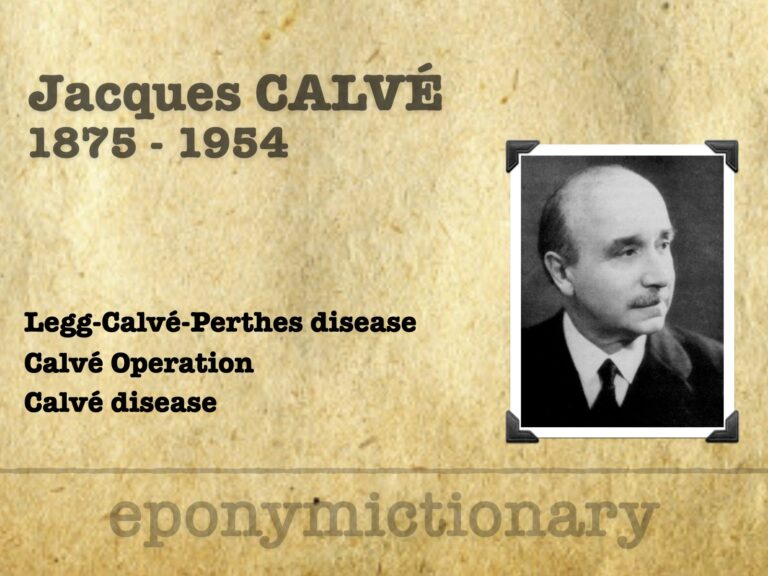
Jacques Calvé (1875–1954), French orthopaedist. Defined vertebra plana, advanced spinal TB care, and described Legg–Calvé–Perthes disease
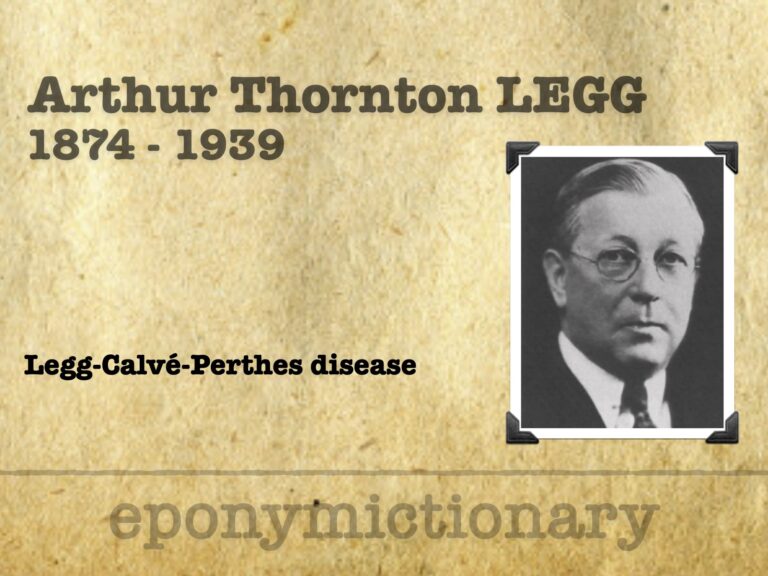
Arthur Thornton Legg (1874–1939), American orthopaedic surgeon, described Legg–Calvé–Perthes disease, clarifying its non-tuberculous origin
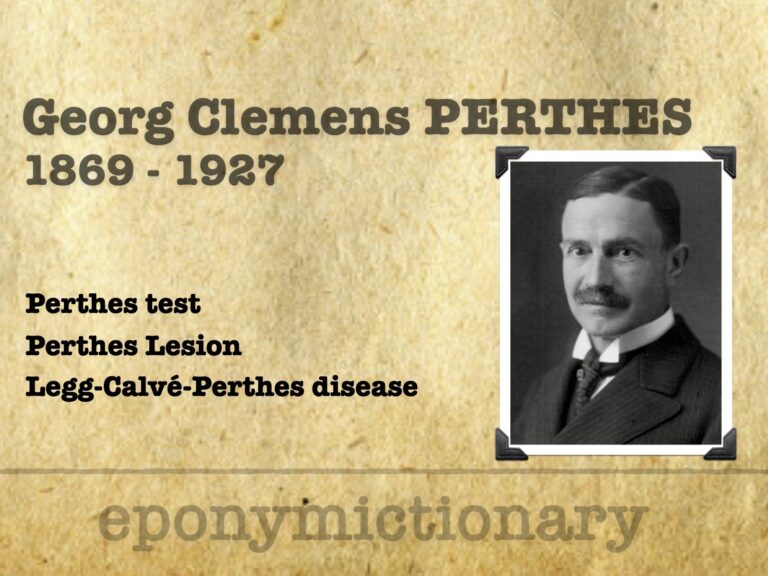
Georg Perthes (1869–1927), German surgeon. Described Perthes’ test for varicose veins (1895) and arthritis deformans juvenilis, later known as Perthes disease (1910)
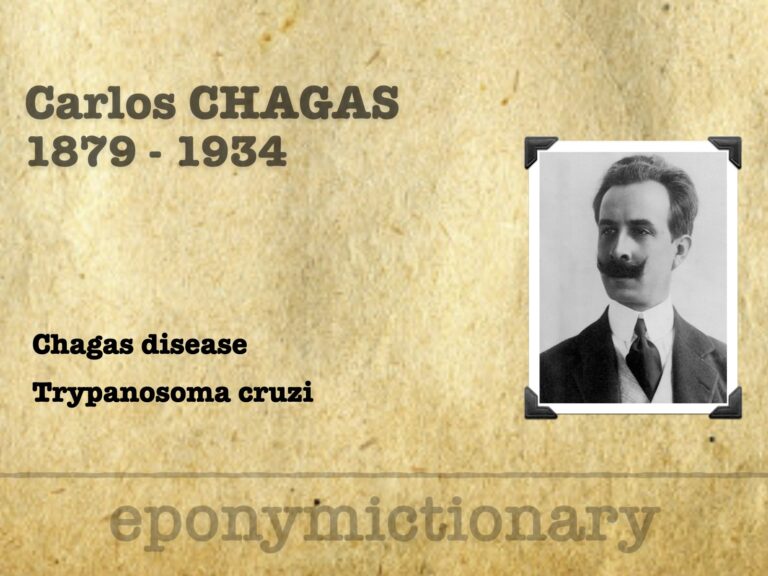
Carlos Chagas (1879–1934), Brazilian physician–scientist who identified Trypanosoma cruzi and described Chagas disease (1908–1909).
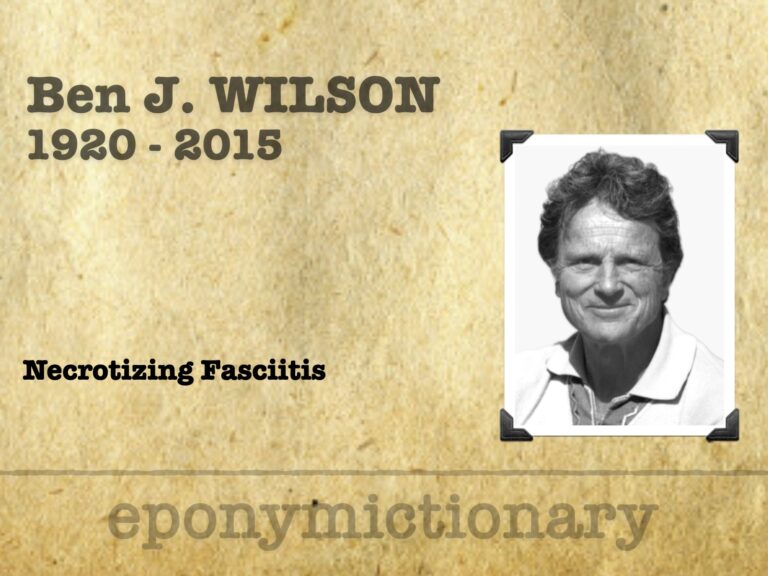
Ben J. Wilson (1920–2015), American surgeon who coined 'necrotizing fasciitis' in 1951, Parkland Hospital leader, and pioneer in surgical infection care
Alexander Burns Wallace (1906–1974) was a Scottish plastic surgeon. Published the Wallace Rules of nine for burn size estimation in 1951

Heinrich Adolf Rinne (1819-1868) was a German otologist best remembered for the eponymous Rinne test — a fundamental clinical tool in the assessment of hearing loss.
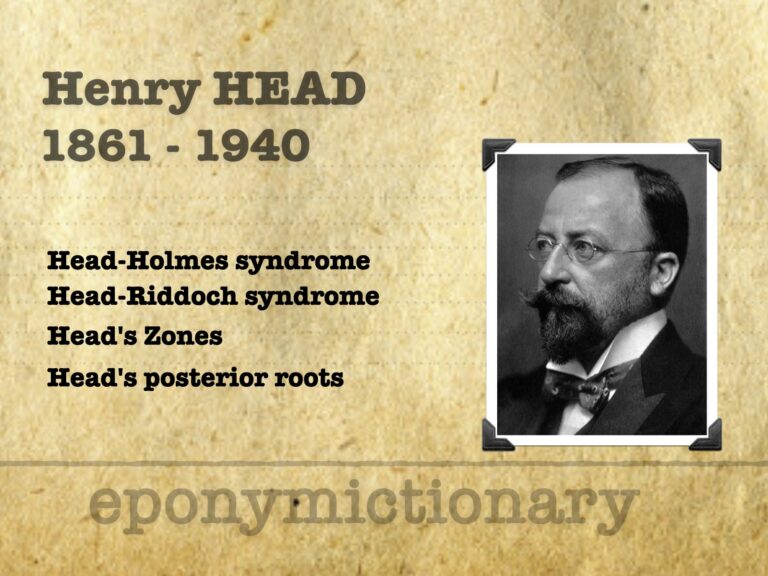
Sir Henry Head (1861-1940) was an English neurologist. Peripheral sensory dermatomes in man Head's zones (1893-1896)

Margaret Dix (1911–1991), British neuro-otologist who co-developed the Dix–Hallpike test, reshaped diagnosis of vertigo and advanced vestibular science

Harold Leeming Sheehan (1900-1988) was an English physician and pathologist. Eponymously remembered for his description of Sheehan Syndrome in 1937