
Ludwig Edinger
Ludwig Edinger (1855-1918) was a German neurologist and anatomist. Edinger demonstrated the nucleus in the foetus in 1885; and Westphal in the adult in 1887.


Ludwig Edinger (1855-1918) was a German neurologist and anatomist. Edinger demonstrated the nucleus in the foetus in 1885; and Westphal in the adult in 1887.
Biography Medical Eponyms Landouzy-Déjérine syndrome First to describe and publish 9 cases of Landouzy-Déjérine syndrome (facioscapulohumeral muscular dystrophy) in the third edition of De l’électrisation localisée in 1872: 219-220 Key Medical Attributions Duchenne smile Controversies Major Publications References Biography Eponymous…

Jules Philippe Falret (1824 - 1902) was a French psychiatrist. 1877, along with Ernest-Charles Lasègue (1816-1883) first described the concept of Folie à deux, initially termed Lasègue-Falret syndrome.

John Madison Taylor (1855-1931) was an American pediatric neurologist. He designed the first tendon reflex hammer in 1888
The neurological examination in 3 minutes, on video - the highest form of art?
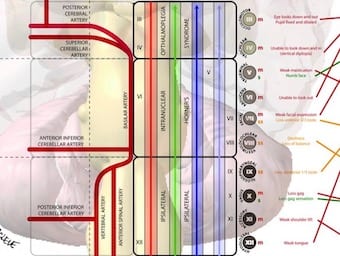
Helpful Brainstem Figures. Cross-sections of the brainstem. Medial brainstem syndromes and lateral brainstem syndromes
Peter Gates rule of 4 of the brainstem illustrated in a single diagram...why and how?
Gates described a simplified method for answering the question 'Where is the lesion?' using only the parts of the brainstem that we actually examine during a clinical examination to understand brainstem vascular syndromes.

Clinical neurology a primer is written by leading Australian neurology Associate Professor Peter Gates. This book is the ultimate guide to neurology for people like me – who don’t understand it, but need to know it! Available in kindle edition…
James Parkinson (1755-1824) was an English surgeon, apothecary, palaeontologist, geologist and political activist. Parkinson's disease (1817)

Jean-Baptiste Octave Landry de Thézillat (1826 - 1865) was a French physician. Landry ascending paralysis (1859) as early description of Guillain–Barré syndrome (1916)

Myotomes and Differentiating Nerve Lesions