

Tönnis classification
Tönnis classification for developmental hip dysplasia: radiographic grades, key landmarks, limitations, historical development and the IHDI system


Tönnis classification for developmental hip dysplasia: radiographic grades, key landmarks, limitations, historical development and the IHDI system

John Joseph Gartland (1918-2016), American orthopaedic surgeon. Gartland classification and Gartland–Werley score for fracture outcomes.

Capener triangle is an early AP radiographic sign of SCFE, showing loss of the normal triangular overlap between the femoral neck and acetabulum.
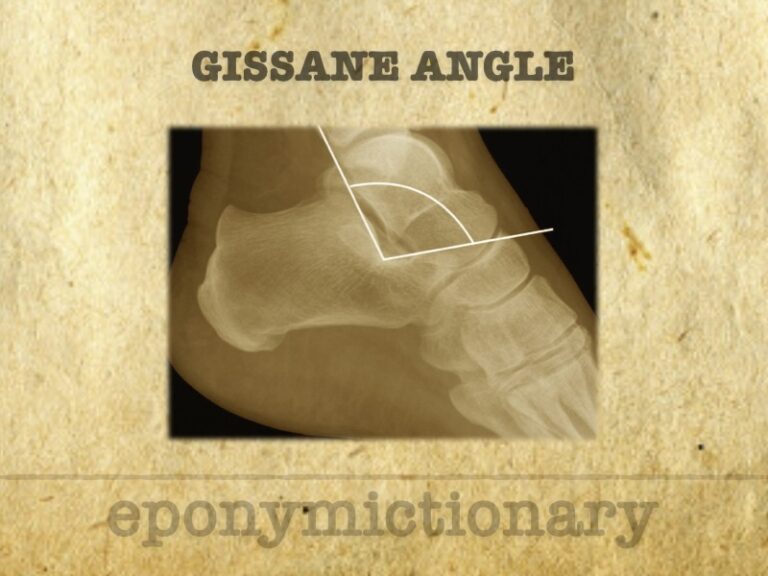
Gissane angle. Measurement on lateral calcaneal radiographs, normal values, clinical use, limitations and historical development.

Sophus von Rosen (1898-1996), Swedish orthopaedic surgeon. Pioneered neonatal hip screening and developed the von Rosen splint and Andrén–von Rosen view.

Andrén–von Rosen view is an abduction–internal rotation radiograph used in DDH. Review technique, von Rosen line, pitfalls and history.

Von Rosen splint is an aluminium abduction splint for neonatal hip instability. Review history, design, evidence, complications and history.

Iselin disease is traction apophysitis of the fifth metatarsal in adolescents. Review diagnosis, imaging, management, history and eponym origins.

Hans Iselin (1878–1953), Swiss surgeon and pioneer of accident medicine, described Iselin disease, traction apophysitis of the 5th metatarsal

Sharp angle measures acetabular inclination on AP pelvic radiographs. Review the measurement, normal values, history and Ullmann–Sharp attribution.

Thomas George Morton (1835 – 1903) was an American surgeon. Eponyms include Morton's neuroma; neuralgia and metarsalgia

Dudley Joy Morton (1884–1960), American physician and anatomist associated with Morton foot, Morton toe, first-ray hypermobility and Morton extension.