

Rolland J. Whitacre
Rolland John Whitacre (1909–1956), American anesthesiologist and inventor of the pencil-point spinal needle that reduced post-dural puncture headache.

Rolland John Whitacre (1909–1956), American anesthesiologist and inventor of the pencil-point spinal needle that reduced post-dural puncture headache.
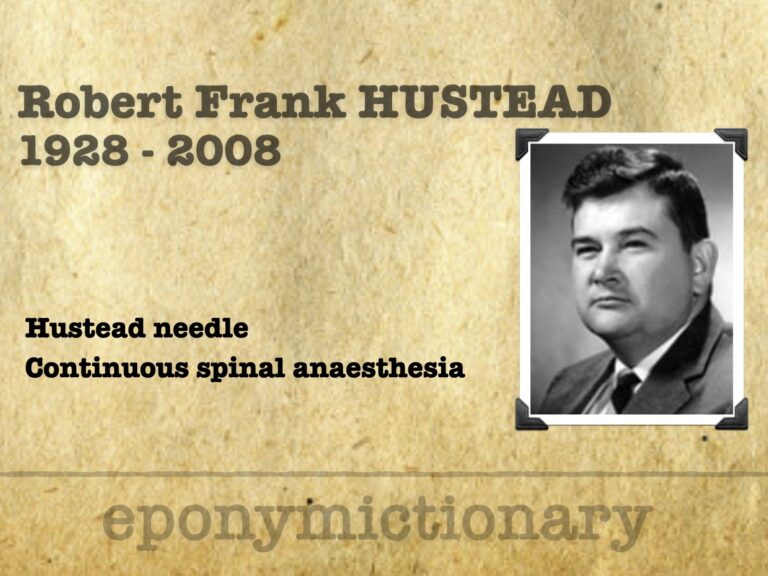
Robert Frank Hustead (1928-2008), American anaesthesiologist; refined epidural needle design, helped establish obstetric and ophthalmic anaesthesia subspecialties
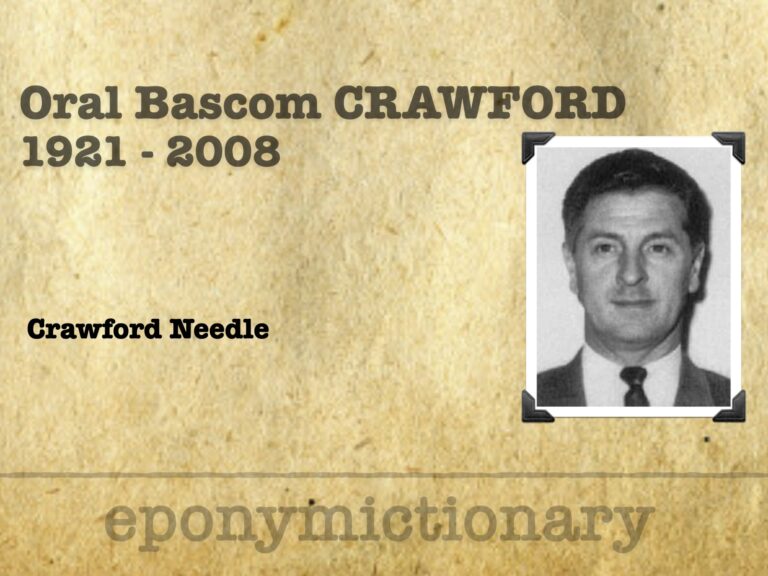
Oral Bascom Crawford Jr (1921–2008), American anesthesiologist. Early advocate of thoracic epidural anesthesia, inventor of the Crawford needle, and prilocaine investigator.

Leonid Rogozov (1934–2000): Soviet surgeon who performed a self-appendicectomy in Antarctica (1961) when evacuation was impossible—an iconic feat of austere medicine.
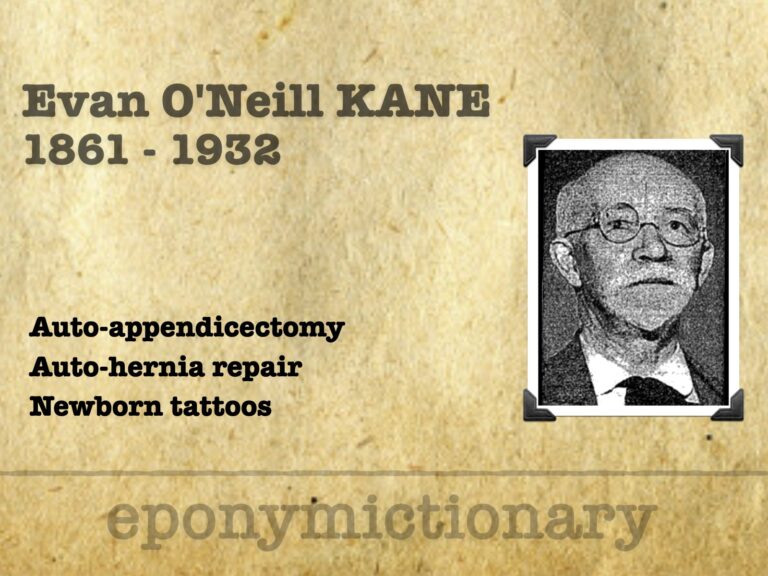
Evan O’Neill Kane (1864–1932), American country surgeon. Railway accident specialist and medical inventor, famed for his 1921 auto-appendicectomy.
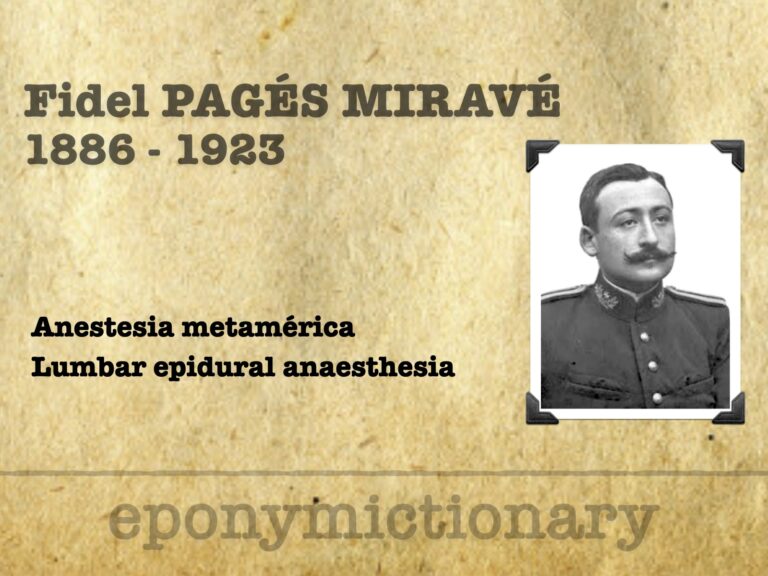
Fidel Pagés (1886–1923): Spanish military surgeon who described “anestesia metamérica” (1921), an early, practical lumbar epidural technique.
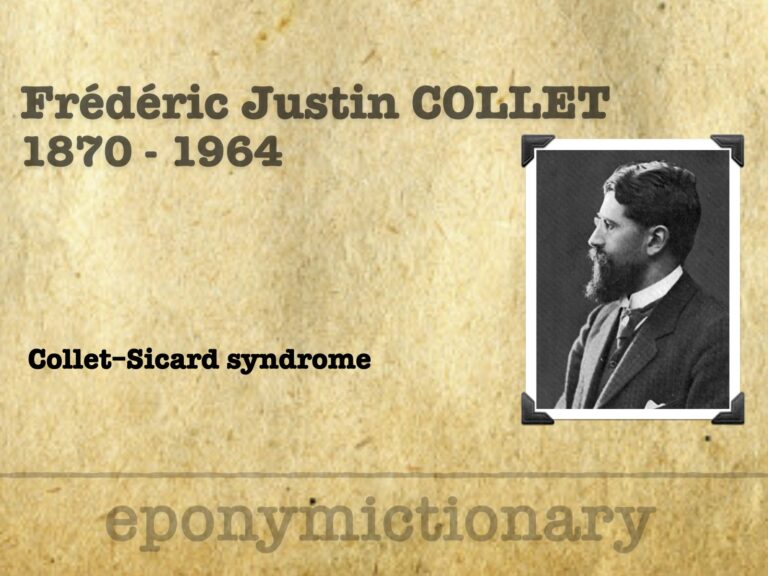
Frédéric Justin Collet (1870–1964), Lyon physician and ENT professor; described the 1915 skull-base palsy of CN IX–XII later known as Collet–Sicard syndrome
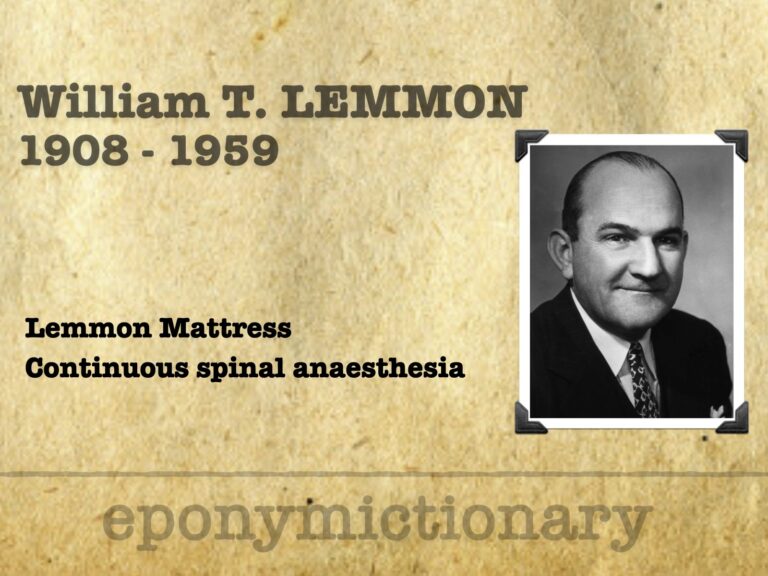
William Thomas Lemmon (1896-1974), surgeon who pioneered continuous spinal anaesthesia, and the Lemmon mattress
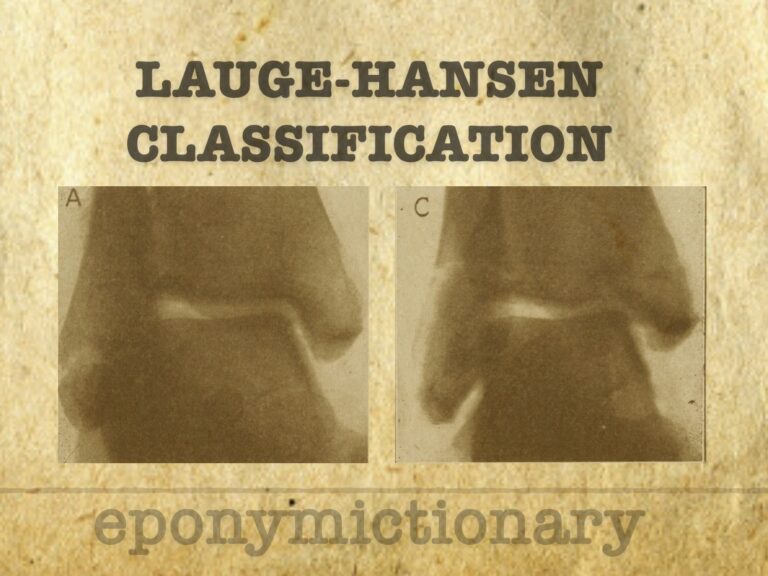
Lauge-Hansen classification of ankle injuries (1950) - predictable fracture patterns defined by injury mechanism and resultant radiological findings
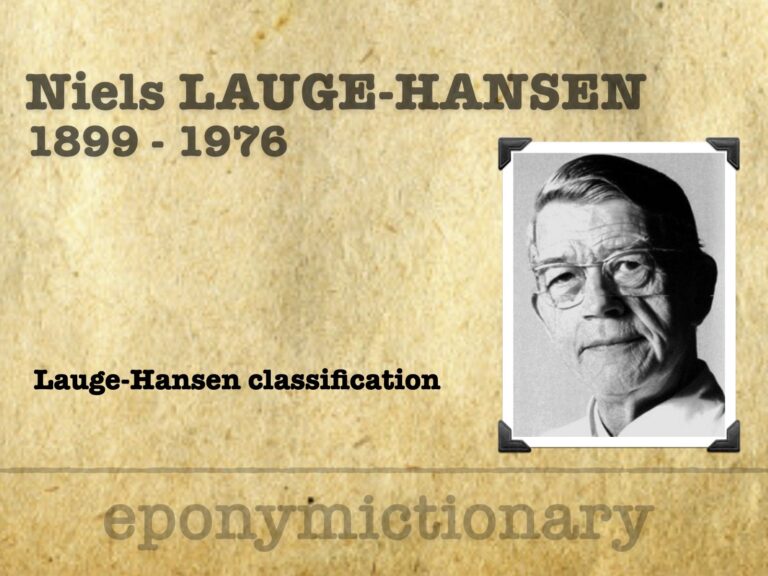
Niels Lauge-Hansen (1899 – 1976) was a Danish Radiologist. Eponymously linked with the Lauge-Hansen classification of ankle fractures in 1950
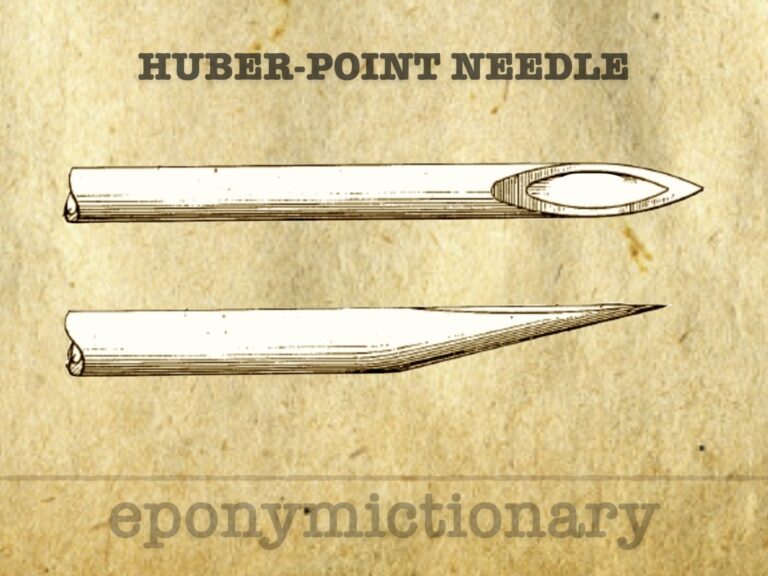
Hypodermic needle (needle which enters the skin) Originally described in 1946 by Ralph Huber. More commonly known as the Tuohy Needle

Jess Bernard Weiss (1917 – 2007) was an American anesthesiologist. Best known for designing the Weiss needle for the placement of epidural catheters