

Cope’s Sign
Cardio-biliary reflex (“Cope sign”): gallbladder disease causing vagal bradycardia or AV block that mimics cardiac events, often with normal troponin.

Cardio-biliary reflex (“Cope sign”): gallbladder disease causing vagal bradycardia or AV block that mimics cardiac events, often with normal troponin.

Learn or Blame explores cognitive bias, just culture and human factors in adverse event review, showing why healthcare can either learn or blame, not both.
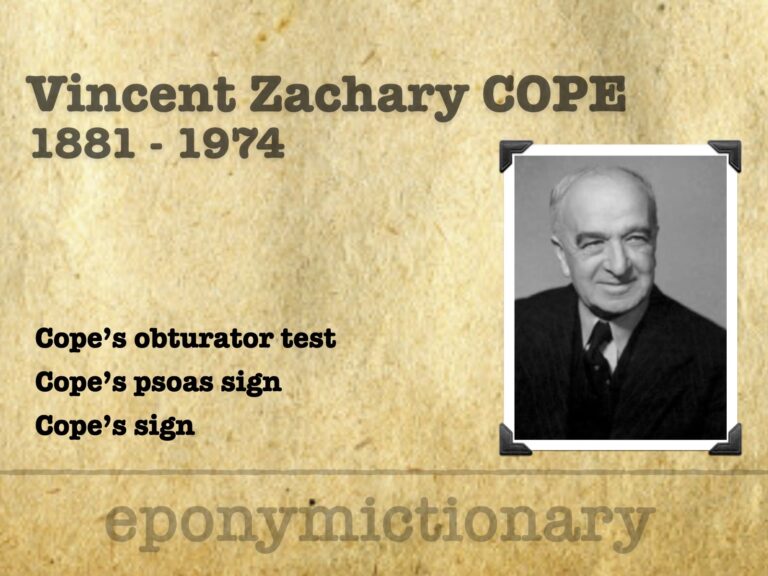
Sir Vincent Zachary Cope (1881 – 1974) was a British physician and surgeon. Eponymously linked with Cope Psoas test and obturator test.
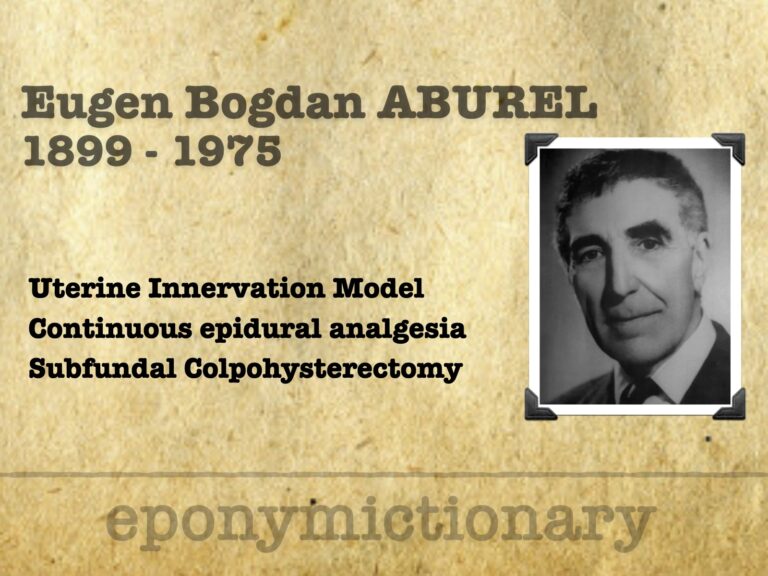
Eugen Bogdan Aburel (1899-1975), Romanian obstetrician and gynaecologist. Pioneer of continuous epidural analgesia, and fertility-sparing cancer surgery
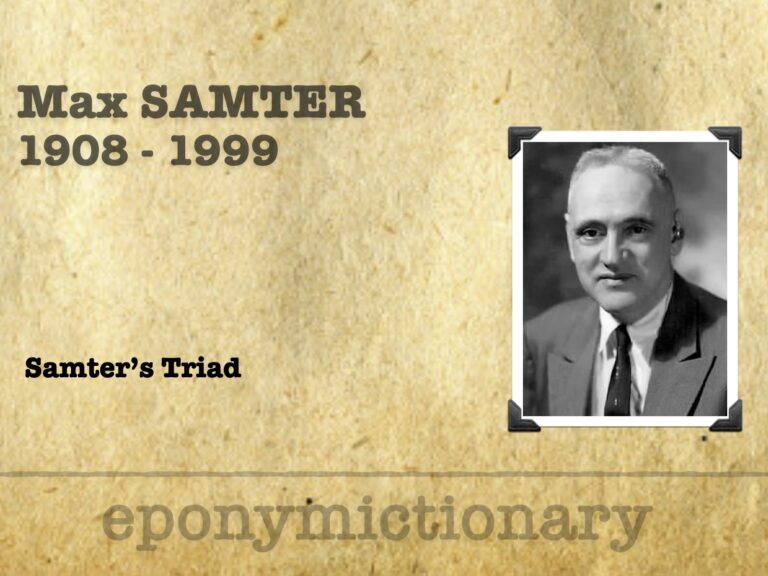
Max Samter (1908–1999), German born, American allergist. “Samter’s triad”—asthma, nasal polyps, and severe reactions to aspirin
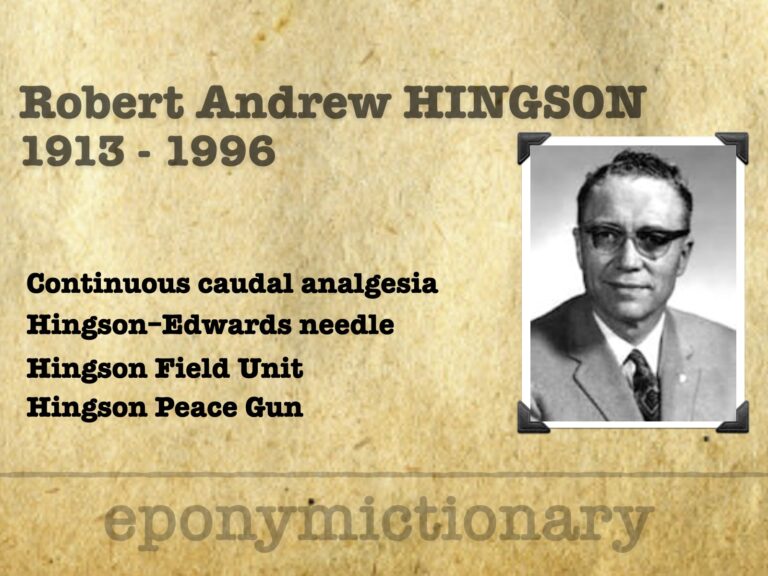
Robert Andrew Hingson (1913-1996), American anesthesiologist, pioneer of continuous epidural analgesia; Hingson Peace Gun; humanitarian mass vaccination programs.
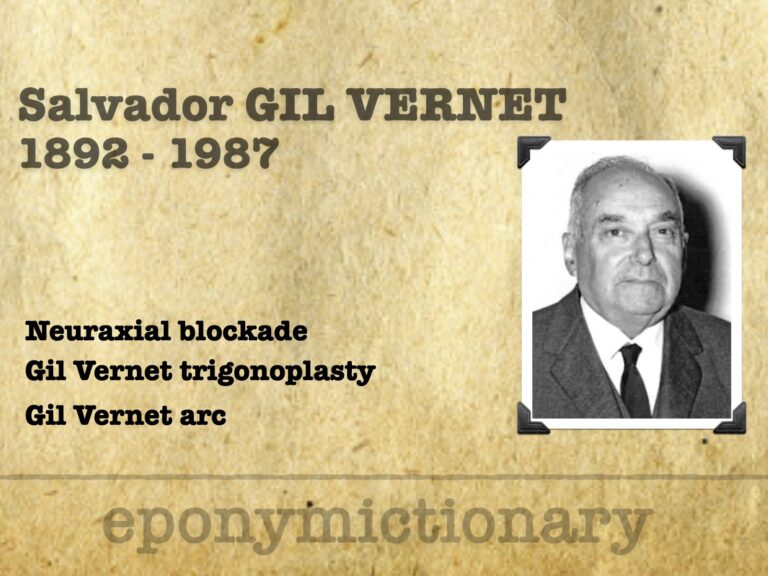
Salvador Gil Vernet (1892-1987), Spanish urologist. pioneer of functional pelvic anatomy, prostate zonal theory, continence mechanisms and anatomy-led urological surgery.
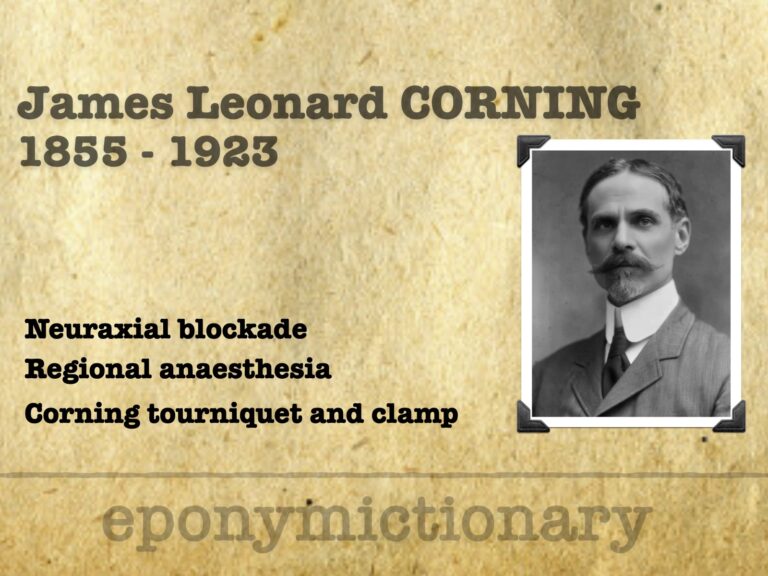
James Leonard Corning (1855 - 1923) was an American neurologist. Epidural block (1885); Regional anaesthesia (1885)
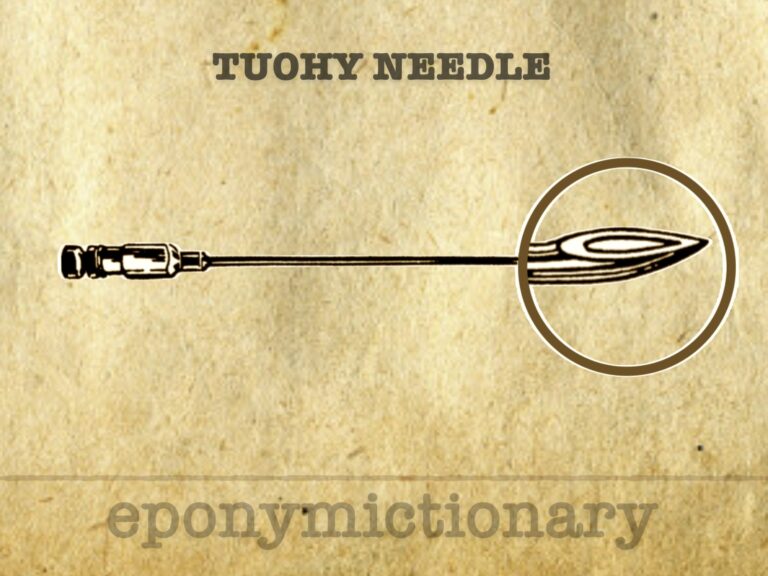
Tuohy needle: directional neuraxial needle enabling continuous spinal and epidural catheter techniques, based on the original Huber-point design.
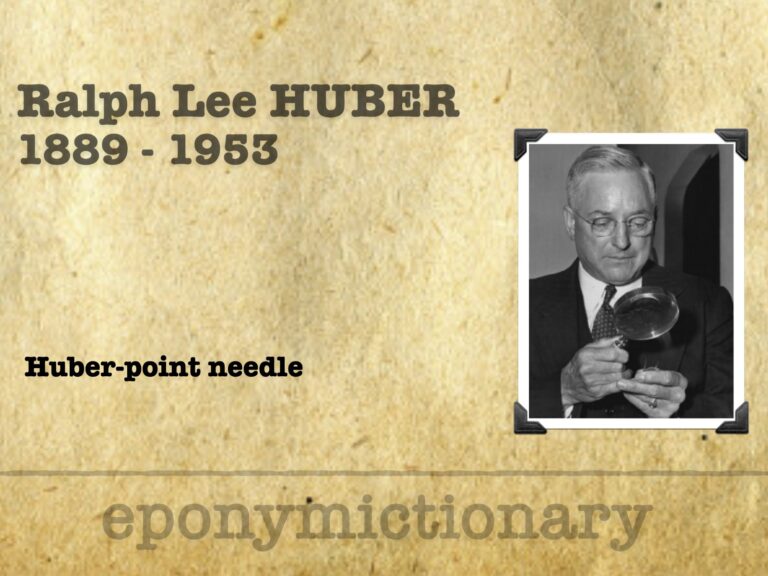
Ralph L Huber (1890-1953) was an American Dentist and inventor. Created Huber-point needle (1943, patent 1945) commonly known as TUOHY needle

Edward Boyce Tuohy (1908 – 1959) American anaesthesiologist. Best known for contribution to continuous epidural anaesthesia; Tuohy needle
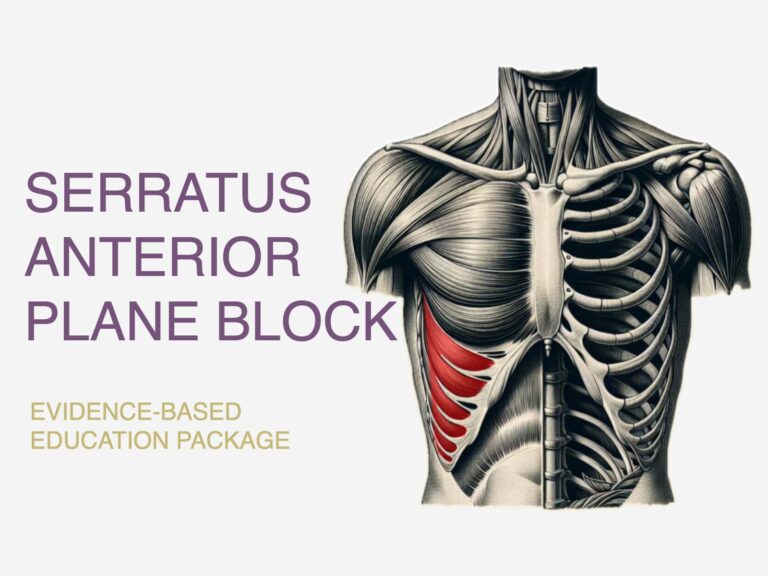
FOAMed serratus anterior plane block (SAPB) education package for ED rib fractures: evidence-based indications, sonoanatomy, procedure and safety.