
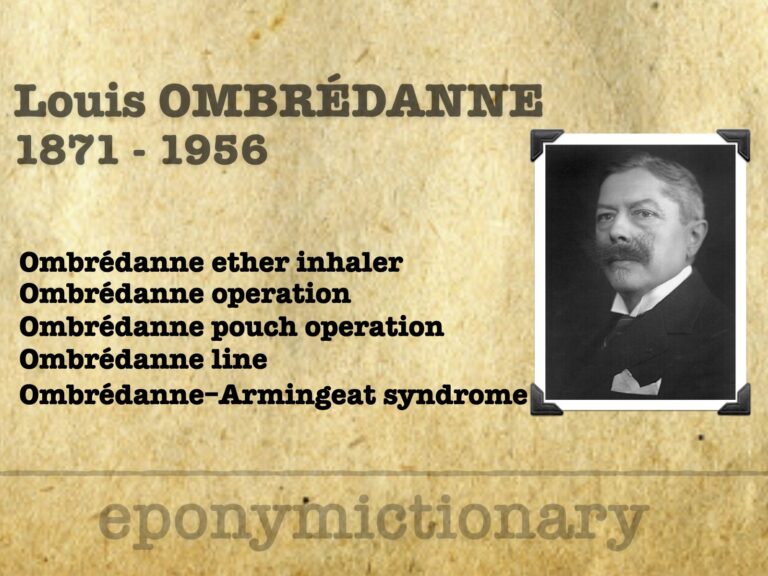
Louis Ombrédanne
Louis Ombrédanne (1871–1956), French paediatric surgeon linked to the Ombrédanne inhaler, hip line, orchidopexy and reconstructive surgery.


Louis Ombrédanne (1871–1956), French paediatric surgeon linked to the Ombrédanne inhaler, hip line, orchidopexy and reconstructive surgery.
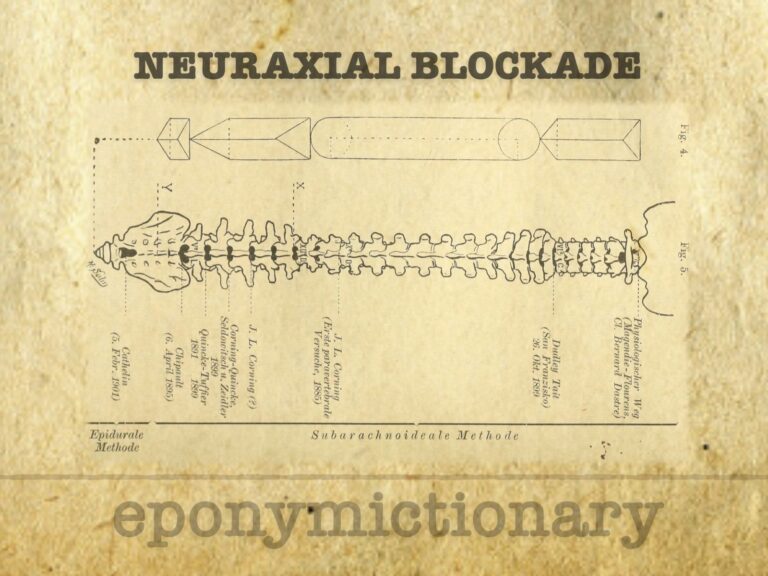
History of neuraxial anaesthesia: milestones in spinal and epidural blockade from Koller and Corning to Quincke, Bier, Tuohy and Curbelo.
Aaron sign is referred pain induced by continuous firm pressure over McBurney point, described by Charles D. Aaron in 1913 for chronic appendicitis.
Rovsing sign: original 1907 technique, Perman's earlier 1904 sign, history, mechanism, diagnostic accuracy and evolution of the appendicitis sign.
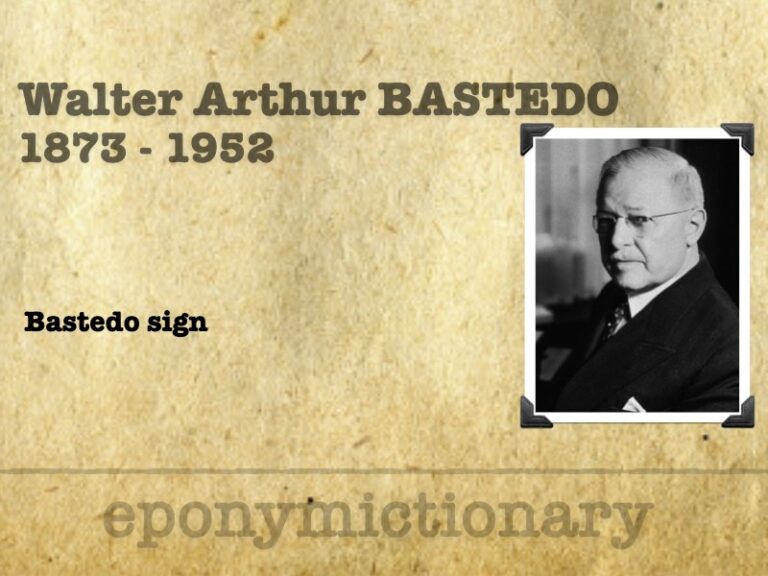
Walter Arthur Bastedo (1873–1952), American physician, pharmacologist and gastroenterologist who described Bastedo sign for chronic appendicitis.
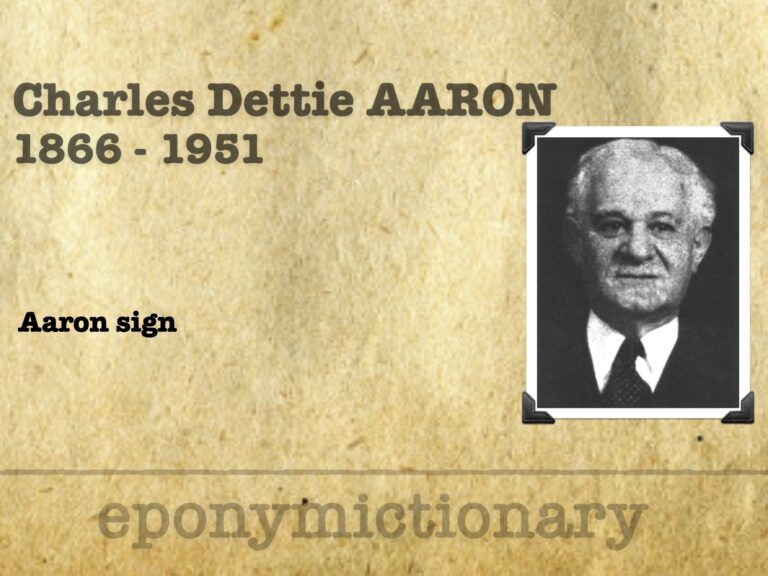
Charles Dettie Aaron (1866–1951) was an American gastroenterologist, author and educator who described the eponymous Aaron sign for chronic appendicitis.

Fritz de Quervain (1868 – 1940) was an Swiss surgeon. He described the chronic tendonitis that bears his name (De Quervain disease)

Emil Samuel Perman (1856 - 1946) was a Swedish general surgeon. Eponymsously associated with the Perman-Rovsing sign

Clinical updates in cardiology, antimicrobial stewardship, and febrile infants, followed by a case-based discussion of The Pitt Episode 2.
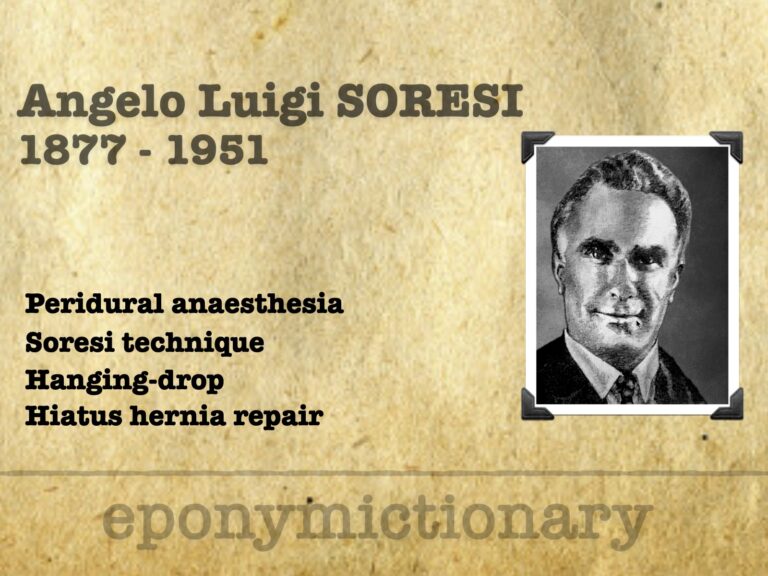
Angelo Luigi Soresi (1877–1951), Italian-born American surgeon who described peridural (epidural) anaesthesia and an early “hanging drop” endpoint for locating the epidural space (1932).
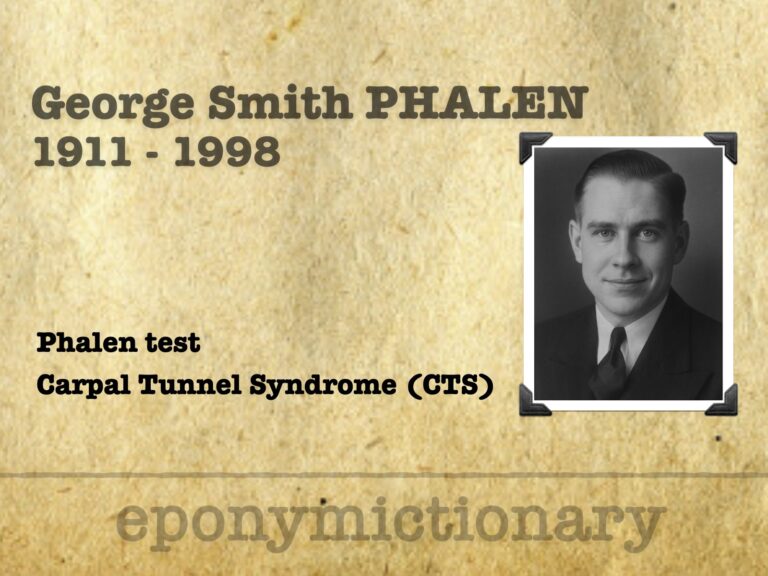
George Phalen (1911–1998), American hand surgeon known for the Phalen test and his defining work on carpal tunnel syndrome.
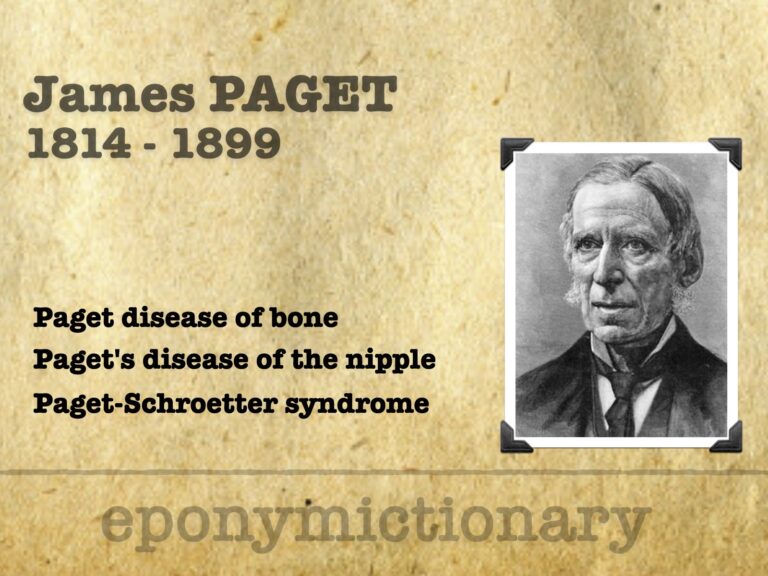
Sir James Paget (1814 - 1899) was a renowned English surgeon. In a career spanning eight decades, with research and practice in surgery, as well as serving the royal family during Queen Victoria’s reign